
Santol Edge Team
AI Research & Engineering at Santol Edge
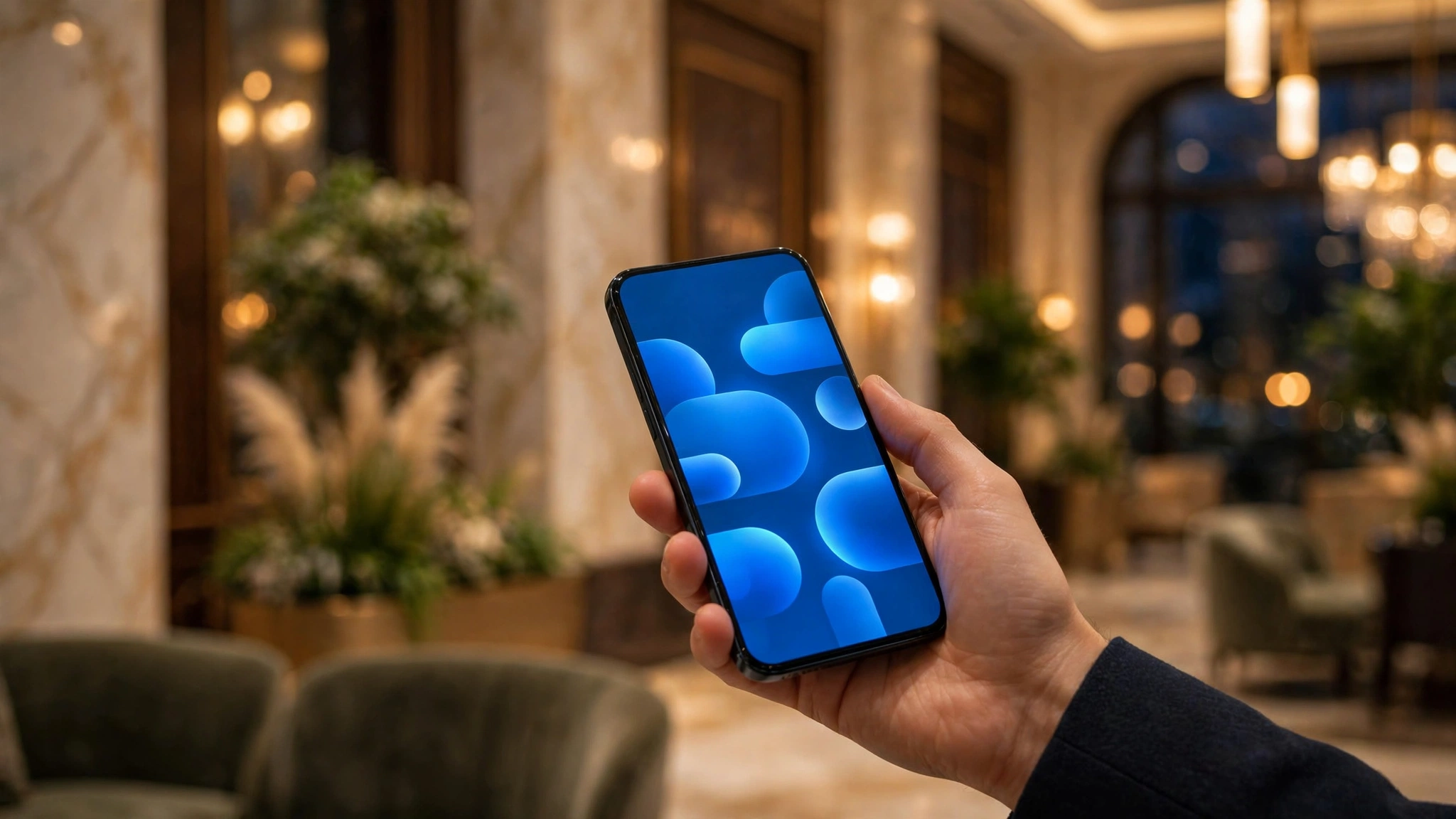

“Mobile App for Hotels: The Honest Decision Guide”
Mobile App for Hotels: An Honest Decision Guide for Independent Properties
Deciding whether to build or buy a mobile app for hotels comes down to one core reality: guest software only delivers ROI if it removes friction that your front desk or phone lines cannot handle alone. If you manage an independent hotel, a boutique property, or a multi-location group, you have likely received pitches from enterprise software vendors promising seamless digital transformations. But do you actually need a dedicated hotel guest app, or will it sit on digital shelves gathering virtual dust? This guide cuts through the vendor hype to examine when guest apps pay off, when they fail, how different build paths stack up financially, and how to execute an adoption strategy that actually works.
When a Hotel Guest App Pays Off vs. When It Does Not
Not every property benefits from a dedicated mobile application. Before allocating budget, hotel owners and managers must evaluate whether their operational model matches the conditions required for high app utility.
A mobile app pays off significantly for properties with high amenity utilization, extended guest stays, or complex multi-outlet operations. Boutique and independent hotels with on-site spas, multiple dining venues, or resort-style activities find that a guest app can increase ancillary spend. Guests can book a massage poolside or order room service without waiting on hold. Similarly, multi-property groups benefit by unifying their brand experience under a single digital roof, reducing administrative overhead across locations.
Conversely, a hotel guest app does not make sense for small bed-and-breakfasts with under fifteen rooms, roadside motels, or properties that depend entirely on third-party booking portals for all of their traffic. If your average length of stay is under two nights and you have minimal on-site amenities beyond a continental breakfast, guests will simply refuse to download a standalone application. In these lightweight scenarios, modern web-based solutions — such as an automated AI website chatbot or a streamlined mobile-optimized booking portal — deliver better results at a fraction of the cost. For deeper insights into conversational engagement channels, read our guide on AI chatbots for hotels.
The 6 Core Jobs a Hotel Guest App Actually Does
If your property fits the profile where a mobile app makes operational sense, the software must perform specific jobs exceptionally well. Avoid bloating your app with gimmicks. Focus instead on these six core functions that directly reduce labor costs and elevate guest satisfaction:
Mobile Check-In and Check-Out: Allow guests to bypass front desk queues entirely by verifying identity, processing digital registration cards, and settling final bills directly on their smartphones.
Keyless Room Entry: Integrate Bluetooth Low Energy (BLE) or NFC digital room keys so guests can unlock their doors without stopping for physical plastic cards.
Room-Service and Dining Ordering: Provide a clean digital menu for in-room dining or poolside ordering, routing orders straight to the kitchen POS to eliminate phone errors.
Spa and Activity Reservations: Let guests browse real-time availability and book treatments, cabanas, or excursions autonomously, maximizing slot utilization.
Local Concierge Recommendations: Feature a curated digital guide of local cafes, hidden spots, and partner tours, positioning your hotel as an insider authority.
Loyalty Program and Push Offers: Send targeted, context-aware push notifications (such as a discounted late-checkout or a happy-hour drink voucher) based on stay milestones.
3 Build Paths: Costs, Realities, and Technical Trade-Offs
Choosing how to build your application is the most critical financial decision you will make in this project. There are three primary pathways, each with distinct cost structures and maintenance realities.
White-Label Guest-App Platforms
White-label SaaS solutions provide pre-built templates specifically designed for hospitality. You plug in your hotel's branding, connect your PMS, and launch quickly.
The reality: While setup is fast, you pay recurring monthly licensing fees that scale with your room count. Customization is restricted to what the platform vendor allows. Setup fees are commonly quoted in the low thousands of dollars, with ongoing monthly SaaS subscriptions of a few hundred dollars depending on room count.
Best for: single properties that want to launch fast without a development team.
Custom Cross-Platform Build
A bespoke cross-platform build utilizes modern frameworks (like React Native or Flutter) to deploy a single codebase to both iOS and Android app stores. This path gives you complete control over UI/UX, proprietary features, and data ownership.
The reality: You own the intellectual property and avoid rigid vendor lock-in. However, initial capital expenditure is higher, and you are responsible for ongoing maintenance, bug fixes, and OS updates.
Cost range: Professional mobile app development services for custom hospitality builds typically start around $3,500 for lean MVPs, scaling upward depending on complex integrations. For a deeper breakdown of cost drivers, see our analysis on mobile app development cost.
Best for: groups and resorts that need proprietary features and full data ownership.
Progressive Web Apps (PWAs)
A Progressive Web App is not downloaded from an app store; instead, it runs directly in the guest's mobile browser while offering app-like speed, offline capability, and push notifications.
The reality: This is the lowest-friction option because guests do not need to visit an app store or download a heavy file. It is ideal for mid-scale properties testing mobile adoption without high upfront risk.
Cost range: Generally falls under custom web development budgets, starting from $2,500 for a robust, integrated web application framework.
Best for: independent hotels testing mobile adoption before committing to a native build.
PMS Integration and App Store Approval Basics
An app that cannot talk to your Property Management System is essentially a digital brochure. Seamless two-way integration with PMS platforms is non-negotiable. Your app must pull live guest profile data, reservation dates, and folio balances while writing check-in statuses and service charges back to the PMS ledger in real time.
Furthermore, if you choose a native app build, you must navigate Apple App Store and Google Play Store review guidelines. Both tech giants enforce strict rules regarding privacy policies, account deletion capabilities, and secure payment processing. Building under a developer account registered directly to your hotel legal entity helps avoid delays during submission. If managing voice infrastructure or phone-based triage alongside your app is part of your automation stack, exploring solutions like AI voice agents for hotels can bridge traditional phone calls with your digital workflows.
The 4-Step Guest Adoption Playbook
The greatest failure mode for hospitality apps is low download rates. If guests do not adopt the tool, even a brilliant piece of software provides zero return. Execute this four-step adoption playbook to drive high engagement:
Deploy pre-arrival email triggers: Send a personalized welcome email 48 hours before check-in with a direct link to your web app or app store download, highlighting how it saves them time upon arrival.
Utilize front-desk and in-room QR codes: Place sleek, branded tent cards on bedside tables, elevator mirrors, and front desk counters featuring QR codes that instantly open your digital concierge or mobile menu.
Train front-desk staff as champions: Incentivize front-desk agents to mention the app during check-in: "Did you know you can use our digital key and order room service right from your phone?" Staff enthusiasm drives guest curiosity.
Lead with one flagship feature first: Do not force guests to learn six new features at once. Promote one high-value capability — such as instant mobile check-in or digital room-service ordering — as the primary entry point. Once they engage, they will explore the rest of the app naturally.
Frequently Asked Questions
Do hotel guests actually download separate mobile apps?
Generally, guests resist downloading standalone apps for short stays. That is why many independent properties favor Progressive Web Apps (PWAs) or ensure their native app offers immediate utility, such as keyless room entry or express check-in, on first open.
How does a mobile app connect to our existing PMS?
Modern guest apps connect via secure REST APIs provided by your Property Management System vendor. This allows real-time synchronization of guest folios, room numbers, and reservation statuses without manual data entry.
Is a Progressive Web App better than a native app store app?
For most independent and boutique hotels, a Progressive Web App is more practical because it eliminates app store friction, lowers development costs, and works instantly in any mobile browser. Native apps are better suited for luxury resorts requiring deep Bluetooth integration for smart locks.
What maintenance is required after launching a hotel app?
Ongoing maintenance includes regular software updates for new iOS and Android OS releases, API monitoring for PMS sync stability, security certificate renewals, and content updates for seasonal menus or local concierge guides.
Can a hotel app help increase ancillary revenue?
Yes. By placing digital dining menus, spa booking calendars, and late-checkout upgrade prompts directly in the palm of the guest's hand, properties often see an uptick in impulse purchases and amenity utilization.
Contact us
Ready to evaluate the right mobile app strategy or custom automation path for your property? Contact us to discuss your workflow requirements today.
Santol Edge Team
AuthorWrites extensively about generative AI, autonomous agent design, enterprise automation architectures, and customer experience engineering at Santol Edge.
Read Next

How AI Automation Helps Modern Businesses Scale 10x Faster
Discover how forward-thinking companies are deploying intelligent agents and automated pipelines to reduce overhead and boost revenue.

How AI Chatbots Transform Customer Support and Business Growth
Learn how AI chatbots improve customer response times, qualify leads, support teams, and create more consistent customer experiences.

AI Voice Agents: What They Are and How They Work
Understand where voice agents add value, how they connect with business systems, and what to consider before launching one.
Community Comments (0)
Oct 15, 2026Elisa Gabriella
VP of Operations · BrightSync
“A genuinely useful piece — the point about consolidating thin pages matches what we saw on our own platform last year. Deploying automated workflows cut roughly half our manual ticket volume and resolution speed went up significantly.”
Leave a Reply
Your email address will not be published. Required fields are marked *