
Santol Edge Team
AI Research & Engineering at Santol Edge
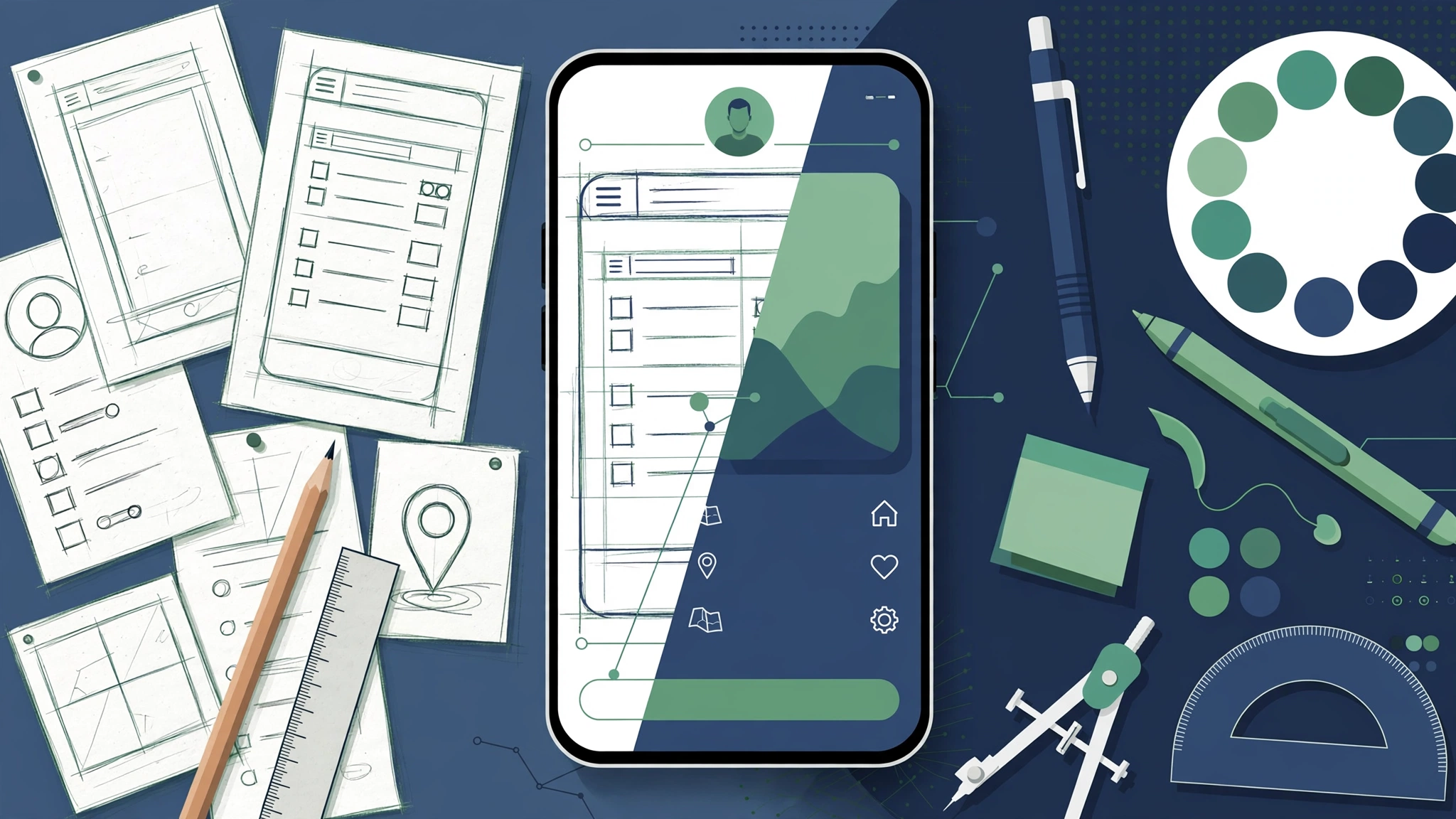

“How much does it cost to build a mobile app? Realistic 2026 ranges, what drives price, and how to cut cost without killing quality.”
How Much Does Mobile App Development Cost in 2026?
If you're planning a mobile app project, the first question is usually the hardest one: what will it actually cost? The short answer is that mobile app development cost in 2026 typically falls into three bands — roughly $25k–$60k for a simple MVP, $60k–$150k for a mid-complexity app, and $150k+ for complex, feature-rich platforms. These are market-typical ranges, not guarantees; your final price depends on features, platforms, design depth, and who builds it.
This guide walks through what drives the cost, how platform choices affect pricing, and how to keep your budget under control without shipping a bad product.
What Drives Mobile App Development Cost
An app's price tag isn't a single number — it's a stack of decisions. Here are the biggest cost drivers.
1. Feature Set and Complexity
Features are the single biggest lever on cost. A booking app with a login, calendar, and payment screen is a fundamentally different project from a marketplace with real-time chat, GPS tracking, push notifications, and a rating system. Every feature adds design, development, and testing time. The most expensive mistake buyers make is trying to ship version 3.0 of the product in the first release.
2. Platforms: iOS, Android, or Both
Targeting one platform roughly halves your development effort; targeting both doubles it — if you build natively. This is why the cross-platform question matters so much (more on that below). iOS and Android app development cost diverges most when native builds are required, since you're paying for two separate codebases.
3. UI/UX Design
Design ranges from clean template-based screens to fully custom, branded interfaces with animations and micro-interactions. Design typically accounts for 10–20% of a project budget. Cheaper design isn't just less pretty — unclear user flows cause expensive rework later.
4. Backend and Infrastructure
An app that works offline with no server costs far less than one needing user accounts, a database, an admin panel, and APIs. Backend development often matches or exceeds the mobile-side work. If your app needs a custom admin dashboard for your team to manage content or users, budget for it explicitly.
5. Third-Party Integrations
Payments (Stripe, Apple Pay, Google Pay), maps, SMS verification, CRM connections, booking systems — each integration adds development and testing time, plus possible ongoing subscription costs for those services.
6. AI Features
AI is the new cost variable. Adding an AI chatbot, image recognition, voice interaction, or personalization engine can add meaningful scope. Some AI features are simple API integrations; others (custom models, real-time processing) are significant engineering projects. Be specific about what "AI" means for your app when getting quotes — the range is enormous.
Native vs Cross-Platform: What It Means for Your Budget
Native development (Swift for iOS, Kotlin for Android) means building the app separately for each platform. It delivers the best performance and full access to device features, but you're maintaining two codebases — which means roughly 1.5–2x the cost of a single platform.
Cross-platform development with React Native or Flutter lets one codebase serve both iOS and Android. For most business apps — booking tools, service apps, dashboards, customer portals — cross-platform delivers 90%+ of the native experience at roughly 60–70% of the dual-native cost, and it's faster to maintain since updates ship to both platforms at once.
When does native still make sense? Heavy graphics or gaming, apps that push the limits of device hardware, or cases where you need day-one access to brand-new OS features. For the typical business buyer, cross-platform is the smart default and the main reason custom mobile app development pricing has come down in recent years.
App Development Cost Breakdown by App Type
Here's a typical app development cost breakdown by what you're building. These are 2026 market-typical ranges from agency work, presented as planning bands:
Simple informational app (company profile, content, contact, basic forms): $15k–$30k
MVP / startup app (core feature set, login, basic backend): $25k–$60k
Business utility app (booking, scheduling, customer portal, payments): $50k–$100k
Marketplace or on-demand app (two user types, real-time features, chat, reviews): $80k–$180k
Complex platform (AI features, heavy integrations, custom backend, admin ecosystem): $150k–$300k+
Timelines roughly track with cost: a simple app can ship in 2–3 months, a mid-complexity app in 4–6 months, and complex platforms in 6–12+ months.
Hidden and Ongoing Costs Most Buyers Miss
The build quote is not the total cost of ownership. Budget for these:
Maintenance and updates (15–20% of build cost per year): OS updates break things. Apple and Google change requirements regularly, and an app that isn't maintained stops working. This is the most commonly forgotten line item.
App store fees: Apple charges $99/year for a developer account; Google Play charges a one-time $25 fee. Both take a commission on in-app purchases (typically 15–30% depending on the program).
Backend hosting and services: Servers, databases, push notification services, and third-party API subscriptions run monthly. Costs scale with users.
Feature iterations: Version 1.0 is never the end. Plan a budget for post-launch improvements based on real user feedback — this is where the best ROI lives.
App Store Optimization (ASO) and marketing: An app nobody finds is a sunk cost. Even basic ASO (keywords, screenshots, ratings strategy) needs attention.
How to Reduce Cost Without Killing Quality
You don't need the cheapest quote — you need the smartest scope. Here's how experienced buyers keep costs down:
Start with an MVP. Ship the smallest version that delivers real value to real users. You validate the idea before spending six figures on features nobody asked for.
Prioritize ruthlessly. Make a list of every feature you want, then cut it in half. Then cut it again. What's left is your MVP.
Choose cross-platform. Unless you have a specific technical reason not to, React Native or Flutter gets you both app stores for far less.
Use proven integrations. Stripe for payments, Firebase for backend services — don't pay to rebuild solved problems.
Design once, carefully. A clear, finalized design before development starts prevents the most expensive kind of rework: changing screens mid-build.
Phase the roadmap. Plan v1, v2, and v3 up front. This keeps the initial budget tight while giving the project a clear growth path.
How to Choose a Mobile App Development Partner
Price matters, but the cheapest bid usually costs more in the end through rework, delays, or an app that has to be rebuilt. Evaluate partners on:
Relevant portfolio: Have they built apps like yours — not just apps in general, but apps in your category with real users?
Process transparency: Do they work in milestones with demos you can actually test? Fixed-price quotes should be tied to a defined scope; vague quotes are a red flag.
Post-launch support: Who maintains the app after launch, and at what cost? Get this in writing.
Communication: You'll work with this team for months. Slow, unclear communication is the best predictor of a painful project.
Ownership: Confirm in the contract that you own the code, designs, and app store accounts.
Ask every candidate the same questions, compare scope-to-scope (not just price-to-price), and be wary of quotes that are dramatically lower than the rest — something is being left out.
Frequently Asked Questions
How much does it cost to build a mobile app in 2026?
A simple MVP typically costs $25k–$60k, a mid-complexity business app $60k–$150k, and a complex platform $150k or more. These are typical agency ranges; freelance or offshore builds can be lower, with trade-offs in process and support.
Is it cheaper to build for iOS or Android first?
Building for one platform first is cheaper than building for both, and starting with the platform your customers actually use is the smart move. Many businesses launch iOS-first or Android-first based on their audience, then expand. Cross-platform frameworks make the "both at once" option much more affordable than it used to be.
How long does it take to develop a mobile app?
Simple apps take 2–3 months, mid-complexity apps 4–6 months, and complex platforms 6–12 months or more. Timelines stretch most when scope changes mid-project, which is another reason to finalize the MVP scope before development starts.
What is the cheapest way to build a mobile app?
An MVP built with a cross-platform framework (React Native or Flutter), using proven third-party integrations instead of custom builds, and a tightly prioritized feature list. No-code tools are cheaper still, but they hit hard limits quickly for anything beyond simple use cases.
Do I need separate apps for iOS and Android?
Not necessarily. Cross-platform development produces one codebase that runs on both, which covers the vast majority of business apps well. You only need separate native apps for performance-critical or hardware-intensive use cases.
How much does app maintenance cost per year?
Plan on roughly 15–20% of the initial build cost per year for maintenance, OS compatibility updates, and minor improvements. This doesn't include new features, hosting, or third-party service subscriptions.
Get a Realistic Quote for Your App Idea
Every app is different, and ranges only get you so far. If you have an app idea — or an existing product that needs rebuilding — the fastest way to a reliable number is a proper scoping conversation. Book a free consultation at santoledge.com/contact and we'll walk through your goals, recommend the right technical approach, and give you an honest cost and timeline estimate with no obligation.
Santol Edge Team
AuthorWrites extensively about generative AI, autonomous agent design, enterprise automation architectures, and customer experience engineering at Santol Edge.
Read Next

How AI Automation Helps Modern Businesses Scale 10x Faster
Discover how forward-thinking companies are deploying intelligent agents and automated pipelines to reduce overhead and boost revenue.

How AI Chatbots Transform Customer Support and Business Growth
Learn how AI chatbots improve customer response times, qualify leads, support teams, and create more consistent customer experiences.

AI Voice Agents: What They Are and How They Work
Understand where voice agents add value, how they connect with business systems, and what to consider before launching one.
Community Comments (0)
Sep 24, 2026Elisa Gabriella
VP of Operations · BrightSync
“A genuinely useful piece — the point about consolidating thin pages matches what we saw on our own platform last year. Deploying automated workflows cut roughly half our manual ticket volume and resolution speed went up significantly.”
Leave a Reply
Your email address will not be published. Required fields are marked *