
Santol Edge Team
AI Research & Engineering at Santol Edge
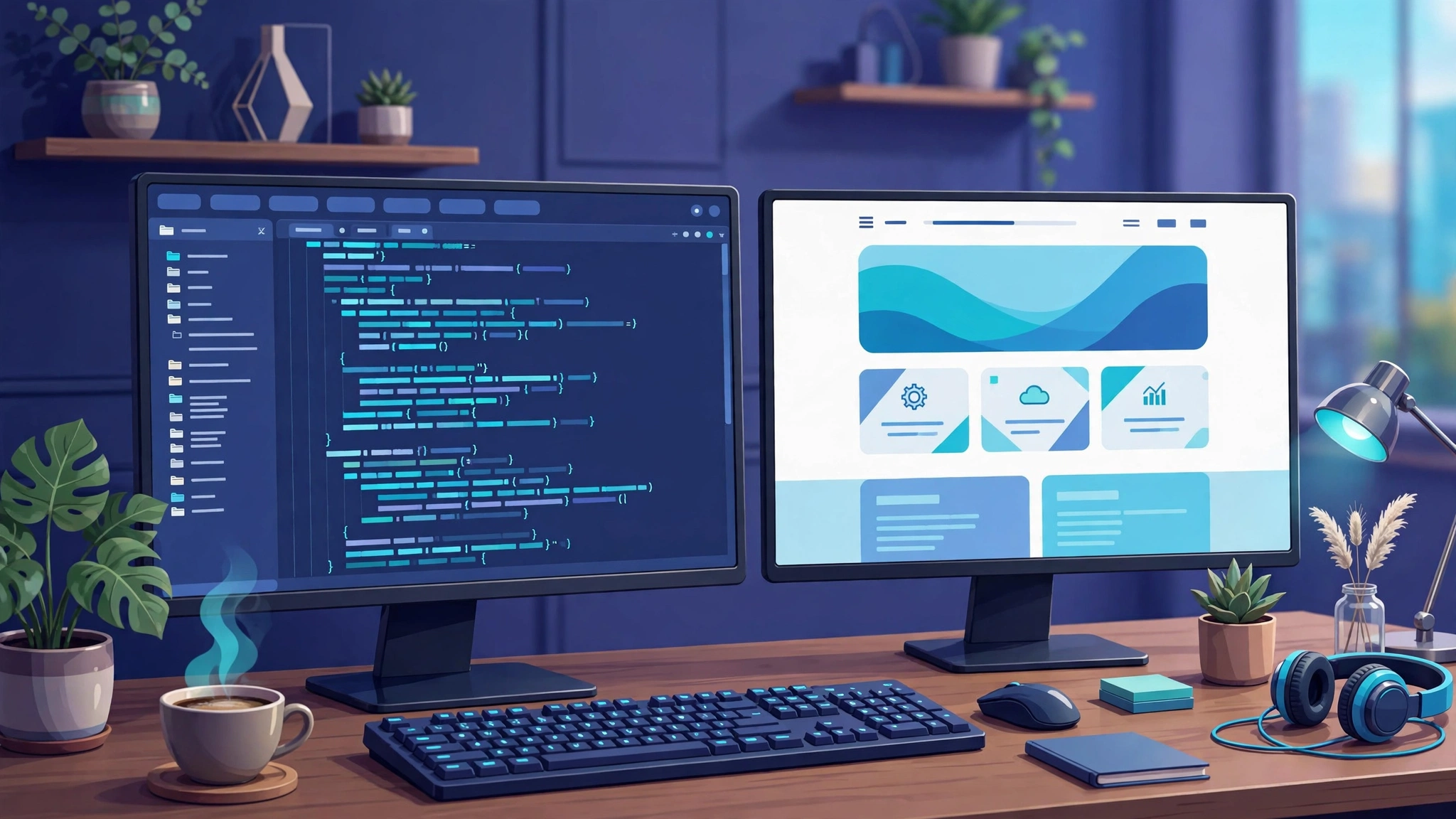

“What do custom web development services include, what do they cost, and how do you pick the right partner? A no-fluff guide for business buyers.”
Custom Web Development Services: A Practical Buyer's Guide
If you're shopping for a business website or web application, the market is confusing: page builders promise a site in an afternoon, freelancers offer "full custom builds" at suspicious prices, and agency quotes feel like a different planet. What do custom web development services actually include, who really needs them, and how do you buy them well? This guide answers that.
Custom web development means a website or web application designed and coded specifically for your business — your goals, your processes, your brand, your customers. Unlike a pre-made template, nothing is rented and nothing is generic. You own it outright, and it grows with the business instead of fighting you at every upgrade.
Who needs it? Not everyone — a brand-new solo consultant can start on a page builder. But if your site drives leads, takes bookings, processes payments, or connects to a CRM, a custom build pays for itself fast through better conversion and no monthly feature taxes.
Custom Build vs WordPress/Template vs No-Code: An Honest Comparison
WordPress and templates
WordPress is a legitimate option for content-heavy sites with standard needs. The trade-offs: templates look like thousands of other sites, plugin stacks add security and maintenance risk, and performance often suffers under layers of page-builder bloat.
No-code and page builders
Excellent for prototypes, internal tools, and simple marketing pages. They fail whenever custom logic appears: complex booking rules, multi-step quote flows, or custom integrations. You'll hit a wall, then pay twice — once for the no-code build, once for the rebuild.
Custom development
Custom website development builds exactly what the business needs — nothing rented, nothing shoehorned. You own the code. Load times are fast because there's no generic framework overhead, and integrations connect directly to your CRM, booking, and payment tools without fragile plugin chains.
The honest summary: use templates or no-code when speed and budget beat quality and flexibility. Choose custom web development services when the website is a revenue channel or a long-term asset.
What a Professional Engagement Looks Like
One of the easiest ways to judge business website development services is to ask what the process looks like. A professional engagement follows a predictable rhythm:
Discovery. The team maps your goals, customers, competitors, and the workflows the site must support before any code is written.
Design. Wireframes, then full visual designs grounded in conversion. You approve designs before development starts.
Development. Approved designs become a working site or web application — responsive, accessible, built to the agreed requirements.
QA and testing. Real devices, real browsers, real user flows — forms, payments, bookings, and integrations tested end to end.
Launch. Deployment, analytics setup, SEO basics (meta tags, sitemaps, clean URLs), speed verification, and backups.
Maintenance and support. Updates, monitoring, and a support plan keep the site secure and improving after launch.
If a vendor skips discovery and QA and goes straight from a mockup to "done," that's not a process — that's a gamble.
Technologies Commonly Used
The modern web is built on JavaScript frameworks. React is the dominant library for interactive interfaces, and Next.js builds on it with server-side rendering, strong SEO support, and excellent performance — which is why many agencies, including Santol Edge, build business sites and web application development projects on Next.js. Typical stacks add a headless CMS for content, APIs for integrations, and cloud hosting for reliability.
You don't need to be the expert — but make sure the team uses current, mainstream technology rather than obscure frameworks only they can maintain. A confident team explains its stack in plain language.
Pricing Factors and Typical Ranges
Custom web development pricing varies widely because scope varies widely. The honest drivers of cost are:
Scope and complexity. A 10-page marketing site is a different project from a booking platform with customer accounts and payments.
Design depth. Template-skinned builds are cheaper than original UX and design research.
Integrations. Each system the site must talk to — CRM, scheduling, payments, marketing automation — adds build and testing time.
Ongoing support. A maintenance plan costs more over time but keeps the site secure and improving.
As a rough guide for the US and European markets: custom web development services for a small-to-medium business typically start in the low thousands and climb with pages, design work, and integrations; custom web applications run higher and are usually quoted after discovery. Be wary of quotes dramatically below market — corners are cut somewhere, and you'll discover which after launch. Ask for itemized proposals so you compare scope, not just totals.
How to Evaluate a Web Development Partner
When comparing a web development company for businesses, look past the portfolio homepage:
Portfolio relevance. Have they built for businesses like yours? Click through their projects and judge the work, not the screenshots.
Process. Can they describe discovery, design, development, QA, and launch without hand-waving? Vague process means vague outcomes.
Communication. Do they explain technical choices in plain language? How they act during the sales process is how they'll act after you sign.
Ownership. Confirm you own the code, the domain, and the hosting accounts outright.
Post-launch support. What does maintenance cover, how fast do they respond, and what does it cost?
References. A short call with a past client tells you more than fifty review badges.
Red Flags
Dig deeper or walk away when you see:
No discovery phase: a quote based on a 15-minute call
"Unlimited revisions" or a fixed price for an undefined scope
The agency keeps control of your domain, hosting, or source code
No testing phase and no launch checklist
Obsolete or proprietary tech you can't find documentation for
No maintenance option — or maintenance that only covers their own mistakes
Pressure tactics: "this price expires today"
A Practical Buyer's Checklist
Before you sign anything, run through this list:
Goals are written down: what the site must do for the business (leads, bookings, sales, credibility)
Scope is documented page by page and feature by feature
You own the code, domain, and all accounts
Integrations are named explicitly (CRM, payments, booking, email)
SEO basics are included: clean URLs, meta tags, sitemap, page speed targets
QA covers real devices and real user flows, not just desktop checks
Launch plan includes analytics, backups, and a rollback option
Maintenance and support terms are in writing
Payment is tied to milestones, not a single upfront sum
Bring this checklist to your first call with any vendor. How they react to it tells you most of what you need to know.
Frequently Asked Questions
How long does a custom website take to build? A custom marketing site takes a few weeks to a few months from discovery to launch, depending on pages, design rounds, and integrations; web applications take longer. Any honest timeline is tied to scope — a full custom build promised in a week is usually a template.
Can you rebuild our existing website instead of starting from scratch? Often yes. Many businesses keep content and brand but rebuild the technology underneath for speed, security, and better conversion. A good partner audits the current site first and tells you honestly whether a rebuild or targeted redesign makes more sense.
Will we be able to update the website ourselves? Yes, with a proper setup. Modern builds include a content management system so your team can update pages without touching code — confirm it in the proposal and ask for a training walkthrough at handover.
What happens if we need changes after launch? That's what maintenance and support plans cover: security updates, small content and feature changes, and a defined response time for issues. Agree on the arrangement before you need it.
Do you also handle SEO and content? Technical SEO foundations — clean URLs, meta tags, sitemaps, page speed — should be part of any professional build; ongoing content and link-building are usually separate. Ask which parts are included.
How do we get started? Most start with a discovery call: you describe the business and the problem, the team proposes scope and a quote. If you'd like to talk through your project, book a free consultation at santoledge.com/contact.
Santol Edge Team
AuthorWrites extensively about generative AI, autonomous agent design, enterprise automation architectures, and customer experience engineering at Santol Edge.
Read Next

How AI Automation Helps Modern Businesses Scale 10x Faster
Discover how forward-thinking companies are deploying intelligent agents and automated pipelines to reduce overhead and boost revenue.

How AI Chatbots Transform Customer Support and Business Growth
Learn how AI chatbots improve customer response times, qualify leads, support teams, and create more consistent customer experiences.

AI Voice Agents: What They Are and How They Work
Understand where voice agents add value, how they connect with business systems, and what to consider before launching one.
Community Comments (0)
Sep 24, 2026Elisa Gabriella
VP of Operations · BrightSync
“A genuinely useful piece — the point about consolidating thin pages matches what we saw on our own platform last year. Deploying automated workflows cut roughly half our manual ticket volume and resolution speed went up significantly.”
Leave a Reply
Your email address will not be published. Required fields are marked *