
Santol Edge Team
AI Research & Engineering at Santol Edge

“AI Voice Agents for Solar Companies: The 2026 Independent Decision Guide”
AI Voice Agents for Solar Companies: The 2026 Independent Decision Guide
Running a residential solar installation business in 2026 means operating in a high-stakes, fast-moving market where speed-to-lead dictates who wins a five-figure contract. When a homeowner is looking into solar panels, battery storage, or available tax incentives, they are usually calling two or three competitors at the exact same time. If your phone goes to voicemail because your sales reps are out in the field on roof inspections, that potential five-figure install is likely gone to a competitor who picked up on the first ring.
An AI voice agent for solar companies is changing how independent installers handle inbound inquiry volume, triage lead qualification, and manage appointment setting without swelling overhead. Unlike basic automated phone trees that frustrate callers with endless menu prompts, modern conversational voice agents speak naturally, handle interruptions, answer complex questions about net metering, and write data directly back into your CRM in real time.
However, the market is flooded with vendor sales pitches promising miraculous overnight transformations. As an independent agency, our goal is to cut through the marketing noise. This guide breaks down the true high-ticket economics, six essential jobs an AI voice agent can handle, realistic platform boundaries, transparent pricing, and a practical 30-day implementation blueprint.
The High-Ticket Economics of Solar Lead Conversion
The economic reality of the solar industry is starkly different from low-ticket home services like pest control or routine plumbing. A typical residential solar installation often runs into the tens of thousands of dollars, carrying a gross profit margin that makes every single lead exceptionally valuable.
When customer acquisition costs through digital ads, door-to-door canvassing, or lead aggregators routinely run into the hundreds of dollars per lead, dropping a hot prospect is an expensive mistake. Consider the compounding effect of missed communication:
- Speed-to-lead decay: studies on lead response consistently find that reaching out within the first few minutes dramatically improves your chances of contacting and qualifying a lead — wait too long and the opportunity cools fast.
- The after-hours window: many homeowners research solar and fill out web forms or call in the evenings after work — times when office staff have gone home.
- Field rep focus: your closers and project managers should be out conducting site surveys and closing deals, not sitting by office phones waiting for general inquiries about utility bills.
Implementing an AI-powered communication layer ensures that every inbound phone call is answered promptly, day or night. For deeper insights into automating adjacent home services, you can review how similar workflows operate in our guide on AI voice agents for home services.
6 Core Jobs an AI Voice Agent Can Handle for Solar Installers
Not all tasks require human intervention. While closing a complex commercial deal or negotiating custom financing terms still demands human expertise, an AI voice agent excels at high-volume, repetitive touchpoints. Here are six operational jobs voice agents handle reliably for solar businesses:
Missed-Call Recovery
When your team is caught up on active installs or out on site surveys, incoming calls can be missed. An AI voice agent immediately intercepts missed calls by calling the prospect back within seconds, introducing itself politely, and asking how it can assist with their solar inquiry before they dial a competitor.
Site-Survey Appointment Setting
Coordinating a site survey requires gathering basic details about the home's roof orientation, shading, and average monthly electric bill. The voice agent can collect these initial parameters and sync directly with your team's calendar to book the site inspection. For parallel automation strategies in the roofing sector, check out AI voice agents for roofing companies.
Financing and Lease Pre-Qualification Q&A
Homeowners frequently have questions about tax credits, solar loans, power purchase agreements (PPAs), and utility net metering policies. The AI can answer these standard FAQs accurately, referencing your specific state regulations and financing partners — while staying clear of anything that looks like lending advice.
Storm-Season Call Surge Handling
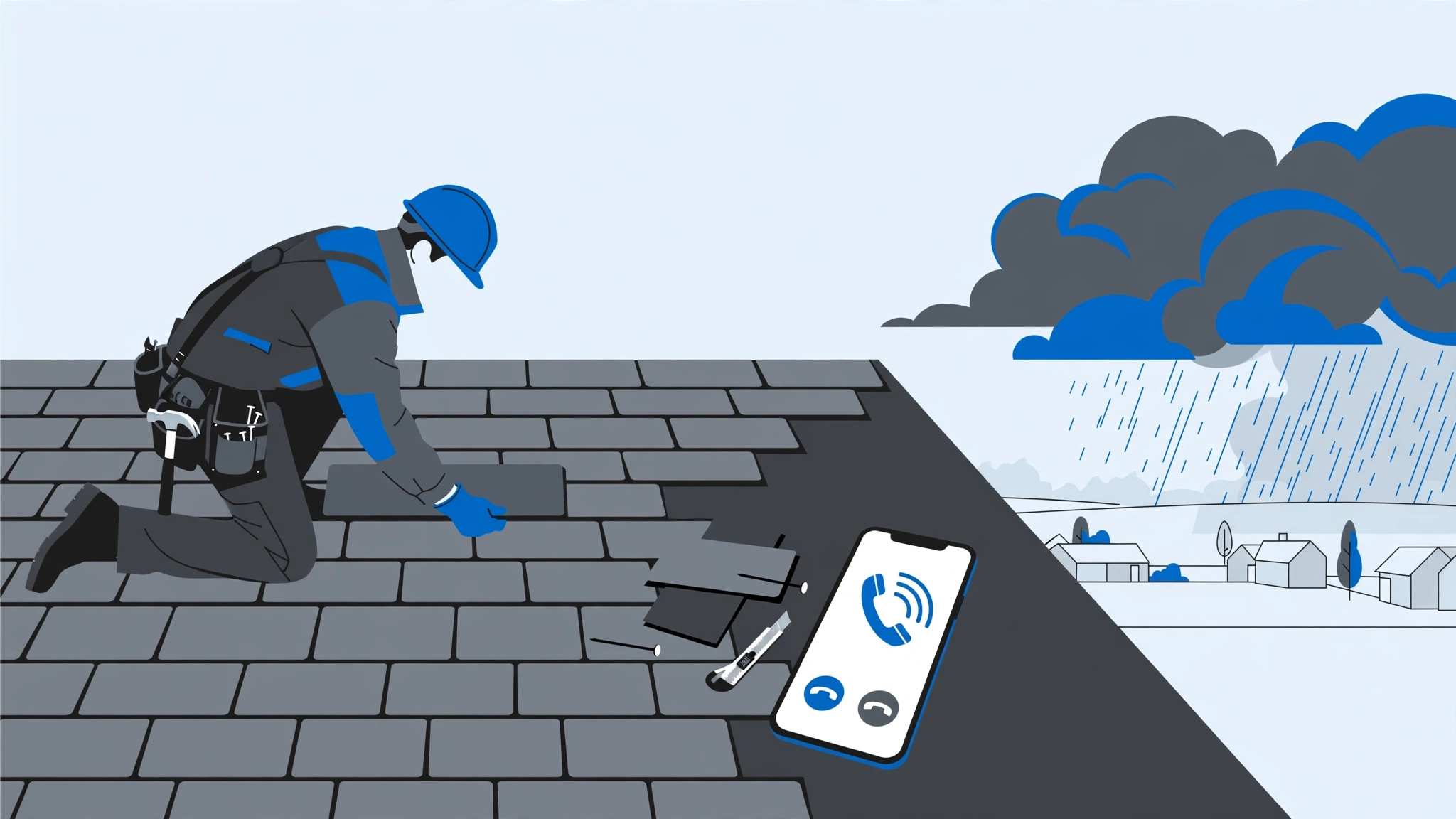
Severe weather events often spike inquiries regarding roof damage, panel inspections, or battery backup systems. During sudden traffic spikes, human receptionists get overwhelmed. Voice agents scale to handle many simultaneous callers, so no homeowner is left listening to a busy signal.
Missed-Call Text-Back Integration
Sometimes prospects prefer texting over talking. If a call drops or a user prefers messaging, the system can seamlessly transition the conversation to an SMS thread, keeping the engagement alive and capturing contact details for your sales pipeline.
CRM Write-Back
Manual data entry is a primary source of CRM errors and neglected follow-ups. After every call, the voice agent summarizes the transcript, extracts key data points (such as monthly electric bill amount, utility provider, and roof type), and writes those records directly into your CRM.
Platform vs. Custom Build: Understanding Costs and Boundaries
When evaluating how to deploy conversational voice technology, solar business owners generally face two paths: off-the-shelf software templates or custom-engineered architectures.
Off-the-shelf tools often look attractive due to low starting subscription fees, but they frequently fail when confronted with industry-specific nuance — such as regional utility names, complex incentive structures, or specific CRM database schemas. Custom builds, by contrast, are tailored to your existing tech stack.
How the two paths compare:
- Customization: standard SaaS templates offer rigid templates with limited branching; a custom agency deployment is fully tailored to solar workflows.
- CRM integration: templates offer basic webhooks with limited field mapping; custom builds deliver deep, bi-directional sync.
- Pricing structure: templates mean a monthly SaaS tier plus hidden markups; custom means transparent setup plus usage pricing.
- Voice naturalness: templates often sound robotic with stiff inflection; custom builds deliver human-like conversational flow.
Transparent Pricing Realities
To keep your budgeting straightforward, development and deployment costs should be transparent. Professional implementation typically starts with an AI Voice Agent Setup $1,200 one-time fee for standard configurations, while highly custom enterprise architectures are provided via fixed quotes after a free consultation. Per-minute voice usage is estimated transparently during scoping so you never face surprise overages.
For other complementary automation needs, baseline investment benchmarks include:
- AI Website Chatbot: $499 one-time
- AI Automation Audit: $149 one-time / Lead Qualification: $699 one-time
- Appointment Booking: $799 one-time / CRM Setup: $999 one-time (with optional ongoing support ranging from $299 to $999/month)
- Custom AI Web Applications: from $2,500
- Mobile App Development: from $3,500
All prices in USD. You can explore our professional engineering options directly on our AI voice agent development services page.
Honest Limits: Where AI Must Step Aside
A responsible independent guide must also highlight where AI voice agents fall short. Knowing the boundaries prevents client dissatisfaction and compliance issues.
- Financing negotiation and closing: while an AI can pre-qualify a lead based on credit tier or electric bills, actual loan terms, contract signing, and final closing must be handled by licensed human representatives.
- Complex engineering assessments: roof structural integrity, electrical panel upgrades, and precise shading analysis require human engineering expertise. AI should only book the survey, not diagnose structural safety.
- Mandatory AI disclosure and call consent: depending on your operating state and federal regulations, callers should be transparently informed that they are interacting with an AI assistant. Always follow applicable call-recording consent rules at the start of every interaction. (This is general information, not legal advice.)
Your 30-Day Rollout Blueprint
Adopting new technology should not disrupt your current sales pipeline. A structured 30-day implementation plan minimizes friction and ensures smooth adoption by your sales team:
- Days 1–7 (scoping and mapping): audit your current inbound call logs, CRM workflows, and top homeowner objections. Define the exact script logic and handoff triggers for human reps.
- Days 8–18 (development and voice training): build the custom conversational models, integrate telephony routing, and connect the CRM write-back pipelines.
- Days 19–25 (testing and edge-case simulation): run rigorous internal tests. Simulate difficult customer interruptions, tricky utility questions, and after-hours call surges to refine the agent's responses.
- Days 26–30 (soft launch and team handoff): roll out the voice agent to a fraction of your traffic or after-hours windows. Train your sales team on how to read the auto-generated CRM summaries before jumping on follow-up calls.
Frequently Asked Questions
Can an AI voice agent replace my human solar sales reps?
No. An AI voice agent is designed to handle top-of-funnel tasks like missed-call recovery, initial qualification, and appointment booking. Closing high-ticket solar contracts, conducting site surveys, and building trust with homeowners still require skilled human professionals.
How does the AI voice agent integrate with my existing CRM?
Custom voice deployments connect directly to your CRM via secure APIs or native webhooks. Whenever a call concludes, the agent updates contact records, logs call transcripts, and sets task reminders for your sales team automatically.
Is the caller required to know they are speaking with an AI?
Yes. Best practices and various regulatory frameworks recommend that voice agents clearly disclose their artificial identity early in the conversation to maintain transparency and build immediate trust with the homeowner.
What happens if the caller asks a question the AI doesn't understand?
When faced with complex technical or non-standard queries, the voice agent is programmed to gracefully acknowledge the limitation, capture the caller's details, and schedule a prompt callback from a human specialist.
How are voice usage costs calculated?
Voice usage is typically billed on a per-minute basis covering telephony and AI model inference. These operational costs are estimated during your initial scoping phase based on your average monthly inbound call volume.
Ready to capture every inbound lead and reduce missed-call drop-off without expanding your administrative overhead? Contact us to discuss your workflow requirements today.
Santol Edge Team
AuthorWrites extensively about generative AI, autonomous agent design, enterprise automation architectures, and customer experience engineering at Santol Edge.
Read Next

How AI Automation Helps Modern Businesses Scale 10x Faster
Discover how forward-thinking companies are deploying intelligent agents and automated pipelines to reduce overhead and boost revenue.
How AI Chatbots Transform Customer Support and Business Growth
Learn how AI chatbots improve customer response times, qualify leads, support teams, and create more consistent customer experiences.

AI Voice Agents: What They Are and How They Work
Understand where voice agents add value, how they connect with business systems, and what to consider before launching one.
Community Comments (0)
Oct 22, 2026Elisa Gabriella
VP of Operations · BrightSync
“A genuinely useful piece — the point about consolidating thin pages matches what we saw on our own platform last year. Deploying automated workflows cut roughly half our manual ticket volume and resolution speed went up significantly.”
Leave a Reply
Your email address will not be published. Required fields are marked *