
Santol Edge Team
AI Research & Engineering at Santol Edge
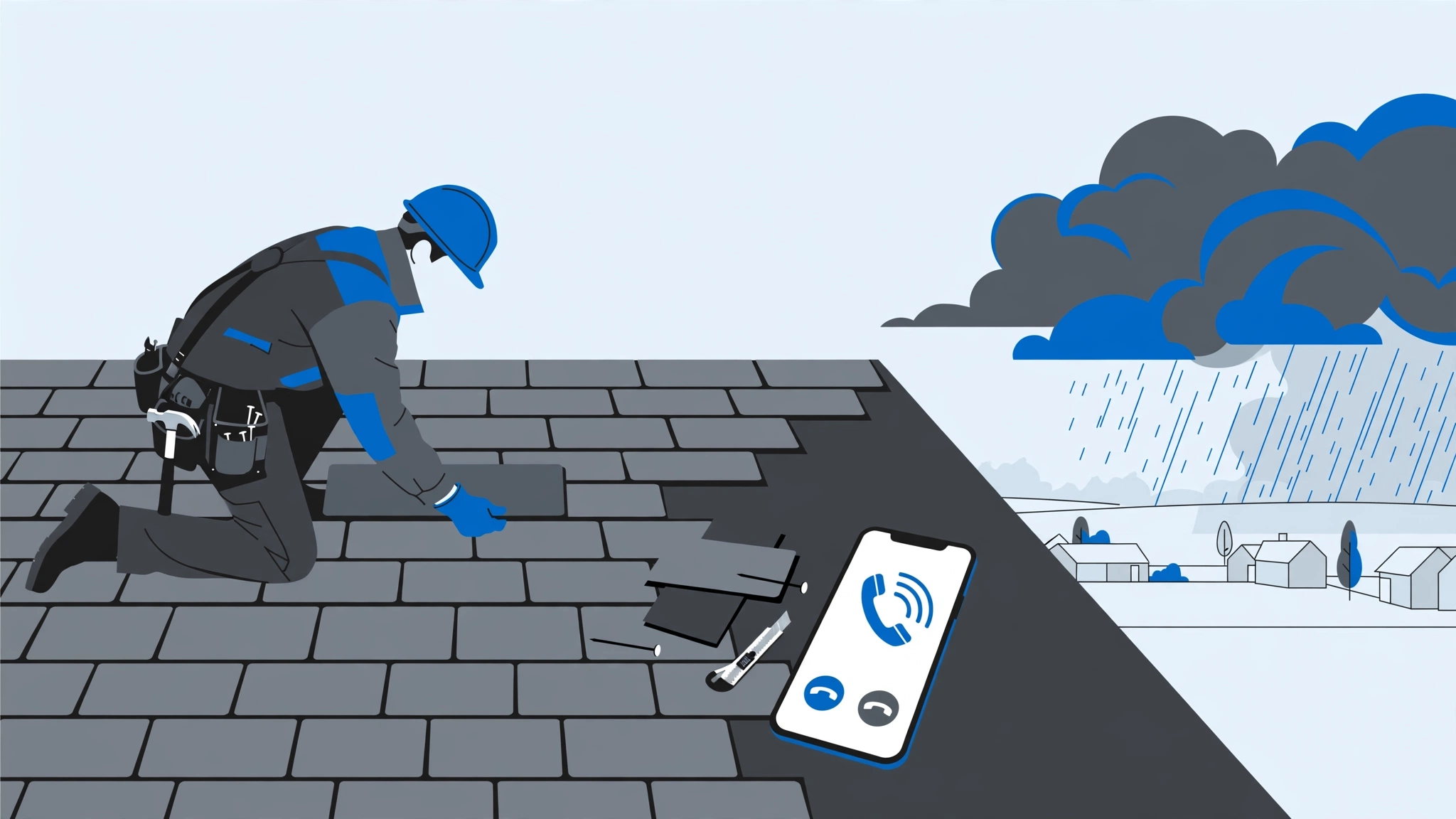

“AI Voice Agents for Roofing Companies: Never Miss a Storm-Season Call Again”
AI Voice Agents for Roofing Companies: Never Miss a Storm-Season Call Again
Yes — an AI voice agent for roofing companies can answer every single inbound phone call 24/7, qualify the homeowner, and book an inspection directly into your calendar without a human ever picking up the phone. When a severe thunderstorm rolls through your service area at 2:00 AM, homeowners wake up to water dripping through their ceilings and start calling local contractors immediately; whoever picks up the phone first usually wins the job, while unanswered calls go straight to your competitors. Modern roofing businesses are increasingly turning to intelligent voice automation to capture these high-value leads instantly, eliminating missed calls while keeping office staff focused on field operations, material ordering, and project management.
The Real Cost of Missed Calls in the Roofing Industry
Roofing is fundamentally an outdoor, mobile trade. When your crew is up on a steep pitch three stories high, hammering shingles or laying underlayment, nobody can safely stop to answer a ringing cell phone. If your single office manager is away from the desk, at lunch, or already on another line, the call rolls over to voicemail.
In the roofing industry, voicemail is essentially a dead end. In practice, most homeowners who reach a roofing company voicemail simply hang up and dial the next contractor on their Google search results instead of leaving a message. During major storm damage call answering surges, your phone lines can become completely overwhelmed with dozens of simultaneous callers. Traditional human answering services often lack technical roofing knowledge — they cannot distinguish between a minor missing shingle and an active, catastrophic interior ceiling collapse, and they rarely connect directly into your live scheduling software to lock down an inspection time.
Missed call recovery roofing strategies have evolved past basic message-taking services. When a homeowner has water pouring into their living room, they want immediate reassurance, an understanding of their situation, and a confirmed appointment time. An automated assistant ensures that every ring is answered promptly, transforming a chaotic weather event into an organized pipeline of booked inspections.
Six Core Jobs a Roofing Voice Agent Handles
Deploying an AI receptionist for roofing companies brings structured, reliable execution to your inbound communications across six distinct operational areas.
1. Around-the-Clock Call Answering
Your phone system answers instantly, day or night, weekday or weekend. Whether a homeowner calls at noon on a Tuesday or midnight on a Sunday, the assistant greets them politely, represents your brand professionally, and handles their inquiry without making them wait on hold.
2. Intelligent Emergency Triage Ladder
Not every call requires the same urgency. The system sorts incoming requests using a clear priority ladder:
- Active Leak (High Priority): Water actively entering living spaces. The system captures the address, instructs the homeowner on temporary damage mitigation (such as placing buckets or moving furniture), and flags the alert for immediate dispatch or emergency callback.
- Storm-Damage Inspection Request (Medium Priority): Recent hail or high winds have affected the roof or siding. The system logs the date of the storm, asks about visible granule loss or dented gutters, and schedules an inspection.
- Routine Quote or Maintenance (Standard Priority): General inquiries about roof replacements, age-related wear, or gutter cleaning. The system gathers project scope details and books a standard consultation.
3. Free-Inspection Booking Into Your Calendar
Instead of telling a homeowner someone will call them back to schedule, the voice agent checks your live calendar (such as Google Calendar, Outlook, or JobNimbus) in real time. It offers available inspection windows, confirms the homeowner's preferred time, and automatically populates the calendar entry with all gathered project details.
4. Insurance-Claim Intake Questions
Navigating insurance claims is central to modern roofing sales. The voice agent systematically asks critical intake questions: Is the homeowner planning to file an insurance claim? Has an adjuster already inspected the property? What is their insurance carrier? This information helps your sales reps prepare accurate inspection folders before driving out to the site.
5. Missed-Call Text-Back Fallback
If a potential client hangs up before the voice agent connects, or if text communication is preferred, the system instantly triggers an automated SMS text-back so the lead stays warm. This dual-channel approach ensures maximum lead capture.
6. Estimate Follow-Up Calls
Following up on sent estimates is essential for closing deals. The voice agent can place outbound calls or send structured follow-ups to homeowners who received an estimate a few days prior, answering basic questions about financing or warranty options and transferring interested clients directly to a project manager.
What the Voice Agent Asks on Every Call
To make sure your sales team walks into every inspection fully prepared, the voice agent follows a conversational script designed to capture essential project data naturally. It never sounds like a robotic questionnaire; instead, it guides the conversation smoothly while collecting:
- Property Status: Are they the homeowner or a tenant? (Renters are filtered out unless they have explicit landlord authorization.)
- Roof Age and Material: Is the roof asphalt shingle, metal, tile, or flat? Roughly how old is the current installation?
- Leak Location and Severity: Is water actively dripping, staining drywall, or confined to the attic?
- Insurance Involvement: Is this an out-of-pocket replacement or an insurance claim stemming from a recent storm?
- Contact Information: Name, property address, phone number, and email address for confirmation notifications.
Seamless Integration with Your CRM, Calendar, and Dispatch Tools
You do not need to abandon your existing software stack to implement voice automation. Modern integration platforms like Zapier, Make, or direct API connections link your AI voice agent directly to the tools your team already uses every day.
When a call concludes, the system instantly updates your CRM (such as JobNimbus, AccuLynx, or HubSpot) with the full call transcript, audio recording link, and structured data tags. Simultaneously, the appointment is written to your dispatch calendar, and an instant notification (via SMS or Slack) alerts your sales manager or on-call project manager that a new inspection has been locked in. This eliminates manual data entry, prevents lost sticky notes, and ensures leads are acted upon within minutes.
AI Voice Agent vs. Human Answering Service vs. Office Staff
Choosing how to handle your phones depends on your company's size, budget, and call volume. Here is an honest breakdown of the three main options available to roofing contractors today.
AI Voice Agent
An automated voice system operates with zero fatigue, handling unlimited simultaneous calls without ever putting a homeowner on hold. It integrates directly with your scheduling software to book appointments instantly, operating 24/7 at a fraction of the cost of full-time human staffing. While it handles standard intake and triage exceptionally well, it cannot perform physical roof inspections or negotiate complex commercial contracts.
Human Answering Service
Traditional live answering services provide a human voice, which some older homeowners appreciate. However, typical operators lack specific roofing knowledge, frequently make spelling errors when taking down addresses, and rarely integrate deeply into your calendar — usually resulting in a message that sits until your office reopens. They also charge high per-call or per-minute fees that scale steeply during heavy storm seasons.
In-House Office Staff
Dedicated office employees build personal rapport with clients, handle complex customer service issues, and manage day-to-day office administration smoothly. However, human staff cannot work 24/7 without incurring massive overtime costs, and a single receptionist can only handle one phone call at a time, leaving subsequent callers stranded during peak demand windows.
Cost Reality and Investment
Understanding the financial investment helps you evaluate the potential return on investment. Implementing an AI solution is far more cost-effective than hiring additional administrative staff.
AI Voice Agent Setup: $1,200 one-time from an agency, which includes custom prompt engineering, CRM integration, workflow building, and rigorous testing. This is paired with usage-based per-minute voice charges estimated during scoping based on your expected monthly call volume. Fixed quotes are provided after a free consultation.
Alternative Add-Ons: Many roofers also deploy an AI Website Chatbot $499 one-time to capture website visitors who prefer typing over calling.
Ongoing Fees: Monthly costs typically consist of standard telephony carrier fees and usage minutes, making it significantly cheaper than a traditional answering service or part-time receptionist.
For more details on implementation costs, read our guide on AI voice agent cost breakdown. To understand how automation impacts your bottom line, explore our AI automation ROI guide. For a broader look at operational efficiency, review AI automation cost vs. hiring. Additional strategies are covered in our comprehensive AI voice agent for business guide.
Guardrails: What the Voice Agent Must NEVER Do
Automation is powerful, but strict guardrails must be established to protect your business liability and maintain customer trust.
Never Negotiate Price: The AI must never quote square-footage rates, offer discounts, or discuss payment terms. Its sole job is information gathering and inspection booking.
Never Promise Repair Timelines: Because weather conditions and material supply chains fluctuate, the agent should never promise that a crew will arrive on a specific day before the inspection has been officially verified by your production manager.
Never Give Insurance-Coverage Advice: The agent must never tell a homeowner whether their insurance policy will cover a claim. It should only ask if they plan to file and note the carrier.
Mandatory AI Disclosure: At the very start of the conversation, the system clearly and politely states that it is an automated assistant representing your company.
Call-Recording Consent: Where required by local regulations, the system announces that the call may be recorded for quality and training purposes.
A Practical 30-Day Rollout Plan
Adopting voice automation does not happen overnight, but a structured rollout ensures a smooth transition without disrupting your current operations.
Week 1: Scoping and Scripting. Map out your most common inbound call types, emergency criteria, and calendar availability rules. Review call recordings from previous storm seasons to identify exact customer phrasing.
Week 2: Build and CRM Integration. Configure the voice agent's conversational logic, connect your calendar and CRM via API or Zapier, and set up notification alerts for your sales team.
Week 3: Rigorous Internal Testing. Run dozens of test calls simulating active leaks, routine inquiries, and dropped connections. Refine prompt responses to ensure natural cadence and accurate data transfer.
Week 4: Launch and Monitoring. Route a portion of your inbound calls (or after-hours overflow) to the AI agent. Monitor transcripts daily, tweak responses based on real-world interactions, and gradually scale to 24/7 live operation.
Honest Limits of Roofing AI
While voice automation solves missed-call fatigue, it is not a silver bullet. An AI voice agent cannot physically climb a ladder to inspect flashing, it cannot negotiate deductible amounts with stubborn insurance adjusters, and it cannot replace the human trust built when an experienced project manager sits at a homeowner's kitchen table. Think of the voice agent as your elite front-line dispatcher — it captures the lead, secures the appointment, and hands over clean data so your human experts can close the deal.
Frequently Asked Questions
Can an AI voice agent understand homeowners who are stressed or panicked during a storm?
Yes. Modern speech recognition models handle emotional, rapid, or fragmented speech effectively. The system is programmed to remain calm, steady, and reassuring, guiding panicked callers through essential safety steps and gathering their property address quickly without becoming flustered.
How does the AI know when our roofing crew is available for an inspection?
The voice agent connects directly to your team's digital calendar in real time via secure API integrations. It reads your pre-set availability rules — such as morning and afternoon inspection slots — and only offers open time windows that match your operational schedule.
What happens if a homeowner asks a complex technical question the AI doesn't know?
If a caller asks an intricate technical question regarding specialized commercial roofing membranes or obscure warranty terms, the AI recognizes its boundary, politely explains that it will have a senior project manager review the specific question, and logs an urgent callback request for your team.
Can the voice agent handle both English and Spanish speaking callers?
Yes. Many advanced voice agents feature bilingual capabilities, automatically detecting whether the inbound caller is speaking English or Spanish and seamlessly switching to the appropriate language to qualify and book the inspection.
Will homeowners feel frustrated talking to an artificial intelligence?
Most homeowners care far more about speed and responsiveness than whether a human picks up on the first ring, especially during an emergency. By stating clearly at the outset that it is an automated assistant and immediately booking their inspection without putting them on hold, caller satisfaction typically remains high.
Get a Free Consultation
Ready to stop losing profitable roofing jobs to missed calls and voicemail boxes? Let us review your current phone workflow and design a custom voice automation strategy for your business. Learn more about our AI voice agent development services.
Santol Edge Team
AuthorWrites extensively about generative AI, autonomous agent design, enterprise automation architectures, and customer experience engineering at Santol Edge.
Read Next

How AI Automation Helps Modern Businesses Scale 10x Faster
Discover how forward-thinking companies are deploying intelligent agents and automated pipelines to reduce overhead and boost revenue.

How AI Chatbots Transform Customer Support and Business Growth
Learn how AI chatbots improve customer response times, qualify leads, support teams, and create more consistent customer experiences.

AI Voice Agents: What They Are and How They Work
Understand where voice agents add value, how they connect with business systems, and what to consider before launching one.
Community Comments (0)
Oct 18, 2026Elisa Gabriella
VP of Operations · BrightSync
“A genuinely useful piece — the point about consolidating thin pages matches what we saw on our own platform last year. Deploying automated workflows cut roughly half our manual ticket volume and resolution speed went up significantly.”
Leave a Reply
Your email address will not be published. Required fields are marked *