
Santol Edge Team
AI Research & Engineering at Santol Edge
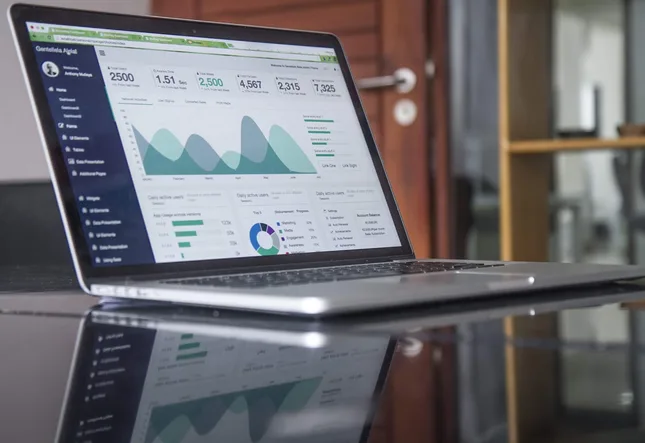

“AI Voice Agent Cost: What Actually Determines the Price in 2026”
AI Voice Agent Cost: What Actually Determines the Price in 2026
So how much does an AI voice agent cost? The honest answer is that it has two parts: a one-time setup fee to design, build, and configure your agent — and ongoing usage charges from the voice platform that runs your calls. The setup number can be fixed in writing before work begins. The usage part depends on your call volume, and it should be estimated during scoping so you see the full picture before you commit.
At Santol Edge, the AI Voice Agent Setup is a $1,200 one-time fee, and you get a fixed quote before any work begins — so the setup price never moves. Ongoing platform usage is billed by the voice platform itself, and we help you estimate it during scoping so there are no surprises later. The consultation is free.
This guide breaks down every piece of the bill, the questions that move your quote, and how to keep your costs down — without the pricing-page maze.
Why AI Voice Agent Pricing Feels Confusing
If you've already browsed a few AI voice agent pricing pages, you've probably noticed that comparing them is harder than it should be. There are three reasons for that.
First, the price is layered. You are not buying one thing — you are paying for the voice platform, the phone number, the AI model that does the thinking, and the voice that does the talking. Some providers bundle all of this into one rate; others charge for each piece separately. Both approaches are legitimate, but you can't compare a bundled price against an itemized one without doing homework.
Second, everyone bills differently. Some platforms bill per minute of conversation, others per call, others per month with usage tiers. A flat monthly plan can mean very different things depending on how many minutes are included — and what counts as a billable minute.
Third, setup quotes vary a lot by complexity. A simple inbound agent that answers FAQs costs far less to build than an outbound sales agent connected to your CRM with a custom voice. When a vendor gives you a quote without asking about your use case, be cautious — the real price often comes out later.
The Pieces of an AI Voice Agent Bill
Here's the anatomy of a real AI voice agent bill. Once you understand the pieces, every quote you see becomes easy to read.
1. Setup and build (one-time)
This is the design-and-build work that happens before your agent takes its first call:
Call flow design — mapping what the agent should do: greet, answer FAQs, take bookings, transfer to a human.
Script and knowledge base — writing the prompts and loading your business information (hours, prices, services, policies).
Voice selection and tuning — choosing and adjusting the voice so it sounds natural for your business.
Integrations — connecting to your calendar, CRM, or booking system so the agent can actually book appointments, not just talk about them.
Testing — running test calls and fixing the awkward moments before real customers hear them.
Number provisioning — setting up the phone number and call routing.
Simpler builds (FAQ answering, basic call handling) take less work. Anything with CRM integration, custom voices, or complex decision logic takes more. This is the one line item that should always come with a fixed quote.
2. Platform usage (ongoing)
The voice platform that runs your conversations charges for usage — most commonly per minute of conversation. This is usually the biggest ongoing line item. Higher call volume means a higher monthly bill, but it also means a lower cost per call, since the setup fee is spread over more conversations.
3. Phone numbers and telecom (ongoing)
Your agent needs a real phone number to answer calls on. For a single-location small business, this is usually the smallest part of the bill. It grows if you run campaigns across several numbers or need toll-free lines.
4. Ongoing tuning and support (optional but wise)
After launch, the agent needs occasional updates: new FAQs, seasonal hours, tweaked call scripts. Some providers include a maintenance window in the setup; others charge a small monthly retainer. Ask about this before you sign — it's the line item most buyers forget.
What Moves Your Quote: 6 Questions a Good Provider Asks
When you request a quote, these are the questions a good provider will ask — and the answers that change the price.
Inbound or outbound? Inbound agents (answering your customers) are the standard build. Outbound agents (appointment reminders, follow-ups, lead reactivation) need dialing logic, compliance handling, and retry rules — slightly more setup work.
Does it need your CRM or calendar? An agent that books real appointments into your calendar or logs calls into your CRM needs integration work. It's one of the biggest cost drivers — and also one of the biggest value drivers.
Custom voice or standard? Standard included voices keep costs down. A premium or cloned brand voice adds an extra usage layer. Most businesses start with the included voice and only upgrade if callers complain or the brand demands it.
How complex are the calls? Answering "what are your hours?" is simple. Handling "reschedule my appointment, and by the way, is the senior technician available Thursday?" needs more design, testing, and a stronger AI model.
What is your call volume? Higher volume means a higher monthly platform bill but a lower cost per call. It also changes which platform pricing model is cheapest for you.
Any other languages? Multilingual agents need extra configuration and testing per language.
If a provider quotes you a number without asking most of these, they're guessing — and guesses get revised later.
How to Keep Your AI Voice Agent Costs Down
Five practical steps, roughly in order of impact:
Start with one job, not five. Launch the agent to handle your most common call type first (usually appointment booking or FAQs). Add complexity after it's working and earning its keep.
Pick the right platform for your volume. Some platforms suit low call volumes; others reward high volume with better rates. Do the math for your minutes — this is exactly what a good scoping call covers.
Use the included voice first. Upgrade to a premium voice only if callers complain or your brand demands it. It adds cost without adding capability.
Keep calls short by design. An agent that answers the question and books the appointment quickly costs less per call than one that chats. Good call-flow design is a cost control measure.
Review usage monthly for the first quarter. Check which calls run long and why. Often one confusing FAQ or one missing piece of information is responsible for most of the wasted minutes — fix it once and the savings repeat every month.
AI Voice Agent vs. the Alternatives
Cost only matters in context. Here's how an AI voice agent compares with the two options most businesses consider — qualitatively, so you can judge the fit.
AI voice agent vs. live answering service vs. full-time receptionist — how they compare:
Availability: AI voice agent — 24/7; live answering service — 24/7 (shared agents); full-time receptionist — business hours only.
Call capacity: AI voice agent — handles multiple calls at once; live answering service — can queue at peak times; full-time receptionist — one call at a time.
Consistency: AI voice agent — same script every call; live answering service — varies by agent on shift; full-time receptionist — varies by person.
Best for: AI voice agent — high or after-hours call volume, appointment booking, FAQ handling; live answering service — businesses that want a human voice without hiring; full-time receptionist — front-desk presence plus in-person tasks.
A few honest observations. A live answering service looks affordable on a base plan — until you exceed the included minutes and overage rates kick in. That's where AI voice agents pull ahead: there's no penalty for volume. A full-time receptionist, meanwhile, does far more than answer phones — greeting visitors, handling mail, office tasks — so it's not an apples-to-apples comparison. But if the job is mostly answering calls, the cost gap is worth examining honestly.
The middle path many businesses choose is a hybrid: the AI voice agent handles routine calls 24/7, and complex or sensitive calls transfer to a human. You keep the human touch where it matters and stop paying for it where it doesn't.
What an AI Voice Agent Costs at Santol Edge
Here's our pricing, exactly as listed on our site:
AI Voice Agent Setup — $1,200 one-time. Design, build, voice tuning, integrations, and testing, all covered.
Fixed quote before any work begins. The number you approve is the number you pay — no surprise invoices halfway through.
Ongoing platform usage is billed by the voice platform on top of that. During scoping, we help you pick the platform that fits your call volume and estimate the usage, so you see the full picture before committing.
The consultation is free. Bring your call volume and your must-have features, and we'll turn them into a fixed quote in one conversation.
Frequently Asked Questions
How much does an AI voice agent cost per month?
It depends on your call volume — the voice platform bills for usage, so a business answering a handful of calls a day pays less than one running hundreds. The setup fee is the fixed part: at Santol Edge it's $1,200 one-time. Get your usage estimated during a free consultation rather than guessing from a pricing page.
What is the cheapest way to run an AI voice agent?
Start with a simple build (FAQ answering, basic call handling), use the platform's included voice, and launch for your most common call type first. Add integrations and complexity only after the agent is working and earning its keep.
Is an AI voice agent cheaper than a receptionist for phone handling?
For phone handling specifically, usually yes — an AI agent costs less per month than staffing phones around the clock, and it never misses a call at 9 PM on a Sunday. A receptionist still wins for everything in-person: greeting visitors, handling mail, and the tasks no phone agent can do.
Do AI voice agents charge per minute or per call?
Most platforms charge per minute of conversation, billed in small increments. A few managed providers charge per call or per month with usage tiers. Always confirm whether billing is per minute or per call before comparing two quotes — a cheap per-call rate can be expensive if your calls run long.
How much does it cost to set up an AI voice agent?
It depends on complexity: a basic FAQ-answering agent takes less build work than one with CRM integration, custom voices, or outbound calling. At Santol Edge, the setup is $1,200 one-time with a fixed quote agreed before work begins. Whoever you choose, get the scope and the fixed price in writing.
Can I get a fixed price before starting?
You should insist on it. Any reputable provider can scope your use case and give you a fixed setup quote. At Santol Edge, you receive a fixed quote before any work begins, and the consultation is free.
The Bottom Line
AI voice agent pricing isn't mysterious once you see the pieces: a one-time setup to build and configure your agent, ongoing platform usage that scales with your call volume, a small telecom line item, and optional tuning support. Get the setup price fixed in writing, get the usage estimated for your call volume, and compare alternatives on fit — not just on the headline number.
Ready to see what an AI voice agent would cost for your call volume? Get a Free Consultation — Contact us.
Santol Edge Team
AuthorWrites extensively about generative AI, autonomous agent design, enterprise automation architectures, and customer experience engineering at Santol Edge.
Read Next

How AI Automation Helps Modern Businesses Scale 10x Faster
Discover how forward-thinking companies are deploying intelligent agents and automated pipelines to reduce overhead and boost revenue.
How AI Chatbots Transform Customer Support and Business Growth
Learn how AI chatbots improve customer response times, qualify leads, support teams, and create more consistent customer experiences.

AI Voice Agents: What They Are and How They Work
Understand where voice agents add value, how they connect with business systems, and what to consider before launching one.
Community Comments (0)
Sep 24, 2026Elisa Gabriella
VP of Operations · BrightSync
“A genuinely useful piece — the point about consolidating thin pages matches what we saw on our own platform last year. Deploying automated workflows cut roughly half our manual ticket volume and resolution speed went up significantly.”
Leave a Reply
Your email address will not be published. Required fields are marked *