
Santol Edge Team
AI Research & Engineering at Santol Edge
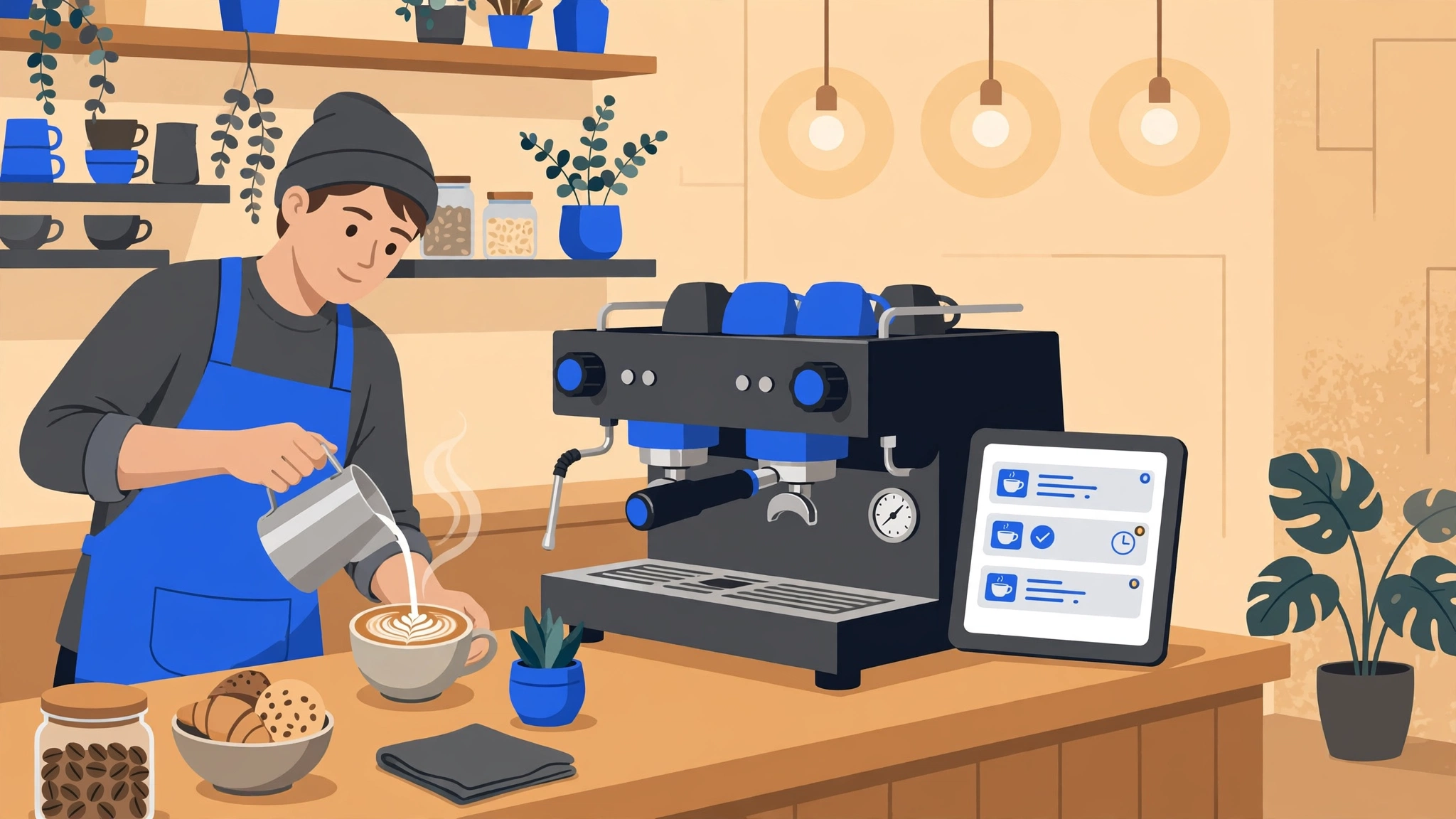

“Mobile App for Moving Companies: When Do You Need One and What Should It Include?”
Mobile App for Moving Companies: When Do You Need One and What Should It Include?
For local and long-distance moving company owners, scaling operations often brings a pivotal software dilemma: should we build a custom native mobile app, or is a responsive mobile website sufficient? Operating a moving business involves juggling customer quote requests, detailed home inventory lists, crew scheduling, fleet dispatching, and day-of-move communication. Deploying a dedicated mobile app for moving companies can streamline these complex workflows, but determining whether your business is ready for a custom software build requires an honest assessment of your operational bottlenecks, customer volume, and budget.
Website vs. Mobile App: When Does a Moving Company Need an App?
Before investing capital into application development, moving operators must evaluate whether an app solves a problem that a well-optimized mobile website cannot.
A high-performing mobile website is essential for every mover. It handles initial lead capture, general pricing inquiries, contact forms, and service area lookups. However, a native mobile application becomes valuable when your workflows require persistent, offline-capable, device-specific hardware features.
Consider building a custom mobile app if your operations involve:
- Crew and driver management: field crews needing offline-capable bill of lading (BOL) signatures, photo condition logs, and real-time punch clocks.
- Complex virtual surveys: allowing customers or in-home estimators to record room-by-room video inventories directly tied to a database.
- Real-time GPS tracking: live-tracking truck locations for dispatchers and sending automated arrival notifications to clients.
To ensure your software concept is viable before committing significant capital, reviewing a structured MVP app development guide can help you scope out core features without over-engineering your first version.
Core Modules of a Moving Company App
If you decide to move forward with application development, your architecture should be split into distinct portals tailored to your primary user groups: the customer, the moving crew, and the back-office dispatcher.
+-------------------------------------------------------------+| The Moving Company App Architecture |+-------------------------------------------------------------+| [Customer Portal] --> Self-service inventory checklist|| Virtual survey video upload || Move day status & payment || || [Crew & Driver Portal] --> Digital Bill of Lading (BOL) || Pre/post-trip truck inspections || Item condition & damage photos || || [Dispatcher Dashboard] --> Live GPS tracking & routing || Crew schedule synchronization || CRM & estimate management |+-------------------------------------------------------------+
The Customer-Facing Portal
For clients preparing for a stressful relocation, an app can provide immense peace of mind. Key features include an interactive inventory checklist where users can tag furniture and boxes room by room, secure upload portals for virtual video walkthroughs, and real-time status updates on move day.
The Crew and Driver Module
Your field workers need tools that withstand drops, low cellular connectivity in apartment buildings, and fast-paced loading environments. A crew-focused mobile module enables digital Bill of Lading (BOL) sign-offs on glass screens, photo-logging of pre-existing furniture scratches to mitigate damage claims, and digital timecard tracking.
The Build-vs-Buy Decision for Dispatch Software
Before commissioning custom development, take an honest inventory of what already exists. The moving industry has mature off-the-shelf software for dispatching, CRM, and estimates — and for many operators, configuring an existing platform beats building one:
- Buy when your needs are standard: dispatch boards, crew scheduling, estimate templates, and QuickBooks-style invoicing are solved problems. Existing moving software handles them today.
- Build when your workflow is genuinely unusual: proprietary pricing algorithms, multi-warehouse storage orchestration, franchise-specific compliance flows, or customer experiences you treat as a competitive moat.
- Hybrid when you need both: many movers run proven dispatch software for the back office and build a lightweight custom app only for the customer-facing or crew-facing layer, integrated via API.
The honest math: every month you spend building a dispatch board that already exists is a month your crews still run on paper. Start with the bottleneck that costs you the most — usually crew paperwork or customer communication — and expand from there.
Technical Stack Decisions: Cross-Platform vs. Native
When building a mobile application, software architecture choices dictate your long-term maintenance costs and performance. For most mid-sized moving companies, cross-platform frameworks offer an optimal balance of speed and budget.
To evaluate whether to build using modern cross-platform frameworks or traditional native code, reviewing a detailed technical analysis like Flutter vs React Native 2026 provides valuable insights into performance benchmarks, widget libraries, and developer ecosystem support.
What a Good Development Partner Asks You
Before quoting, a serious agency will interrogate your operation. If they do not ask these questions, keep looking:
- How many crews and trucks run on your busiest day, and what breaks first?
- Who enters data today — dispatchers, crew leads, customers — and where does it get retyped?
- What does your existing dispatch and CRM software already do well, and what must the app integrate with?
- Which single workflow, if fixed, would save the most labor hours per week?
- Who on your team will own the app after launch, and who trains new hires on it?
Vague answers are fine at this stage — a good partner turns them into a tight MVP scope. What you want to avoid is an agency that quotes a fixed price after a fifteen-minute call. That quote is a guess, and you will pay for its inaccuracy later, either in change orders or in an app nobody uses.
Red Flags: When an App Project Goes Wrong
Custom app projects in the moving industry fail for the same handful of reasons:
- Over-scoping version one. A v1 with customer portal, crew portal, dispatcher dashboard, GPS, payments, and reviews will take a year and arrive outdated. Ship the single most painful workflow first.
- Designing without crew input. If drivers and loaders were not in the room during design, they will not use the app. Shadow two full move days before writing a single requirement.
- No offline mode. Basements, parking garages, and rural routes kill connectivity. If the app cannot capture a signature offline and sync later, it is useless in the field.
- Hiring an agency with no logistics experience. Consumer-app shops underestimate dispatch complexity. Ask for field-operations references, not just App Store screenshots.
- Skipping the maintenance budget. Operating systems update, store policies change, APIs deprecate. Budget for ongoing maintenance from day one or the app rots within eighteen months.
Development Costs and Investment Framing
Custom software development requires realistic financial planning. While out-of-the-box moving CRM software exists, custom mobile apps are built to match your specific dispatch and inventory workflows.
- Base investment: custom Mobile App Development starts from $3,500 for foundational MVP configurations, scaling upward depending on API integrations with your existing dispatch software, database complexity, and multi-tenant user permissions.
- Alternative configurations: if your primary bottleneck is website lead capture rather than field crew dispatch, simpler solutions such as an AI Website Chatbot ($499 one-time) or CRM Setup ($999 one-time) may deliver a faster return on investment.
- Enterprise requirements: multi-location operations requiring bespoke enterprise architecture are quoted individually following a free consultation.
Before submitting your app to Apple or Google app stores, following a rigorous mobile app launch checklist ensures your privacy policies, API keys, and UI guidelines meet store compliance standards. For businesses ready to scope out a tailored build, explore our professional mobile app development services.
Frequently Asked Questions
Do our customers need to download an app to book a move?
No. Forcing prospective customers to download an app just to get a quote will tank your conversion rate. Initial quotes and lead capture should always happen via your responsive mobile website. A customer app is best utilized after booking to manage inventories, track move days, and review documents.
How do field crews handle areas with poor cellular service?
Your mobile app must feature offline-first data synchronization. If a crew member is inside a basement or a high-rise with zero cellular signal, they should still be able to capture signatures and photo logs locally, with the app automatically syncing data to the cloud once reconnected.
Can the mobile app integrate with our existing moving software and CRM?
Yes. Custom applications can be engineered to connect via secure APIs to your existing dispatching platforms, ensuring that customer details, inventory notes, and schedule updates flow seamlessly without manual double-entry.
How long does it take to build a custom moving company mobile app?
Development timelines vary based on feature complexity. A streamlined Minimum Viable Product (MVP) focusing strictly on crew digital sign-offs typically takes several weeks to design, test, and deploy, while robust multi-portal systems require extended scoping.
Conclusion
Building a mobile app for your moving company can transform chaotic field operations, eliminate paperwork errors, and elevate the client experience. However, because custom development requires significant capital, operators should carefully weigh whether their operational bottlenecks justify an app over optimizing their existing website and CRM workflows.
Ready to explore a custom mobile solution tailored to your fleet and dispatch operations? Contact us today to discuss your business requirements and schedule a free consultation.
Santol Edge Team
AuthorWrites extensively about generative AI, autonomous agent design, enterprise automation architectures, and customer experience engineering at Santol Edge.
Read Next

How AI Automation Helps Modern Businesses Scale 10x Faster
Discover how forward-thinking companies are deploying intelligent agents and automated pipelines to reduce overhead and boost revenue.
How AI Chatbots Transform Customer Support and Business Growth
Learn how AI chatbots improve customer response times, qualify leads, support teams, and create more consistent customer experiences.

AI Voice Agents: What They Are and How They Work
Understand where voice agents add value, how they connect with business systems, and what to consider before launching one.
Community Comments (0)
Oct 23, 2026Elisa Gabriella
VP of Operations · BrightSync
“A genuinely useful piece — the point about consolidating thin pages matches what we saw on our own platform last year. Deploying automated workflows cut roughly half our manual ticket volume and resolution speed went up significantly.”
Leave a Reply
Your email address will not be published. Required fields are marked *