
Santol Edge Team
AI Research & Engineering at Santol Edge
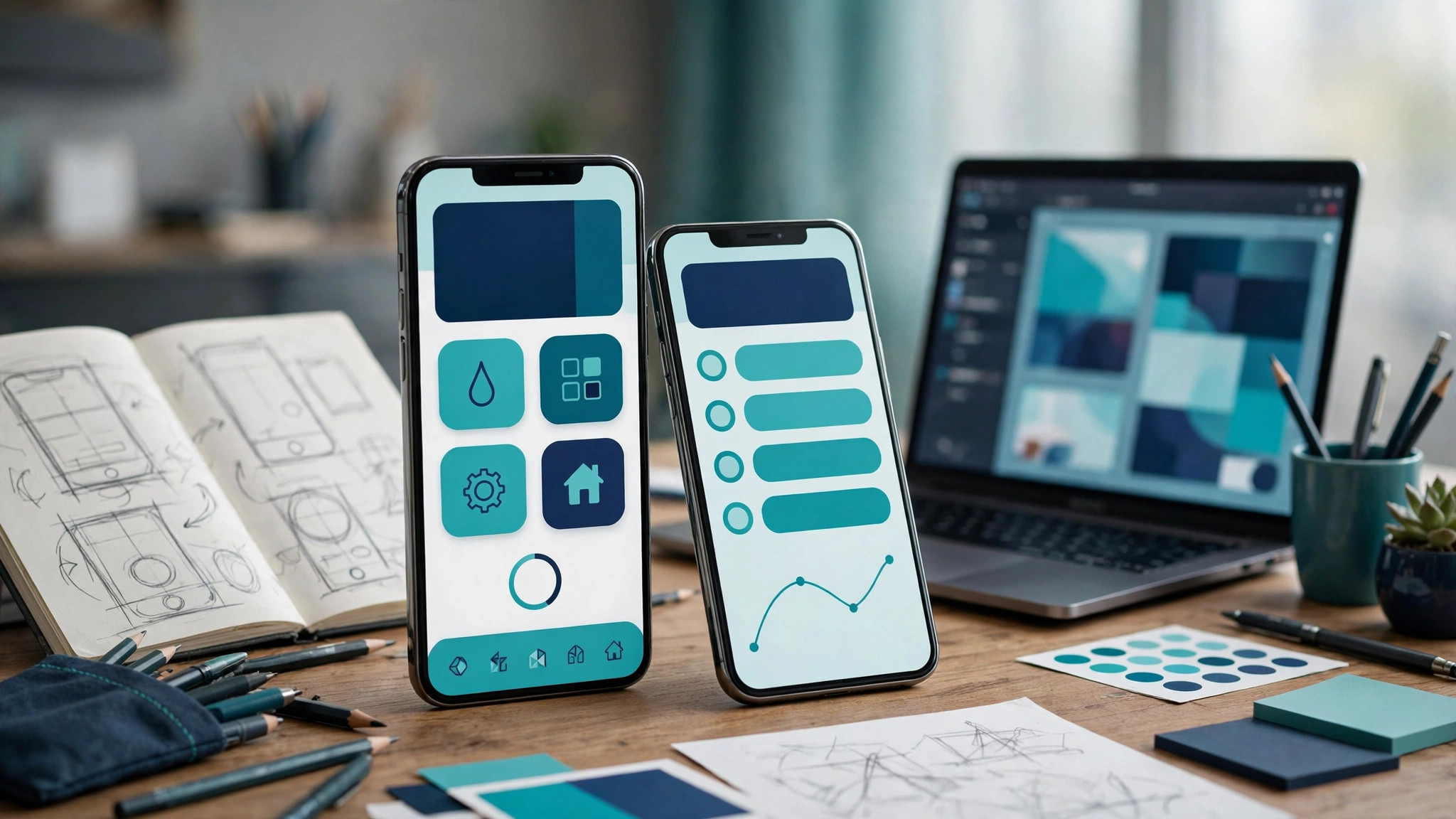

“Home Services Mobile App Development: Owner's Guide”
Home Services Mobile App Development: A Decision Framework for Contractors
Investing in home services mobile app development is a major decision for plumbing, HVAC, electrical, cleaning, and pest control company owners who want to modernize their customer experience. Here is the honest answer up front: most home services companies do not actually need a native mobile app. If your primary goal is generating local leads, letting customers book online, and taking payments, a fast mobile-friendly website with online booking usually wins on cost, speed, and customer adoption.
However, custom mobile applications become powerful assets for established service businesses managing repeat customers, subscription maintenance plans, or large field teams. This guide gives you a decision framework — not a sales pitch — for figuring out which camp you are in.
When Does a Home Services App Actually Pay Off?
Before committing capital to software development, you must evaluate whether your business model justifies the investment. An app earns its keep in three scenarios:
1. High-Volume Recurring Maintenance Plans
If your company runs a thriving subscription model — such as quarterly HVAC tune-ups, monthly pest control visits, or bi-annual plumbing inspections — an app gives customers a branded home base for managing their plan, scheduling visits, and paying invoices. Retention improves when the relationship lives on the customer's home screen.
2. Multi-Tech Field Fleet Management
When you manage a dozen technicians out in the field, custom mobile software helps dispatchers route jobs efficiently, track job status in real time, and capture photos and signatures on-site. (Note: this is typically an internal operations app for your team rather than a customer-facing one, but the ROI logic is similar.)
3. High Repeat-Customer Engagement
If your customers interact with your brand multiple times a month, push notifications for seasonal maintenance reminders, filter replacements, or loyalty rewards keep you top-of-mind and drive repeat bookings.
If your operational bottlenecks center around customer intake and customer service inquiries rather than repeat engagement, conversational tools like our AI chatbot development services and AI voice agent development services can provide instant, 24/7 responsiveness without requiring customers to download an app.
Native App vs. Mobile Web vs. Progressive Web App (PWA)
Choosing the right technical architecture dictates both your upfront budget and how easily customers adopt the solution.
+------------------------------------------------------------+
|            Home Services Digital Platform Options          |
+------------------------------------------------------------+
       |                    |                      |
       v                    v                      v
[ Mobile Website ]      [ PWA ]              [ Native App ]
- No download needed    - Installable          - App store presence
- Lowest cost           - Push notifications   - Best performance
- Easiest to update     - Works offline        - Full device access
Mobile-Friendly Website & Booking Flow: This option requires zero downloads. Customers search for an emergency electrician, land on your optimized page, and book in under two minutes. For most local service companies, this captures the vast majority of the value at a fraction of the cost.
Progressive Web App (PWA): A PWA looks and acts like a mobile app, allowing users to "install" it to their phone's home screen without an app store. It supports push notifications and offline access at a moderate development cost — often the sweet spot for service businesses that want app-like features without native-app overhead.
Native App: Built specifically for iOS and Android using frameworks like React Native or Flutter, native apps offer the best performance and full device integration (camera, GPS, biometrics). Choose this when you need deep hardware access or a premium branded experience for high-value repeat customers.
To ensure your underlying digital infrastructure is optimized for performance and conversion, you can review our web development services.
The PWA Middle Path: A Closer Look
Because the progressive web app sits between a mobile site and a native app, it deserves a closer look — for many home services companies, it is the right answer.
A PWA is built with standard web technologies but behaves like an installed app: customers add it to their home screen straight from your website (no app store, no review process, no 30% commission concerns), it can send push notifications on both Android and iOS, and it works offline for core screens like booking history. Development typically costs meaningfully less than a native app because there is one codebase, and updates ship instantly — no waiting for store approval when you change your pricing or add a service.
The trade-offs are real but narrow for this industry: PWAs cannot access some device hardware as deeply as native apps (advanced Bluetooth integrations, background geofencing), and iOS push notifications for PWAs, while supported, are less prominent than native ones. For booking, payments, reminders, and service history — the core home-services jobs — none of these limitations matter in practice.
A sensible path for most contractors: start with a fast mobile site plus online booking, add PWA installability and push when repeat engagement justifies it, and only go native when your maintenance-plan subscriber base or field fleet is large enough to demand it. Each step builds on the last — nothing is thrown away.
Essential Features for a Home Service Application
If your business model justifies building a dedicated mobile application, certain features are mandatory for customer adoption:
1. Frictionless On-Demand Booking
Homeowners want speed. The app should allow users to select their service type, pick an available time slot, and confirm a booking in under a minute — with real-time technician availability, not a "we'll call you back" black hole.
2. Secure Digital Payments and Invoicing
Allowing customers to pay invoices securely via credit card, Apple Pay, or Google Wallet right inside the app accelerates cash flow and eliminates awkward payment-chasing phone calls.
3. Real-Time Push Reminders and Status Updates
Automated push notifications reduce costly no-shows. Send reminders 24 hours before a visit, alerts when the technician is en route, and follow-ups requesting reviews after completion.
4. Service History and Equipment Logs
Homeowners love seeing a digital paper trail of past repairs, filter sizes, model numbers, and warranty information. This feature alone drives repeat usage and positions your company as the obvious choice for the next service call.
Financial Reality Check: Development Costs and ROI Math
Evaluating software investments requires looking closely at upfront capital requirements and expected returns.
Baseline Web Presence: For companies whose primary need is a high-converting digital storefront, establishing a professional Business Website or Redesign starting from $1,200 delivers the best ROI per dollar spent.
Custom Mobile Solutions: When a business requires dedicated mobile applications with custom backend synchronization, user accounts, and payment processing, Mobile App Development starts from $3,500. For more advanced custom software architectures, solutions like a Custom AI Web App start from $2,500.
The ROI Equation
Consider a residential HVAC company paying for custom mobile development. If the app streamlines booking and reduces no-shows, even a modest improvement in job completion rates can recover the investment within the first year — especially for companies with high average ticket values and repeat service plans.
To explore broader operational efficiencies that compound these financial gains, review our comprehensive AI automation ROI guide and our foundational overview on AI automation for small business.
Frequently Asked Questions About Home Services Apps
Do most home service companies actually need a native mobile app?
No, most local contractors achieve higher returns with a fast, mobile-optimized website and instant online booking. A native app makes sense primarily for businesses with subscription maintenance plans, high repeat engagement, or large field teams.
What is the difference between a mobile website and a progressive web app (PWA)?
A mobile website is viewed entirely inside a web browser, whereas a PWA can be saved directly to a smartphone's home screen, send push notifications, and work offline. PWAs offer an app-like experience without app-store friction, often at a lower development cost.
How much does it cost to build a custom mobile app for a contracting business?
Dedicated mobile app development projects start from $3,500 depending on backend complexity, user authentication requirements, and payment integrations. Simpler needs may be better served by a mobile-friendly website starting from $1,200 or a PWA as a middle ground.
How do push notifications help increase repeat business for cleaning or HVAC companies?
Push notifications serve as gentle, direct reminders for seasonal maintenance checks, filter replacements, and expiring service plans. Because they reach customers instantly on their phones, they drive significantly higher re-engagement than email for time-sensitive service offers.
How long does it take to build a home services app?
A focused PWA or MVP with booking, payments, and notifications typically takes six to twelve weeks from kickoff to launch, depending on backend complexity. A full native app with dispatcher tooling and deep integrations runs longer — your developer should give you a fixed timeline and a fixed quote before work begins.
Conclusion
Navigating digital investments as a home services business owner requires separating hype from practical returns. For most companies, a fast mobile website with seamless online booking outperforms a native app on every metric that matters — cost, adoption, and speed to value. But when your business model centers on repeat engagement, maintenance subscriptions, or field-team coordination, a well-built app becomes a genuine competitive advantage. The key is making the decision with clear eyes and real numbers. If you are weighing the options for your company, start by evaluating whether you need an app at all, Contact us.
Santol Edge Team
AuthorWrites extensively about generative AI, autonomous agent design, enterprise automation architectures, and customer experience engineering at Santol Edge.
Read Next

How AI Automation Helps Modern Businesses Scale 10x Faster
Discover how forward-thinking companies are deploying intelligent agents and automated pipelines to reduce overhead and boost revenue.

How AI Chatbots Transform Customer Support and Business Growth
Learn how AI chatbots improve customer response times, qualify leads, support teams, and create more consistent customer experiences.

AI Voice Agents: What They Are and How They Work
Understand where voice agents add value, how they connect with business systems, and what to consider before launching one.
Community Comments (0)
Oct 16, 2026Elisa Gabriella
VP of Operations · BrightSync
“A genuinely useful piece — the point about consolidating thin pages matches what we saw on our own platform last year. Deploying automated workflows cut roughly half our manual ticket volume and resolution speed went up significantly.”
Leave a Reply
Your email address will not be published. Required fields are marked *