
Santol Edge Team
AI Research & Engineering at Santol Edge
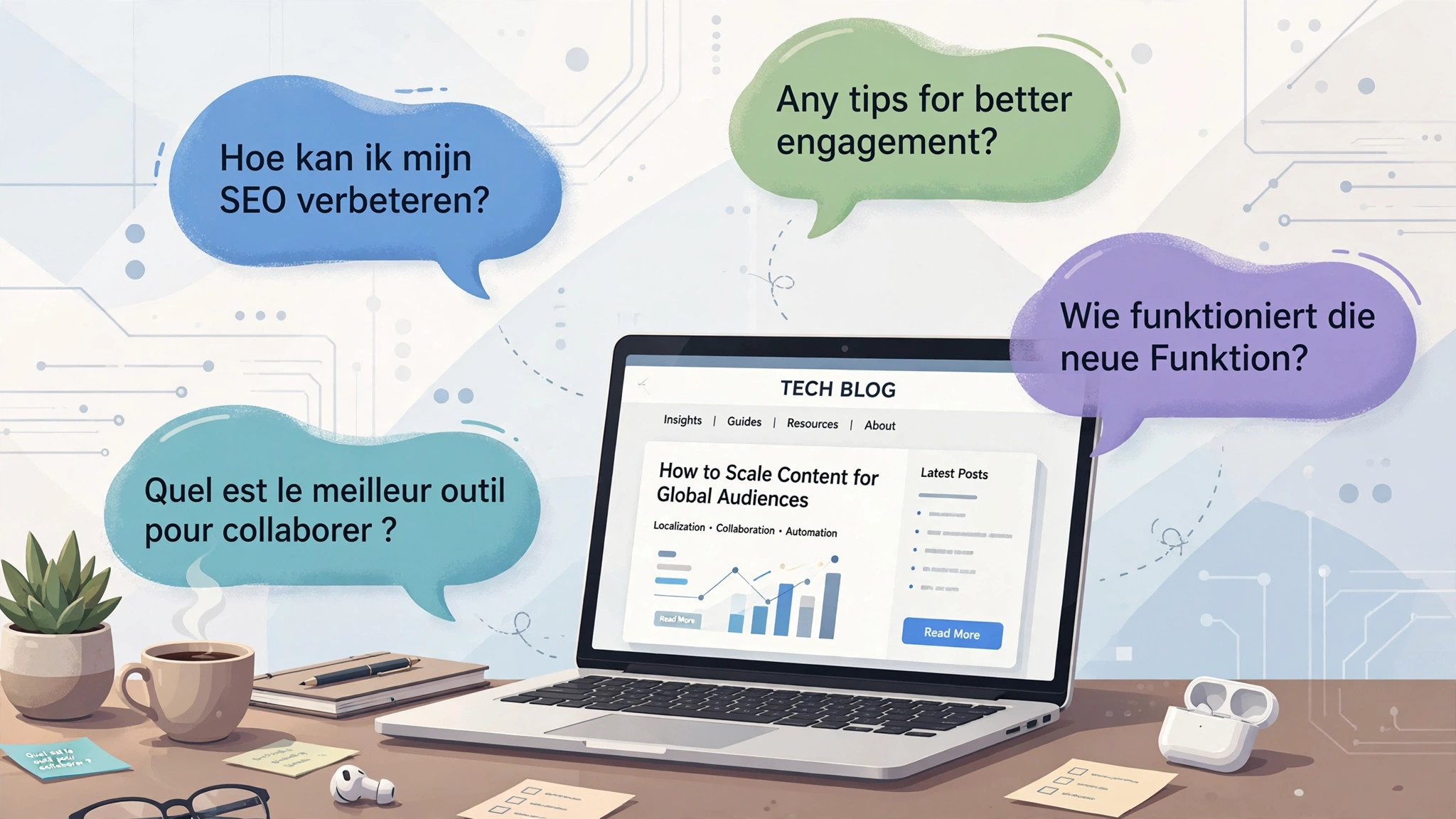

“Multilingual AI Chatbots: Serve Every Customer in Their Language (2026 Guide)”
# Multilingual AI Chatbots: Serve Every Customer in Their Language
If your customers speak more than one language, your chatbot should too. In cities like Amsterdam — where a single street can hold Dutch locals, English-speaking expats, German tourists, and French business travelers — a chatbot that only speaks one language quietly turns away a share of your visitors every day. They land on your site, see a wall of unfamiliar text, and leave.
A multilingual AI chatbot fixes this with a single bot: it detects the language each visitor writes in and answers in that same language. No separate bots per language, no language-picker dropdowns that half your visitors ignore. This guide covers how it works in 2026, where the real pitfalls are, and what it should cost.
## Why Language Is a Conversion Problem, Not a Nice-to-Have
People buy in the language they think in. When a visitor has to translate your chatbot's English answers in their head — or worse, when they can't read them at all — trust drops and they bounce. This is not a theory about exotic markets; it is everyday reality for businesses in multilingual cities and anyone selling across borders in Europe.
The practical effect: a chatbot that answers in the visitor's own language keeps conversations going longer, qualifies more leads, and books more appointments — because the visitor never hits the friction of "this isn't for me." For businesses serving international customers, multilingual support is one of the highest-leverage upgrades a chatbot can get.
## How Multilingual Chatbots Actually Work in 2026
The old way of building multilingual bots was painful: separate conversation trees per language, translated by hand, maintained forever. The modern approach is much simpler.
Automatic language detection. The chatbot reads the visitor's first message, detects the language, and replies in that language. If the visitor switches mid-conversation — starting in Dutch, continuing in English — the bot follows along. Mixed-language messages fall back to whichever language was detected most recently.
Train once, answer everywhere. You build the knowledge base in your primary language — your FAQs, policies, product details — and the underlying language model handles the rest. The bot answers a German question using your English source content, in German. You do not maintain five translations of every answer.
Tone per language. A good setup lets you customize the bot's tone and greeting per language, so the French version sounds naturally French rather than translated-English. Brand voice should survive translation, and this is where cheap setups fail.
None of this requires a separate translation API bolted on the side in most modern builds — detection and translation are handled natively by the language model. What matters is that whoever builds your bot configures it deliberately: which languages to support, what to do when the bot is unsure, and when to hand off to a human.
## The Pitfalls: Where Multilingual Bots Go Wrong
Assuming translation equals localization. A bot that technically answers in Spanish but uses awkward phrasing, wrong formality levels, or culturally off examples will feel broken to native speakers. Have a native speaker review the bot's answers in each supported language before launch — this is a one-time check that prevents lasting damage.
No fallback plan for uncertainty. When the bot cannot confidently detect a language or answer in it, it needs a graceful fallback: a clear message in a default language offering to connect the visitor with a human. A bot that guesses wrong and rambles in the wrong language is worse than one that admits its limits.
Right-to-left and script issues. If you serve customers writing in Arabic, Hebrew, or other right-to-left scripts, the chat widget itself must render them correctly. Modern platforms handle Unicode and RTL natively, but test it — a surprising number of businesses discover this only after a customer complains.
Forgetting the human handoff. Multilingual support raises the stakes on escalation: a frustrated customer in their native language needs a human who speaks it, or at minimum a clear path to email support. The bot should hand off with the full conversation context so nothing gets lost.
## What It Should Cost
Multilingual capability is a configuration layer on top of a standard chatbot build — not a second project. For a business website chatbot, our AI Website Chatbot package is $499 one-time (USD), which covers the chatbot trained on your business, deployed on your website. Multilingual support across your customer languages — Dutch, English, German, French, or others — is scoped as part of the build: straightforward language coverage is typically included, while complex requirements (many languages, RTL scripts, deep tone localization per market) are a fixed quote agreed before work starts, after a free consultation.
Two traps to avoid: vendors who charge per language as if each one is a separate bot (it isn't, in 2026), and "auto-translate everything" plugins with no quality review — machine translation without a native-speaker check will embarrass you in at least one language.
## The Checklist Before You Launch
1. List the languages your customers actually use — check your analytics, support inbox, and sales calls, not your assumptions.
2. Write the knowledge base once, well, in your primary language.
3. Configure detection, per-language tone, and a clear fallback message.
4. Have a native speaker test each language with real customer questions.
5. Test RTL rendering if relevant to your audience.
6. Define the human handoff path per language.
7. Launch, then review conversation logs monthly — new phrasing and edge cases always appear.
A chatbot that speaks your customers' languages is not a luxury feature for international giants. For any business in a multilingual market, it is simply a chatbot that does its job. [Contact us](/contact) for a free consultation — we build multilingual chatbots configured for how your customers actually talk.
Santol Edge Team
AuthorWrites extensively about generative AI, autonomous agent design, enterprise automation architectures, and customer experience engineering at Santol Edge.
Read Next

How AI Automation Helps Modern Businesses Scale 10x Faster
Discover how forward-thinking companies are deploying intelligent agents and automated pipelines to reduce overhead and boost revenue.

How AI Chatbots Transform Customer Support and Business Growth
Learn how AI chatbots improve customer response times, qualify leads, support teams, and create more consistent customer experiences.

AI Voice Agents: What They Are and How They Work
Understand where voice agents add value, how they connect with business systems, and what to consider before launching one.
Community Comments (0)
Sep 28, 2026Elisa Gabriella
VP of Operations · BrightSync
“A genuinely useful piece — the point about consolidating thin pages matches what we saw on our own platform last year. Deploying automated workflows cut roughly half our manual ticket volume and resolution speed went up significantly.”
Leave a Reply
Your email address will not be published. Required fields are marked *