
Santol Edge Team
AI Research & Engineering at Santol Edge
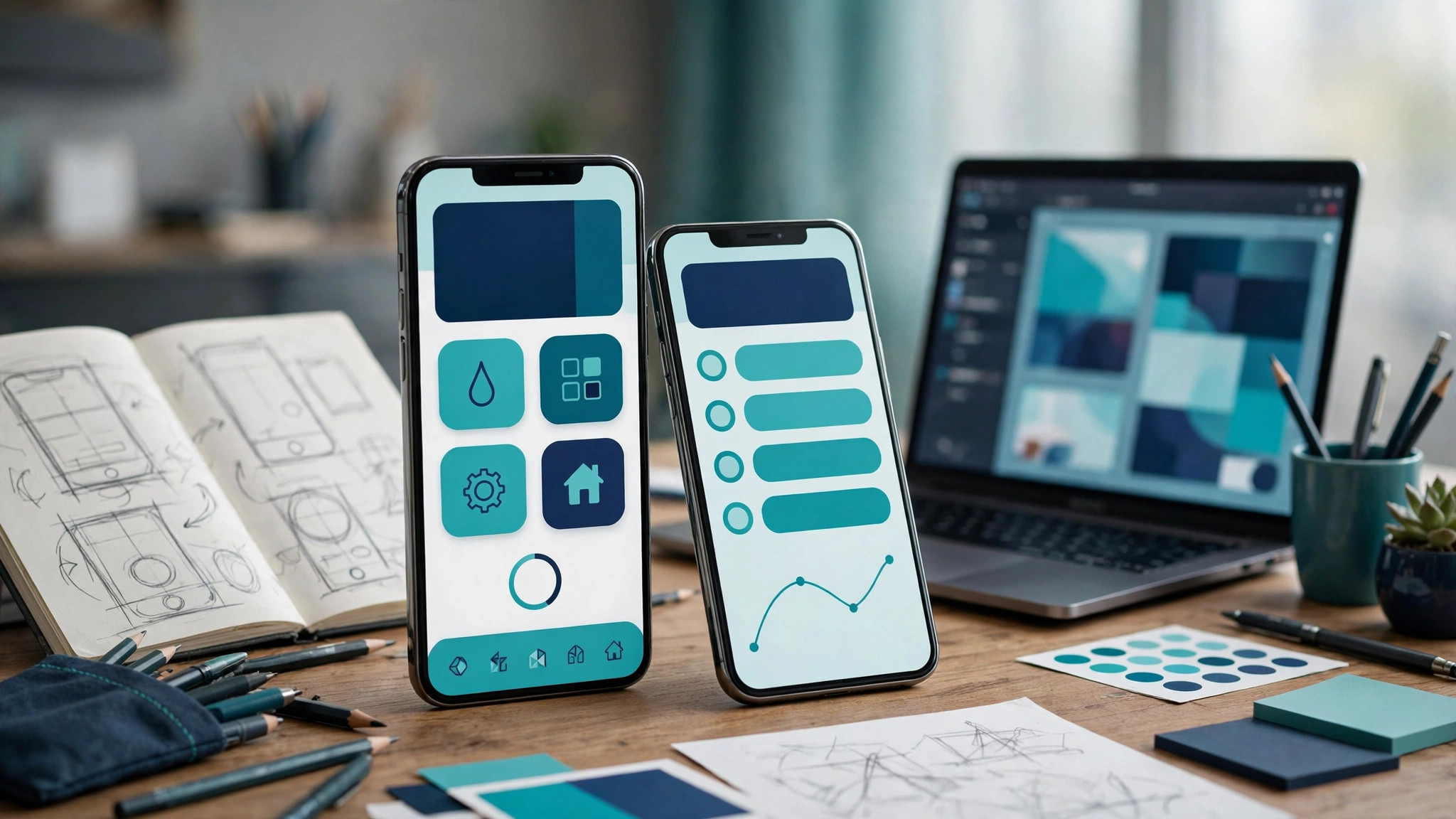

“Mobile App Development Services: A Buyer's Guide for 2026”
Mobile App Development Services: A Buyer's Guide for 2026
When you are looking to build a digital product, hiring an external team for mobile app development services is a significant investment. Understanding exactly what a full-service engagement includes—from discovery and design through app-store launch and maintenance—helps you budget accurately, vet providers effectively, and avoid costly surprises.
This comprehensive guide breaks down everything included in professional mobile app development services, compares native versus cross-platform approaches, shares honest pricing anchored to real agency rates, and gives startups practical MVP-first advice.
What’s Included in Full-Cycle Mobile App Development Services?
A professional agency does not just write code; they guide your product through a structured lifecycle.
1. Discovery and Product Strategy
Before a single line of code is written, a discovery phase aligns your business goals with technical feasibility. This includes stakeholder interviews, competitor analysis, user personas, feature prioritization, and a technical architecture plan.
2. UI/UX Design
User experience (UX) and user interface (UI) design dictate how intuitive and visually compelling your app feels. Deliverables typically include wireframes, interactive prototypes, design systems, and pixel-perfect screens for iOS and Android.
3. Native vs. Cross-Platform Engineering
Choosing how to build your app is a critical technical decision. Agencies offer two primary development paths:
Native Development: Building separate codebases for iOS (Swift/SwiftUI) and Android (Kotlin/Jetpack Compose) delivers maximum performance and full access to device features.
Cross-Platform Development: Utilizing frameworks that allow a single codebase to run smoothly on both platforms, reducing cost and time to market. For a detailed comparison, see Flutter vs React Native 2026.
4. Backend Architecture and API Integration
Most mobile apps require a robust server-side infrastructure to handle user authentication, databases, push notifications, and third-party integrations. Professional services include API design, cloud hosting setup, and data security implementation.
5. Quality Assurance (QA) and Testing
Rigorous testing ensures your app functions reliably across hundreds of different device models, screen sizes, and OS versions. QA covers functional testing, usability testing, performance testing, and security audits.
6. App Store Submission and Launch
Publishing an app on the Apple App Store and Google Play Store involves adhering to strict compliance guidelines, preparing metadata and screenshots, and navigating review processes. Agencies manage submission end-to-end. Use our mobile app launch checklist 2026 to prepare.
7. Post-Launch Maintenance and Iteration
Software is never truly "finished." Post-launch services include monitoring crash reports, releasing OS-compatibility updates, patching security vulnerabilities, and iterating based on user feedback.
Native vs. Cross-Platform: Choosing the Right Framework
Selecting the right technology stack depends on your budget, timeline, and performance requirements.
                        | Native (iOS/Android)              | Cross-Platform (Flutter/React Native)
------------------------|-------------------------------------|--------------------------------------
Performance             | Maximum; direct device hardware     | High; near-native for most uses
Development Cost        | Higher (separate iOS/Android teams) | Lower (shared codebase)
Time to Market          | Slower (duplicate dev cycles)       | Faster (single codebase)
Best For                | Heavy 3D, complex hardware          | MVPs, market validation, content apps
If you are operating on a startup budget or looking to test product-market fit quickly, cross-platform development is often the pragmatic choice. For a full cost breakdown, see our mobile app development cost guide 2026.
MVP-First Advice for Startups
If you are an entrepreneur or product leader launching a new venture, building every feature on your wishlist before launch is a common and expensive mistake.
Identify Core Value: Focus strictly on the single feature that delivers your app's primary value proposition.
Launch Fast, Learn Faster: Getting real users onto your platform provides invaluable data that guesswork cannot replace.
Scale Incrementally: Once user adoption proves demand, reinvest revenue or secure funding to expand features.
To explore our specialized engineering capabilities, you can view our comprehensive mobile app development services page.
Transparent Pricing for Mobile App Development
Budget transparency is essential when evaluating development partners. Our actual starting price—not a market average—is:
Mobile App Development: From $3,500
While enterprise applications with complex backends cost more, this starting price covers a professionally designed, single-platform or cross-platform MVP. For broader digital needs, other baseline benchmarks include:
Business Website/Redesign: From $1,200
Custom AI Web App: From $2,500
AI Voice Agent Setup: $1,200 one-time
AI Website Chatbot: $499 one-time
Any project outside these standardized tiers receives a custom, fixed-quote proposal following a detailed discovery call.
How to Vet and Choose a Mobile App Development Agency
With thousands of agencies globally, finding a reliable development partner requires looking past slick sales decks.
Examine Technical Portfolios: Look for verified experience building apps with similar technical complexity to yours.
Assess Communication and Process: A trustworthy agency employs transparent project management tools and provides regular demos.
Understand IP Ownership: Ensure your contract explicitly states that your organization retains 100% intellectual property rights upon final payment.
Evaluate Support and Warranty: Clarify what happens after launch. Reputable agencies provide a warranty period and clear maintenance options.
Thinking in Total Cost of Ownership, Not Just Build Price
The build quote is only the first line of a longer budget. Before you commit, map the full picture:
The build itself — design, development, testing, and launch, typically quoted as a fixed price after discovery. Our starting point is $3,500 for a professionally built MVP.
Backend and infrastructure — servers, databases, and third-party services (authentication, push notifications, analytics, payment processing) carry monthly costs that scale with users. Ask for an estimate at your expected user volume, not just at launch.
App store presence — developer accounts, plus the ongoing work of keeping listings, screenshots, and descriptions current with each release.
Maintenance and iteration — OS updates, security patches, and user-driven improvements. A realistic rule of thumb is to budget a meaningful annual fraction of the build cost for the first year of upkeep. Get the provider's maintenance terms in writing before you sign the build contract, not after.
An agency that only talks about the build price and waves away everything after launch is selling you half a product.
Common Budget Pitfalls and How to Avoid Them
Scope creep disguised as "small tweaks." Every "just add this one screen" compounds. Insist that new requests go through a written change process with a price attached — it protects both sides.
Designing for every platform on day one. Launching on iOS and Android simultaneously doubles testing surface. Many startups validate on one platform or via cross-platform first, then expand with revenue or funding behind them.
Skipping the backend. A beautiful app with a fragile backend fails the moment users arrive. Make sure the quote covers server architecture, not just screens.
No analytics from day one. If you cannot see where users drop off, you are flying blind on every iteration decision. Analytics instrumentation should be part of the build, not an afterthought.
The First 90 Days After Launch
What happens after the app store approves your submission matters more than the launch itself:
Weeks 1–2: stabilize. Monitor crash reports and user feedback channels daily. Fix critical bugs immediately; log everything else for prioritization.
Weeks 3–6: learn. Watch real usage patterns — which features get used, where users drop off, what support requests repeat. This data is worth more than any pre-launch assumption.
Weeks 7–12: iterate. Ship the first meaningful update based on what you learned: fix the biggest drop-off point, polish the most-used flow, and cut or rework what nobody touches.
Teams that plan for this cycle build better products than teams that treat launch as the finish line.
Frequently Asked Questions
How long does it take to build a mobile app?
The timeline varies based on complexity, ranging from 6 to 12 weeks for a streamlined MVP utilizing cross-platform frameworks, to several months for feature-rich native applications.
Do I need to hire separate developers for iOS and Android?
Not necessarily. Modern cross-platform frameworks allow a single team of engineers to write code that deploys to both platforms, significantly reducing cost and timeline.
Who owns the source code once the app is completed?
You retain full, exclusive ownership of all intellectual property, source code, design assets, and app-store listings upon final payment.
How much does ongoing app maintenance cost?
Ongoing maintenance typically covers server hosting, OS compatibility updates, security patches, and minor feature iterations. Costs vary; request a clear maintenance proposal before signing.
What is the difference between an MVP and a full product?
An MVP (Minimum Viable Product) contains only the essential core features required to solve the primary user problem and validate demand, while a full product includes the complete envisioned feature set.
Ready to build your mobile application?
Partner with experienced engineers to bring your product vision to life with transparent pricing, agile processes, and a focus on measurable outcomes. Contact us today to schedule your free consultation and discuss your project requirements.
Santol Edge Team
AuthorWrites extensively about generative AI, autonomous agent design, enterprise automation architectures, and customer experience engineering at Santol Edge.
Read Next

How AI Automation Helps Modern Businesses Scale 10x Faster
Discover how forward-thinking companies are deploying intelligent agents and automated pipelines to reduce overhead and boost revenue.

How AI Chatbots Transform Customer Support and Business Growth
Learn how AI chatbots improve customer response times, qualify leads, support teams, and create more consistent customer experiences.

AI Voice Agents: What They Are and How They Work
Understand where voice agents add value, how they connect with business systems, and what to consider before launching one.
Community Comments (0)
Oct 13, 2026Elisa Gabriella
VP of Operations · BrightSync
“A genuinely useful piece — the point about consolidating thin pages matches what we saw on our own platform last year. Deploying automated workflows cut roughly half our manual ticket volume and resolution speed went up significantly.”
Leave a Reply
Your email address will not be published. Required fields are marked *