
Santol Edge Team
AI Research & Engineering at Santol Edge
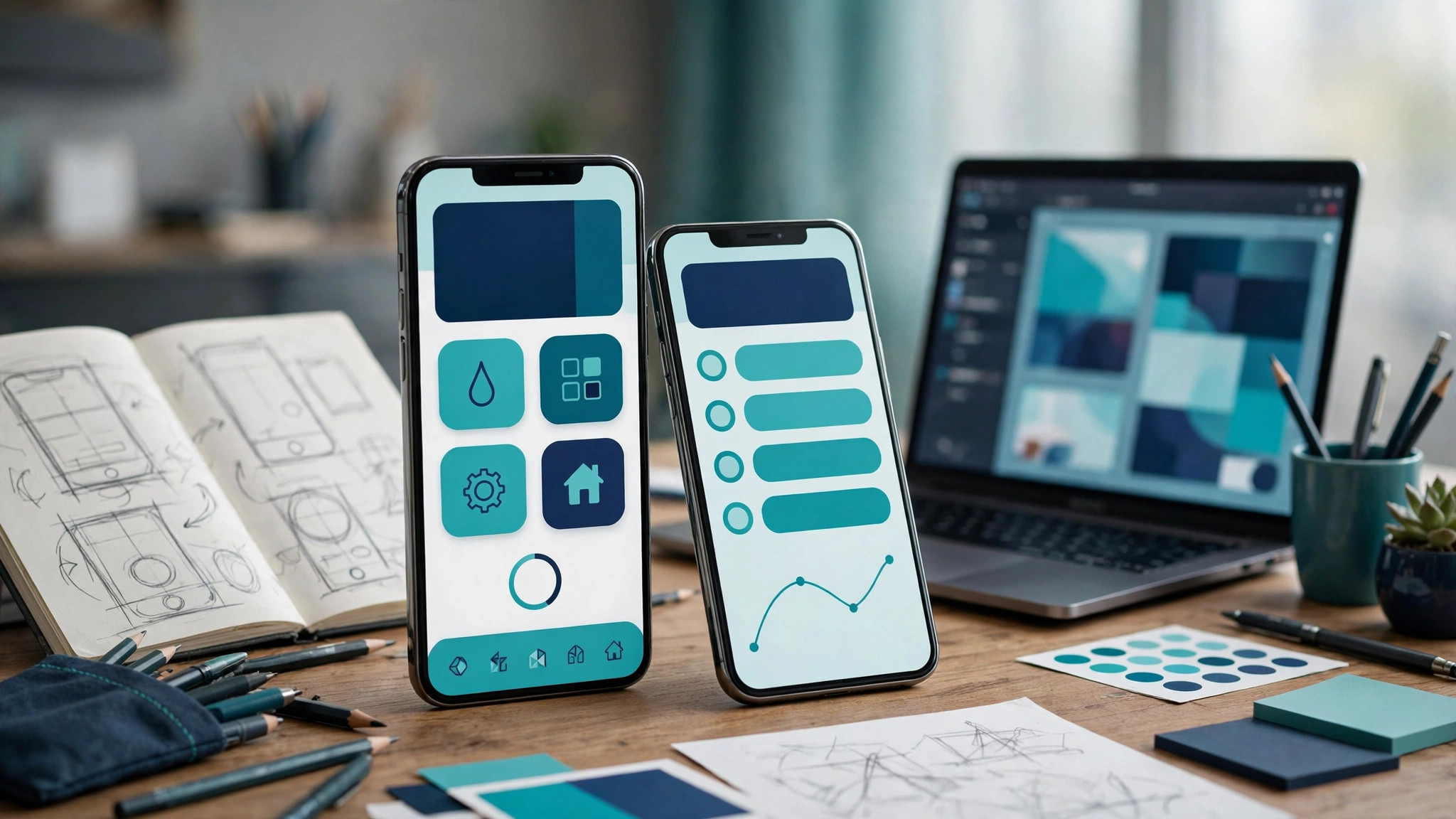

“Mobile App Development for Startups: The Complete 2026 Guide”
Mobile App Development for Startups: The Complete 2026 Guide
Mobile app development for startups involves a disciplined journey from initial problem validation and minimum viable product design to scalable engineering, launch, and post-release optimization. For early-stage founders, navigating this lifecycle efficiently determines whether a software concept gains traction or drains capital before finding a market. Building a successful startup application requires more than just writing clean code; it demands strategic alignment between user needs, technical constraints, and financial resources.
Many new founders jump straight into complex software engineering without confirming whether their target audience actually wants or needs the product. This comprehensive guide outlines a step-by-step startup playbook, comparing native versus cross-platform frameworks, reviewing realistic financial considerations, and providing practical tips for stretching a lean budget.
Step 1: Validate Your App Idea Before Writing Code
Before investing capital into software development, you must confirm that your application solves a genuine, painful problem for a clearly defined audience. Skipping validation is one of the primary reasons startup applications fail to gain active users after launch.
Core Validation Techniques
Problem Interviews: Conduct direct conversations with eight to ten target users to uncover their current workarounds and validate whether your proposed solution addresses a real daily pain point.
Landing Page and Waitlist Sprints: Build a simple informational page outlining your app's value proposition, feature highlights, and mock screens to measure email sign-up intent before development begins.
Clickable Prototyping: Design low-fidelity or high-fidelity prototypes using tools like Figma to test core onboarding and navigation flows with prospective users, observing where they encounter friction.
Pre-Commitments: For business-to-business concepts, aim for signed letter-of-intent pilot agreements; for consumer applications, measure waitlist conversion rates or pre-orders.
For an in-depth framework on testing market demand and refining your concept early, read our guide on app idea validation.
Step 2: Prioritize Your Minimum Viable Product (MVP)
Startups frequently fail by trying to build every imagined feature into version one. Your initial launch should focus exclusively on proving core value rather than impressing users with feature bloat.
Defining Your MVP Scope
Identify the Single Core Job: Determine the one primary outcome your users need to achieve (such as booking a local service in sixty seconds or logging field notes offline) and build the shortest possible path to that outcome.
Streamline Onboarding: Keep user registration frictionless by utilizing email or phone number authentication options rather than demanding extensive profile setups immediately.
Limit Initial Screen Count: Restrict your core user flow to a tight sequence of screens that accomplish the primary task without unnecessary distractions.
Defer Nice-to-Haves: Push features like advanced user profiles, gamification badges, complex social sharing, and secondary settings into later product roadmap phases.
To explore strategies for scoping and engineering a streamlined initial version of your product, review our comprehensive MVP app development guide.
Step 3: Choose Between Native and Cross-Platform Architecture
Selecting your technology stack affects development speed, initial costs, ongoing maintenance overhead, and overall user experience. Startups must balance performance requirements against budget realities when evaluating infrastructure options.
Comparing Development Approaches
Native Development (Swift for iOS, Kotlin for Android): Delivers peak hardware performance, fluid animations, and complete device feature access. However, maintaining two separate codebases increases upfront costs and doubles engineering maintenance effort.
Cross-Platform Frameworks (Flutter, React Native): Utilizes a single codebase to deploy across both iOS and Android environments. This approach accelerates time-to-market and reduces initial capital expenditure, making it the preferred choice for most early-stage startups.
Progressive Web Apps (PWA): Eliminates app store download friction through browser-based access, though capabilities remain limited regarding advanced offline storage and deep background processing.
To examine how professional engineers approach platform selection and scalable system design, explore our dedicated mobile app development services.
Step 4: Budgeting, Timelines, and Lean Development Tips
Understanding financial expectations prevents sudden project stalls. Mobile app development for startups involves variable investments depending on design complexity, backend requirements, and integration depth.
Cost and Timeline Ranges
Development Investment: Professional mobile app development starts from $3,500 for streamlined initial builds and foundational configurations. Complex multi-platform applications requiring custom database architecture and third-party integrations are handled via a fixed quote after a free consultation.
Timeline Expectations: Focused MVP builds typically require between two to four months from initial architectural scoping to beta deployment on app stores, depending on feature depth.
Cost-Saving Strategies for Lean Startups
Adopt Phased Rollouts: Build your core value proposition first, gather user telemetry, and fund subsequent feature expansions using revenue or additional investment rounds.
Leverage Open-Source Components: Utilize pre-tested authentication modules, UI component libraries, and cloud backend services rather than engineering every foundational element from scratch.
Prioritize One Platform First: If your target audience concentrates heavily on a single operating system, launch on that platform first to minimize initial engineering overhead.
Step 5: Choosing a Development Partner
Finding the right technical partner is critical when your internal team lacks full-stack engineering bandwidth. A dependable agency provides architectural guidance, quality assurance testing, and long-term maintenance support.
Key Criteria for Vetting Partners
Startup Portfolio Experience: Look for agencies that have successfully taken early-stage concepts from whiteboard wireframes to live app store deployment.
Transparent Scoping: Ensure potential partners offer clear discovery phases and fixed quotes after a free consultation rather than vague, open-ended billing structures.
Post-Launch Support: Confirm the team provides ongoing performance monitoring, security updates, and bug fixes after your application goes live.
Post-Launch: What Startups Should Track After the MVP Goes Live
Launching is not the finish line - it is the start of the learning phase. The startups that win are the ones that treat their MVP as an experiment and instrument it accordingly.
The Core Metrics That Matter
Activation rate: what percentage of new users complete your app's core action in their first session. If this is low, your onboarding or core flow needs work.
Retention: what share of users return in week two and month two. Retention problems are product problems, not marketing problems.
Conversion to your key revenue event: whatever your business model depends on - paid plan, booking, purchase - track the full funnel conversion from install to revenue.
Crash rate and performance: a single crash on first launch can permanently lose a user. Monitor stability across device types and operating system versions from day one.
Build a Feedback Loop, Not Just a Feature List
Every user complaint, support email, and app store review is data. Establish a simple rhythm: collect feedback weekly, group it by theme, and let the biggest themes decide the next sprint - not whoever shouts loudest internally. Founders who build what users keep asking for consistently outperform founders who build from the roadmap they wrote before launch.
Plan for Technical Maintenance
Budget for the unglamorous work: operating system updates from Apple and Google, security patches, dependency upgrades, and server costs as usage grows. An app that worked perfectly at launch will start degrading within a year without maintenance. Include an ongoing support arrangement with your development partner - or dedicate internal engineering time - before you need it.
Frequently Asked Questions
How much does it cost to start a mobile app?
The cost to build a mobile app varies based on complexity, feature scope, and underlying platform architecture. Professional mobile app development projects start from $3,500 for targeted foundational builds, while complex enterprise applications require a fixed quote after a free consultation. Scoping your project around a focused MVP helps manage upfront expenditures.
What is the cheapest way to develop an app?
The most cost-effective approach is building a cross-platform application using frameworks like Flutter or React Native with a tightly restricted MVP feature set. This allows a single engineering team to deploy to both iOS and Android simultaneously while avoiding the higher costs of maintaining two separate native codebases. Utilizing pre-built cloud backends further minimizes initial development overhead.
How long does it take to build an app for a startup?
A focused mobile app MVP typically takes between two to four months from initial architectural scoping to app store deployment. Complex applications featuring multi-system integrations, real-time messaging, or advanced data synchronization require additional timelines for rigorous quality assurance and testing.
Can ChatGPT build me an app?
Large language models and AI coding assistants can generate boilerplate code, suggest architecture patterns, and help troubleshoot syntax errors, but they cannot independently architect, test, deploy, or maintain a production-ready mobile application. Building a secure, scalable app still requires human engineering expertise, UI/UX design, and rigorous testing across real devices.
Do I need an LLC to start an app?
While you can design, code, and test a mobile app as an individual sole proprietor, forming an LLC or formal corporate entity before launching publicly is strongly recommended. Establishing a formal business structure helps protect your personal assets from liability, simplifies opening business bank accounts, and streamlines app store developer registration.
Ready to Build Your Startup App?
If you have a validated app concept and want to turn your vision into a high-performing mobile application without unnecessary delays, let's discuss your project scope.
Santol Edge Team
AuthorWrites extensively about generative AI, autonomous agent design, enterprise automation architectures, and customer experience engineering at Santol Edge.
Read Next

How AI Automation Helps Modern Businesses Scale 10x Faster
Discover how forward-thinking companies are deploying intelligent agents and automated pipelines to reduce overhead and boost revenue.

How AI Chatbots Transform Customer Support and Business Growth
Learn how AI chatbots improve customer response times, qualify leads, support teams, and create more consistent customer experiences.

AI Voice Agents: What They Are and How They Work
Understand where voice agents add value, how they connect with business systems, and what to consider before launching one.
Community Comments (0)
Oct 13, 2026Elisa Gabriella
VP of Operations · BrightSync
“A genuinely useful piece — the point about consolidating thin pages matches what we saw on our own platform last year. Deploying automated workflows cut roughly half our manual ticket volume and resolution speed went up significantly.”
Leave a Reply
Your email address will not be published. Required fields are marked *