
Santol Edge Team
AI Research & Engineering at Santol Edge
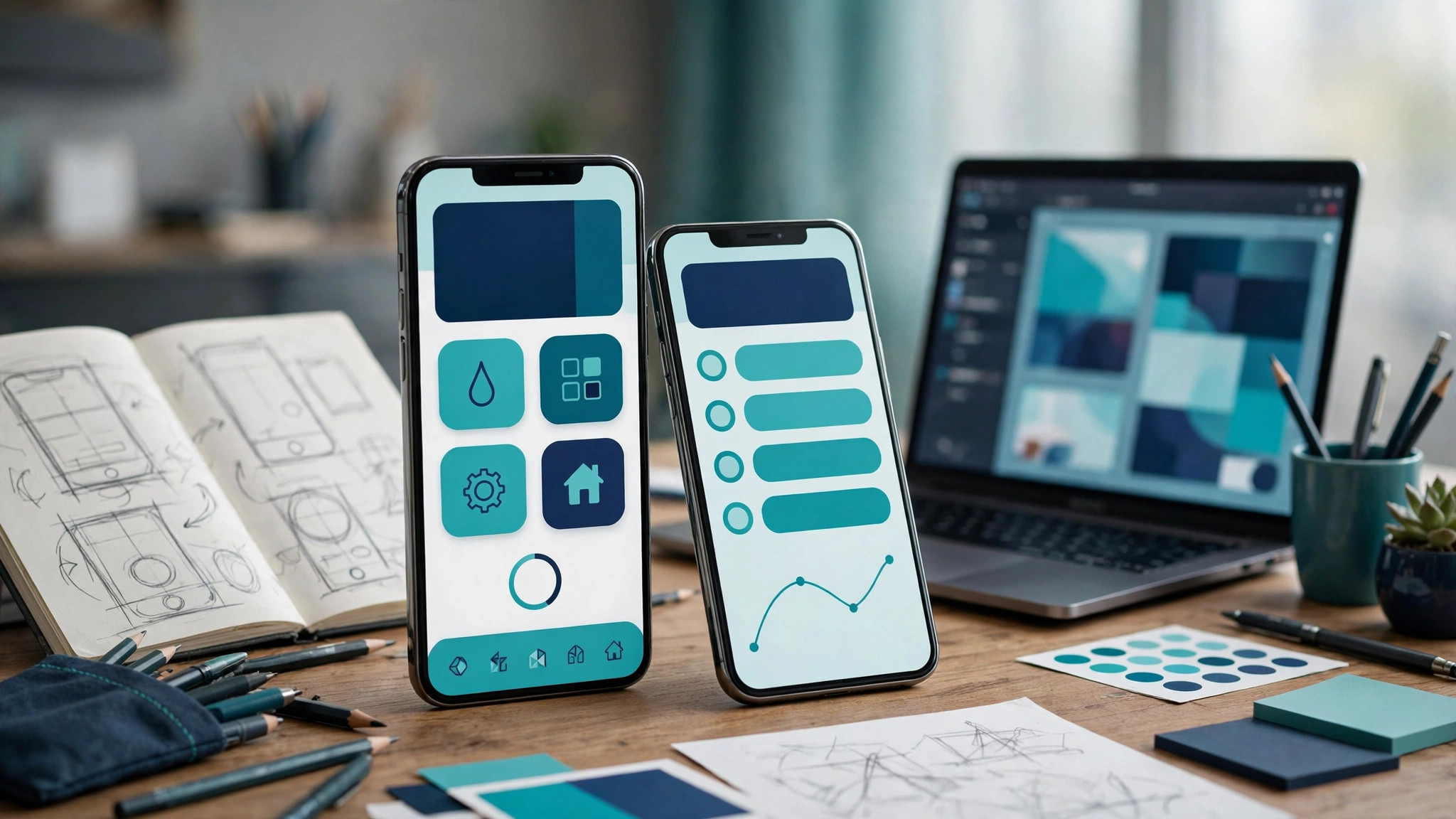

“Mobile App Development for Restaurants: 2026 Guide”
Mobile App Development for Restaurants: The 2026 Decision Guide
Mobile app development for restaurants means building your own branded app — ordering, loyalty rewards, reservations, and push offers under your restaurant's name — instead of relying entirely on food-delivery aggregators. It is not a mini food-delivery marketplace; it is a direct channel to your customers that keeps the relationship (and the margin) with you. This guide walks through the real decision: when your own app makes sense, which features actually pay off, what it honestly costs, how long it takes, and what to automate versus what to leave human.
Your Own Branded App vs Food-Delivery Aggregators
Most restaurant owners meet the app question through aggregators — the big delivery platforms where your menu sits next to every competitor's. Aggregators are useful for discovery: they put you in front of people who have never heard of you. The trade-off is structural:
Commission on every order. Aggregators take a cut of each order, which varies by platform and plan — and it comes straight out of your margin on every single sale.
You don't own the customer. The platform owns the order history, the data, and the relationship. The customer is theirs; you just fulfil the order.
No direct marketing. You cannot push a Tuesday special or a loyalty reward to yesterday's customers, because you cannot reach them.
Your own branded app flips all three: no per-order commission to a platform, full ownership of customer data and order history, and a direct push-notification channel to your regulars. It does not replace aggregators — many restaurants run both, using aggregators for discovery and their own app for repeat business, which is where the profit actually lives. The honest framing is aggregators for new customers, your app for keeping them.
If you are still weighing whether messaging automation fits your restaurant before committing to an app, our guide on AI chatbots for restaurants covers the lighter-weight channel option.
Signs Your Restaurant Is Ready for Its Own App
An app is an investment, and not every restaurant needs one today. You are probably ready when three or more of these are true:
Repeat customers drive your revenue. If regulars make up a large share of orders, an app with loyalty and one-tap reordering pays for itself faster than any ad campaign.
Delivery and takeaway are a real channel. If phone and aggregator orders are a daily routine, your own ordering flow can shift a meaningful share of that volume to zero-commission ordering.
You run promotions that deserve an audience. Weekly specials, seasonal menus, and event nights all work better when you can notify past customers directly.
You take reservations. In-house booking through your own app beats paying per-cover fees or losing tables to no-shows you cannot contact.
You are expanding or franchising. A branded app becomes the consistent ordering and loyalty experience across every location.
If you are a brand-new single location still finding your customer base, the honest advice is often: start with a great website and messaging automation, grow your regulars, then build the app.
Features That Actually Pay Off
Restaurant apps fail when they try to be everything. The features below are the ones that consistently earn their development cost:
Online Ordering With One-Tap Reorder
The core of the app. Customers browse the menu, customize items, pay in-app, and choose pickup or delivery. The killer detail is one-tap reorder of past orders — regulars live for this, and it measurably lifts order frequency. Integrate with your POS or kitchen display so orders flow straight to the kitchen without a tablet farm on the counter.
Loyalty and Rewards
Points per order, stamp cards, tiered rewards — whatever fits your brand. A digital loyalty program inside your own app keeps the data with you and gives customers a reason to order direct instead of through an aggregator. Keep the rules simple enough to explain in one sentence.
Push Notifications for Offers
This is the feature aggregators can never give you: reaching your own customers directly. Used sparingly — a lunch special on a slow Tuesday, a new seasonal menu, a birthday reward — push notifications are one of the highest-return marketing channels a restaurant can own. Used excessively, they get muted. The rule of thumb: every push should carry a genuine offer or genuinely useful information.
Table Reservations
Let customers book, modify, and cancel tables in the app, with automated confirmations and reminders. Reminders alone cut no-shows noticeably, and every no-show recovered is pure recovered revenue on a table you already staffed.
Payments, Order Tracking, and Receipts
Save payment methods securely, show live order status ("in the kitchen", "on its way"), and email receipts automatically. These are table-stakes expectations for any 2026 ordering app — their absence is noticed more than their presence.
Admin Dashboard and Analytics
The unglamorous feature that decides whether the app keeps improving: which dishes sell, when peak hours hit, which offers get redeemed, where customers drop off in the ordering flow. Build analytics in from day one, not as an afterthought.
Features You Can Skip in Version 1
Scope discipline is what keeps an app project on budget. These can wait:
Social features (friend feeds, sharing, reviews inside the app) — nice ideas that almost nobody uses in a restaurant app.
Augmented reality menus — impressive in a demo, rarely opened by a hungry customer.
Multi-language support — important for some markets, but add it in version 2 unless your customer base demands it now.
Complex gamification — badges and leaderboards add months of work for little ordering lift.
In-app customer support chat — a simple contact button and FAQ cover 95% of needs at launch. (If messaging automation interests you later, see our restaurant chatbot guide.)
Ship the ordering-loyalty-push-reservations core, learn from real usage, then expand with evidence instead of guesses.
Honest Cost Reality
Restaurant app costs vary widely with scope, but here is an honest breakdown of what each tier typically involves:
Branded restaurant app (ordering + loyalty + push + reservations)
  from $3,500 one-time — fixed quote after a free consultation

Add-ons commonly quoted separately:
  POS / kitchen-display integration ... fixed quote
  Multi-location / franchise support .. fixed quote
  Custom admin analytics .............. fixed quote

Full food-delivery MARKETPLACE build
  (multi-vendor, driver app, dispatch)
  far larger project — fixed quote after a free consultation
The distinction matters because most "$25K–$180K delivery app" cost guides you will find online describe marketplace builds — a customer app, a restaurant app, a driver app, dispatch, and payments infrastructure. That is a completely different project from your restaurant's own branded app. A single-restaurant branded app with ordering, loyalty, push offers, and reservations starts from $3,500 — a fixed quote agreed before work begins, after a free consultation to scope your exact needs. Marketplace-style builds are quoted as the larger fixed-quote projects they are. Our mobile app development cost guide breaks down how scope drives price across app types.
How Long Does It Take to Build?
For a single-location branded restaurant app with the core feature set above, a realistic timeline is 6–12 weeks from approved design to app-store submission — design and prototyping first, then development in weekly reviewable builds, then testing and store submission. Multi-location support, custom POS integrations, or unusual requirements extend that. Be wary of anyone promising a full custom app in two weeks; that timeline means a template with your logo, not software built for your operation. Our general guide on how long it takes to build a mobile app covers the timeline factors in more depth, and the mobile app launch checklist covers what happens after development finishes.
Native vs Cross-Platform: What Should You Choose?
Most restaurant apps work well as cross-platform builds (one codebase for iOS and Android, e.g. Flutter or React Native), which keeps cost and timeline down while covering both stores. Pure native development (separate iOS and Android codebases) makes sense only when you need deep device-specific features — which restaurant ordering apps rarely do. If the technical trade-offs matter to you, our Flutter vs React Native comparison goes deeper.
What to Automate — and What Not To
Automate: order confirmations, kitchen routing, delivery-status updates, loyalty point accrual, birthday rewards, review requests after completed orders, reservation reminders, and re-engagement offers to lapsed customers. These are repetitive, rule-based, and customers expect them to be instant.
Keep human: complaint handling, allergy and dietary questions, large catering or event quotes, and anything involving a disappointed customer. A bad automated response to a real problem costs more than the automation ever saved. Design every automated flow with a clear path to a human — a phone number or a "talk to us" button that actually works.
Keep the data yours: whichever features you automate, make sure customer data, order history, and loyalty records live in systems you control, not locked inside a third-party platform you cannot export from.
Frequently Asked Questions
How much does it cost to develop a mobile app for a restaurant?
A branded restaurant app with online ordering, loyalty rewards, push offers, and table reservations starts from $3,500 one-time, with a fixed quote agreed after a free consultation. Costs rise with scope — multi-location support, custom POS integration, and advanced analytics are quoted separately. Full food-delivery marketplace builds (customer app + restaurant app + driver app + dispatch) are far larger fixed-quote projects.
Should my restaurant build its own app or just use delivery aggregators?
Use both, for different jobs. Aggregators are good for discovery — reaching customers who have never heard of you — but they take a commission on every order and own the customer relationship. Your own app is for repeat business: zero per-order commission, full ownership of customer data, and direct push-notification marketing to your regulars, where the profit lives.
How long does it take to build a restaurant app?
A single-location branded app with ordering, loyalty, push offers, and reservations typically takes 6–12 weeks from approved design to app-store submission. Timelines extend with multi-location support, custom integrations, or complex requirements.
What features should a restaurant app have?
The features that pay off: online ordering with one-tap reorder, a simple loyalty and rewards program, push notifications for genuine offers, table reservations with automated reminders, in-app payments with order tracking, and an admin dashboard with analytics. Skip social features, AR menus, and complex gamification in version 1.
Do I need separate apps for iOS and Android?
Usually not. Most restaurant apps are built cross-platform — one codebase that runs on both iOS and Android — which keeps cost and timeline down while covering both app stores. Separate native builds are only needed for deep device-specific features that restaurant ordering apps rarely require.
Will a restaurant app work without replacing my POS system?
Yes, in most cases. A branded app can integrate with your existing POS or kitchen display so orders flow straight to the kitchen, and where a direct integration is not available, a simple order-management dashboard can bridge the gap. Integration options are scoped during the free consultation before any quote is given.
Get a Free Consultation on Your Restaurant's App
If repeat customers drive your business and delivery or takeaway is a daily routine, your own branded app is likely one of the highest-return investments you can make — no per-order commissions, your customer data stays yours, and you can reach your regulars directly. We offer a free consultation to scope exactly what your restaurant needs, with a fixed quote before any work starts.
Contact us to book your free consultation and get an honest assessment of what your restaurant's app should cost.
Santol Edge Team
AuthorWrites extensively about generative AI, autonomous agent design, enterprise automation architectures, and customer experience engineering at Santol Edge.
Read Next

How AI Automation Helps Modern Businesses Scale 10x Faster
Discover how forward-thinking companies are deploying intelligent agents and automated pipelines to reduce overhead and boost revenue.

How AI Chatbots Transform Customer Support and Business Growth
Learn how AI chatbots improve customer response times, qualify leads, support teams, and create more consistent customer experiences.

AI Voice Agents: What They Are and How They Work
Understand where voice agents add value, how they connect with business systems, and what to consider before launching one.
Community Comments (0)
Oct 14, 2026Elisa Gabriella
VP of Operations · BrightSync
“A genuinely useful piece — the point about consolidating thin pages matches what we saw on our own platform last year. Deploying automated workflows cut roughly half our manual ticket volume and resolution speed went up significantly.”
Leave a Reply
Your email address will not be published. Required fields are marked *