
Santol Edge Team
AI Research & Engineering at Santol Edge
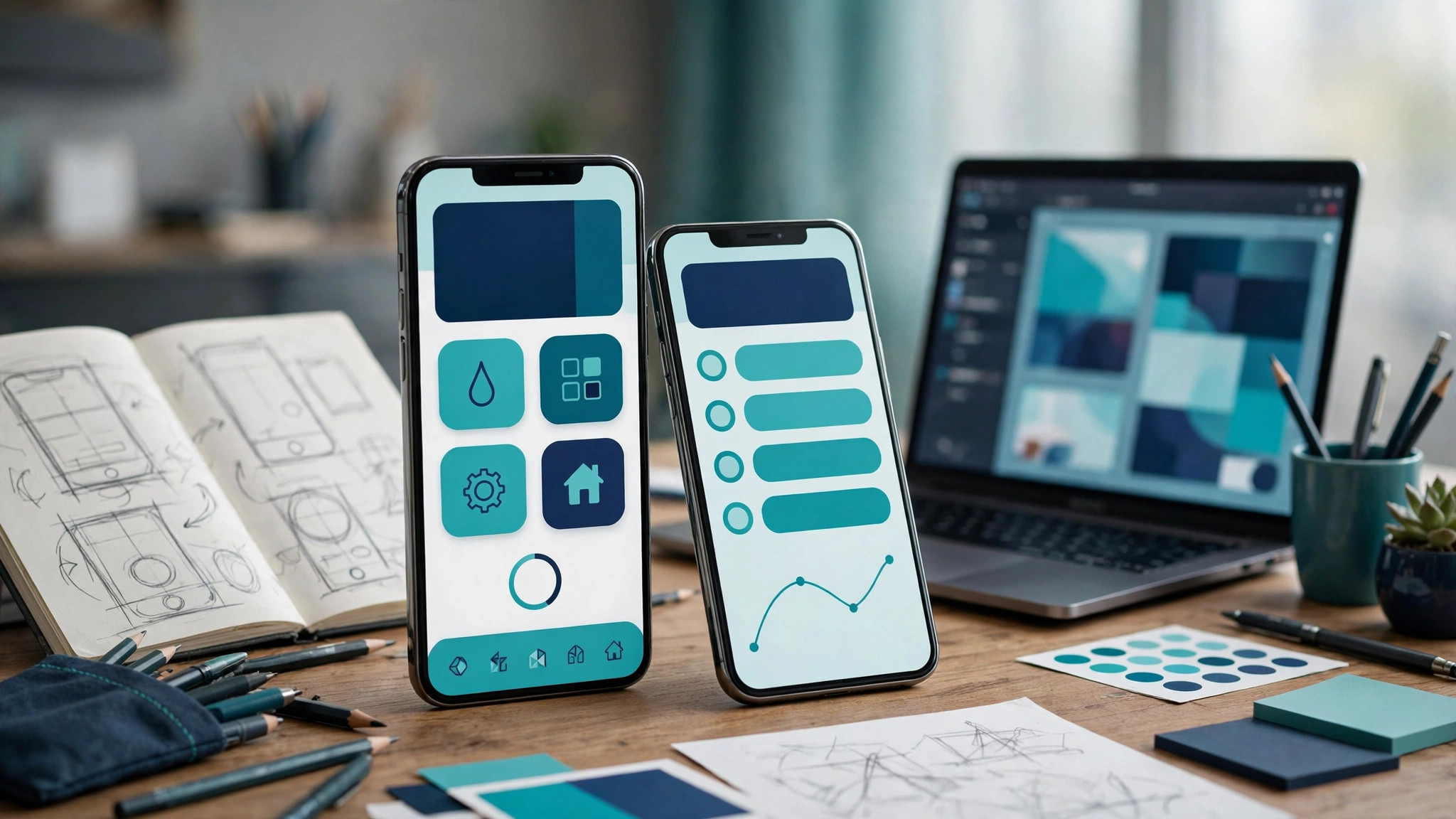

“How Much Does It Cost to Build a Mobile App in 2026?”
How Much Does It Cost to Build a Mobile App in 2026?
It is the first question every business owner asks, and the answers online are confusing: quotes with wildly different numbers of zeros, all claiming to be "typical." Here is an honest breakdown of what actually drives app cost in 2026, so you can budget with confidence.
The short answer: complexity bands
Industry guides published this year converge on roughly these bands for agency-built apps:
Simple app / MVP: a focused feature set, standard UI, one platform or cross-platform — typically in the tens of thousands of dollars, built in 2–4 months. Think booking tools, internal utilities, simple storefronts.
Mid-complexity app: custom UI, real backend, integrations like payments and notifications, both platforms — commonly $50K–$150K, 4–7 months. Think marketplaces, fitness apps with payments, client portals.
Complex app: real-time features, heavy backend logic, AI features, compliance requirements — $150K–$500K+, 7–14+ months. Think fintech, telehealth, multi-vendor platforms.
Enterprise / platform scale: distributed systems, high availability, regulatory compliance — higher still, with timelines measured in years. These are representative ranges, not a price list. The same idea can sit in two different bands depending on scope.
What actually moves your number
Forget "it depends" — here are the specific cost drivers, roughly ordered by impact:
Platforms. iPhone and Android are different platforms. Building natively for both means building two apps. Cross-platform frameworks (Flutter, React Native) share most of the code and are the right choice for most business apps.
Backend. Your app needs somewhere to store accounts and data, plus an admin area so your team can manage content. For many businesses, the backend and admin panel are the most expensive part of the build.
Features and integrations. Industry-representative figures for common additions: user authentication and profiles, push notifications, payment integration (Stripe and similar), maps and location, in-app chat, and an admin dashboard. Each adds design, build, and testing time.
Custom design vs standard UI. Bespoke interfaces cost more than standard components — worth it for consumer apps, often unnecessary for internal tools.
AI features. Chatbots, recommendations, and AI workflows are a growing cost line in 2026 — a basic assistant costs far less than a custom LLM-powered feature set.
The costs nobody quotes you
Maintenance: 15–20% of build cost per year. OS updates, bug fixes, security patches, hosting. On a $50,000 app, that's roughly $7,500–$10,000 every year, forever.
Third-party services. Payment processors, SMS, push notification services, map APIs — usage-based fees that grow with your user base.
App store work. Apple and Google each have review rules, and apps get rejected for surprising reasons. Budget time (and patience) for review cycles.
Scope changes. The #1 budget killer. Lock the feature list before development starts; changes mid-build cost multiples of what they'd cost in planning.
How to spend less without building junk
Start with an MVP. Ship the core workflow that proves the idea; add the rest after real users tell you what they want.
Go cross-platform unless you have a specific reason not to (games, AR, bleeding-edge OS features).
Buy, don't build: Stripe for payments, Firebase for backend basics, proven SDKs for chat and maps.
Reuse what you have. If your website already runs a CMS or backend, the app may be able to plug into it instead of duplicating it.
Get a fixed quote from a team that scopes properly — open-ended hourly billing rewards slow work.
What Santol Edge charges
Mobile App Development starts from $3,500 — covering focused MVPs and single-purpose business apps, with a fixed quote agreed before any work starts. Larger or multi-platform builds are quoted individually after a free consultation, so you know the full number before committing. An illustrative example of honest scoping: a service business wanting appointment booking, push reminders, and a simple admin panel is a contained mid-size project. The same business adding real-time chat, payments, loyalty points, and both native platforms is a different project at a different price — and a proper quote should show you exactly which features move the number. Contact us for a free consultation and a fixed quote on your app idea. Related posts: /blog/mvp-app-development-guide, /blog/flutter-vs-react-native-2026, /blog/how-long-to-build-mobile-app
Frequently asked questions
How much does it cost to build a mobile app in 2026? Industry guides generally place simple apps in the tens of thousands of dollars, mid-complexity apps around $50K–$150K, and complex platforms at $150K–$500K+. The real number depends on features, platforms, and integrations — not app-store category. Santol Edge builds mobile apps from $3,500 for focused MVPs, with a fixed quote after a free consultation. What drives app development cost the most? Screens and features, number of platforms (one platform vs iOS + Android), backend complexity, third-party integrations (payments, maps, chat), and custom design. Every extra platform adds significant cost if you build natively for each. Is cross-platform (Flutter/React Native) cheaper than native? Usually, yes — one shared codebase for iOS and Android instead of two separate apps. Industry guides commonly report meaningful savings versus dual native builds. Native still wins for games, AR/VR, or apps needing cutting-edge OS features. How much does app maintenance cost per year? A widely cited benchmark is 15–20% of the original build cost annually — covering OS updates, bug fixes, security patches, and hosting. Budget this from day one, not after launch. How can I reduce app cost without hurting quality? Start with an MVP (core features only), build cross-platform, use proven third-party services (Stripe for payments, Firebase for backend basics) instead of custom-building everything, and lock the scope before development starts — mid-project scope changes are the #1 budget killer. How long does it take to build an app? Rough industry timelines: a simple MVP in 2–4 months, a mid-complexity app in 4–7 months, and complex platforms in 7–14+ months. Timelines stretch with integrations, compliance needs, and revision cycles.
Santol Edge Team
AuthorWrites extensively about generative AI, autonomous agent design, enterprise automation architectures, and customer experience engineering at Santol Edge.
Read Next

How AI Automation Helps Modern Businesses Scale 10x Faster
Discover how forward-thinking companies are deploying intelligent agents and automated pipelines to reduce overhead and boost revenue.

How AI Chatbots Transform Customer Support and Business Growth
Learn how AI chatbots improve customer response times, qualify leads, support teams, and create more consistent customer experiences.

AI Voice Agents: What They Are and How They Work
Understand where voice agents add value, how they connect with business systems, and what to consider before launching one.
Community Comments (0)
Oct 10, 2026Elisa Gabriella
VP of Operations · BrightSync
“A genuinely useful piece — the point about consolidating thin pages matches what we saw on our own platform last year. Deploying automated workflows cut roughly half our manual ticket volume and resolution speed went up significantly.”
Leave a Reply
Your email address will not be published. Required fields are marked *