
Santol Edge Team
AI Research & Engineering at Santol Edge
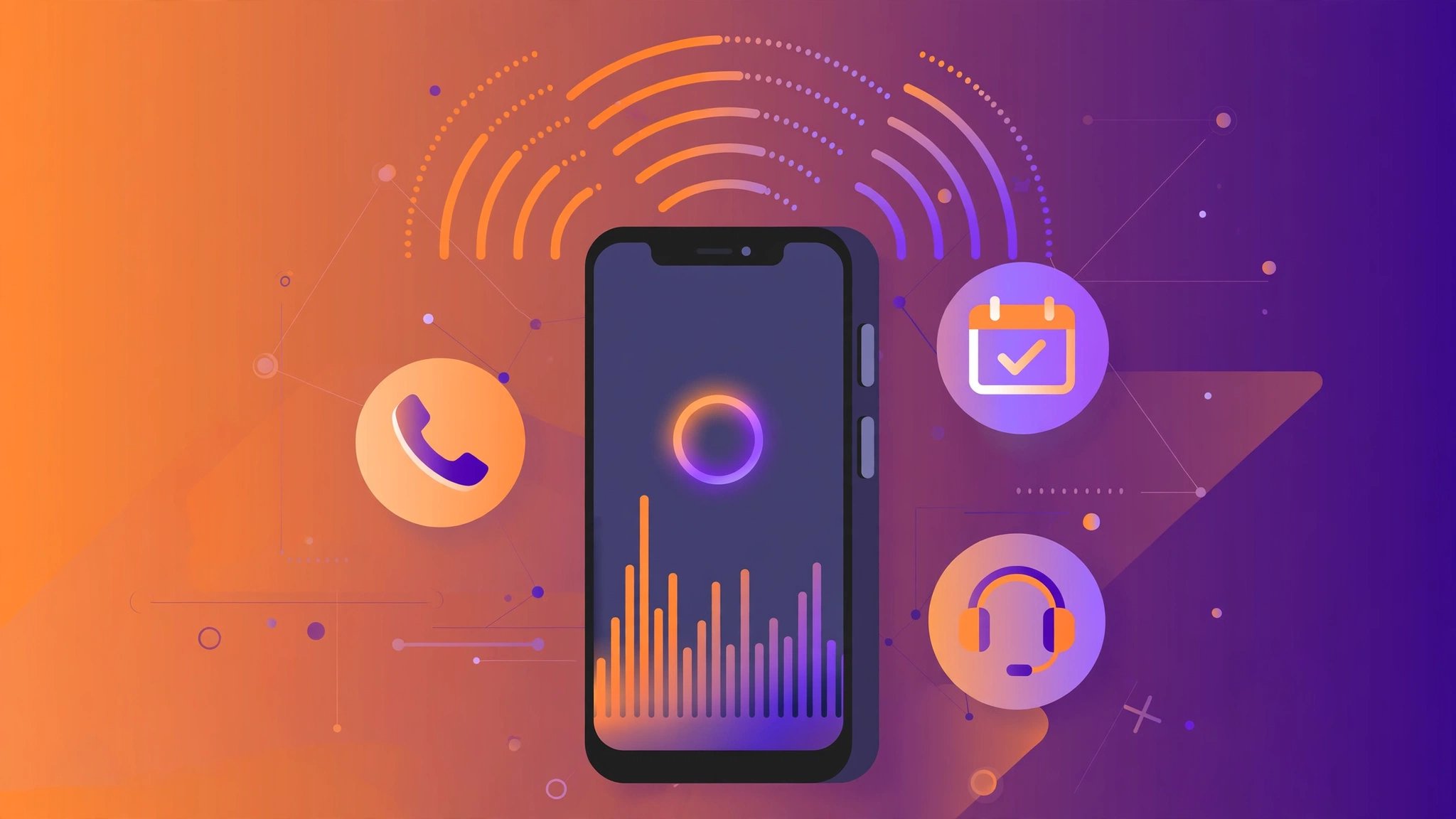

“AI Voice Agent Use Cases for Small Business: 10 Practical Examples”
AI Voice Agent Use Cases for Small Business: 10 Practical Examples
An AI voice agent is software that answers or places phone calls, talks with callers in natural language, and takes action — booking appointments, answering questions, qualifying leads, logging everything to your systems. It is not a phone menu ("press 1 for sales"). Callers speak normally, and the agent responds, asks follow-up questions, and knows when to bring in a human. Here are ten practical ways small businesses are actually using them in 2026, grouped by inbound and outbound, with an honest note on where they don't fit.
New to the concept? Start with our AI voice agents for business guide, which explains how the technology works.
Inbound Use Cases: Calls Coming In
1. After-hours reception and call answering
The classic use case. A plumber, clinic, law firm, or trades business gets calls at 7pm and on weekends — and every missed call is a customer calling a competitor. An AI voice agent answers every call, takes the details, and either books the job or passes a clean summary to the owner. Nothing about the call requires judgment a machine can't handle: who is calling, what they need, when they need it, and a callback number. This is the use case most small businesses should start with, because missed calls have a direct, visible cost.
2. Appointment booking, rescheduling, and confirmations
Clinics, salons, consultants, coaches, and home-service businesses live on their calendars. A voice agent can check live availability, offer slots, book the appointment, and send the confirmation — and handle the reschedule when plans change. The day-before confirmation call is especially valuable: a short automated call that confirms the appointment or rebooks on the spot is one of the most reliable ways to cut no-shows. Pair this with our appointment no-show reduction automation playbook for the full system.
3. Instant lead response and qualification
Speed matters. When someone fills out a quote form or requests a callback, an AI voice agent can call within a minute — while the prospect is still thinking about the problem. The agent asks the qualifying questions (budget range, timeline, what's needed), scores the lead, and books the serious ones straight into the rep's calendar. Leads that don't qualify get logged politely instead of eating a salesperson's afternoon. This is the highest-return use case for businesses that buy ads or get steady inbound inquiries.
4. Tier-1 support: hours, pricing, status, policies
A large share of support calls are the same ten questions: What are your hours? How much does it cost? Where is my order? What is your return policy? A voice agent trained on your business knowledge answers these instantly and consistently — the same accurate answer at 2am as at 2pm. Anything beyond its knowledge or authority transfers to a human with the full conversation attached, so the caller never repeats themselves. Your human team stops burning hours on repeat questions and focuses on the problems that actually need people.
5. Call screening, routing, and intake
For law firms, agencies, clinics, and B2B services, the first call is mostly information gathering. A voice agent collects the caller's details, understands what they need, and routes the call to the right person or department — a warm transfer with context, not a cold handoff. For intake-heavy businesses, the agent can complete the entire intake questionnaire before a professional ever gets involved, which makes the human's time dramatically more productive.
Outbound Use Cases: Calls Going Out
6. Post-demo and post-quote follow-up
Most deals die in the follow-up gap. A day or two after a demo or a sent quote, an AI voice agent calls to ask what the prospect thought, who else needs to see it, and what the next step should be. It is persistent without being pushy, it never forgets, and it works the entire pipeline every single day — including the quotes your reps mentally wrote off. The agent logs the outcome back to the CRM so nothing lives only in someone's head.
7. Re-engaging dormant leads
Old leads are the largest underworked asset most businesses own. Quotes from six months ago, trial users who went quiet, prospects who said "not right now." An AI voice agent can work through hundreds of them in days: check whether the timing has changed, offer something relevant, and book the ones who are ready. Humans find this work draining and deprioritize it; an agent does it with the same energy on call 500 as on call 1.
8. Appointment reminders and no-show reactivation
A short reminder call the day before an appointment cuts no-shows — and when the caller says the time no longer works, the agent rebooks on the spot instead of just logging a cancellation. The same approach reactivates past no-shows: a polite call a week later offering a new slot recovers bookings that would otherwise be lost forever.
9. Renewal, billing, and payment reminders
Renewal dates, overdue invoices, expiring subscriptions — these calls are polite, repetitive, and time-sensitive, which makes them perfect for automation. The agent reminds the customer, answers basic questions about the bill, and routes anyone mentioning cancellation or a dispute straight to a human. Consistency is the win here: nothing slips because a rep was busy or uncomfortable making the call.
10. Customer surveys and feedback calls
Voice response rates beat email surveys by a wide margin, and a voice agent can do something an email form can't: ask a follow-up question when an answer is interesting. A short post-service call — "How did the job go? Anything we could do better?" — surfaces problems while they are still fixable and testimonials while the customer is still happy.
The pattern across all ten: AI voice agents earn their keep on calls that are high-volume, time-sensitive, and follow a knowable shape. The conversation has a structure — qualify, book, confirm, remind, follow up — even though the caller's words vary. Complex negotiations, complaints with real emotion, and anything where trust is on the line stay human. The agent's job is to make sure the human's time goes to exactly those calls.
Which Use Cases Fit a Small Business Best?
You don't need all ten. The right starting point depends on where your business leaks money:
Leaking calls after hours? Start with after-hours reception (use case 1). If you're a one-person or small-team business, this alone can pay for itself.
Leaking bookings to no-shows? Start with booking and confirmations (use cases 2 and 8).
Leaking leads to slow follow-up? Start with instant response and post-quote follow-up (use cases 3 and 6).
Leaking rep time to repeat questions? Start with tier-1 support deflection (use case 4).
Pick the leak that costs you the most, automate that one call type well, and expand from there. One working use case beats five half-configured ones.
For a sense of what each of these costs to set up, see our AI voice agent cost breakdown.
Where AI Voice Agents Don't Fit (Honest Boundaries)
Not every call should be automated. Be cautious with:
Emotionally loaded calls — an upset customer, a sensitive complaint, bad news. A human needs to own these.
Complex negotiations — pricing discussions with real tradeoffs, custom scopes, anything where judgment and relationship matter more than speed.
Very low call volume — if you get three calls a week, you don't have an automation problem; just answer the phone.
Regulated conversations without guardrails — healthcare, finance, and legal calls need compliance review (consent, data handling, recording laws) before any agent goes live. Buildable, but not skippable.
A good implementation draws these lines explicitly: the agent knows exactly which situations trigger an immediate human handoff, and callers are never trapped in a loop.
FAQs
What is an AI voice agent for a small business?
It's software that handles phone calls in natural spoken language — answering inbound calls or placing outbound ones, understanding what the caller says, taking actions like booking appointments or updating your CRM, and transferring to a human when needed. Think of it as a tireless receptionist and follow-up assistant that works 24/7.
Do callers know they're talking to an AI?
They should. Ethical implementations disclose that the caller is speaking with an AI assistant, and many jurisdictions require it. In practice, disclosure doesn't hurt performance — callers care about getting their problem solved quickly, not about who or what solves it. The agent should also offer a human at any point.
How much does an AI voice agent cost for a small business?
Costs vary by platform and call volume, but a professionally set-up voice agent — configured with your business knowledge, booking integration, and human handoff — starts at $1,200 one-time for the AI Voice Agent Setup, with usage-based per-minute voice charges estimated during scoping. Ongoing support and improvements run $299–$999/month depending on scope.
Can an AI voice agent integrate with my CRM and calendar?
Yes — this is where the real value comes from. A properly built agent reads live calendar availability, books directly, logs call outcomes and transcripts to your CRM, and triggers follow-up workflows. Without these integrations it's just a fancy answering machine; with them it's part of your operations.
What happens if the AI doesn't understand the caller?
A good agent has multiple fallback layers: it asks for clarification, rephrases, and after a couple of failed attempts transfers to a human with the full conversation context. The transfer should be warm — the human sees what was already discussed, so the caller never starts over.
Is an AI voice agent better than hiring a receptionist?
It's a different tool. A voice agent handles high-volume, routine, after-hours, and time-sensitive calls at a fraction of the cost, with perfect consistency and instant recall. A human receptionist handles judgment, empathy, and complex situations. Most small businesses end up with both: the agent absorbs the routine volume so the human's time goes to the calls that actually need a person.
Want a Voice Agent Handling Your Calls?
Every use case above starts the same way: mapping which of your calls are routine enough to automate and which must stay human. We build AI Voice Agent setups starting at $1,200 one-time, configured with your real business knowledge, calendar and CRM integration, and a clean human handoff. Get a free consultation and we'll identify your highest-ROI call type together.
Santol Edge Team
AuthorWrites extensively about generative AI, autonomous agent design, enterprise automation architectures, and customer experience engineering at Santol Edge.
Read Next

How AI Automation Helps Modern Businesses Scale 10x Faster
Discover how forward-thinking companies are deploying intelligent agents and automated pipelines to reduce overhead and boost revenue.
How AI Chatbots Transform Customer Support and Business Growth
Learn how AI chatbots improve customer response times, qualify leads, support teams, and create more consistent customer experiences.

AI Voice Agents: What They Are and How They Work
Understand where voice agents add value, how they connect with business systems, and what to consider before launching one.
Community Comments (0)
Sep 26, 2026Elisa Gabriella
VP of Operations · BrightSync
“A genuinely useful piece — the point about consolidating thin pages matches what we saw on our own platform last year. Deploying automated workflows cut roughly half our manual ticket volume and resolution speed went up significantly.”
Leave a Reply
Your email address will not be published. Required fields are marked *