
Santol Edge Team
AI Research & Engineering at Santol Edge
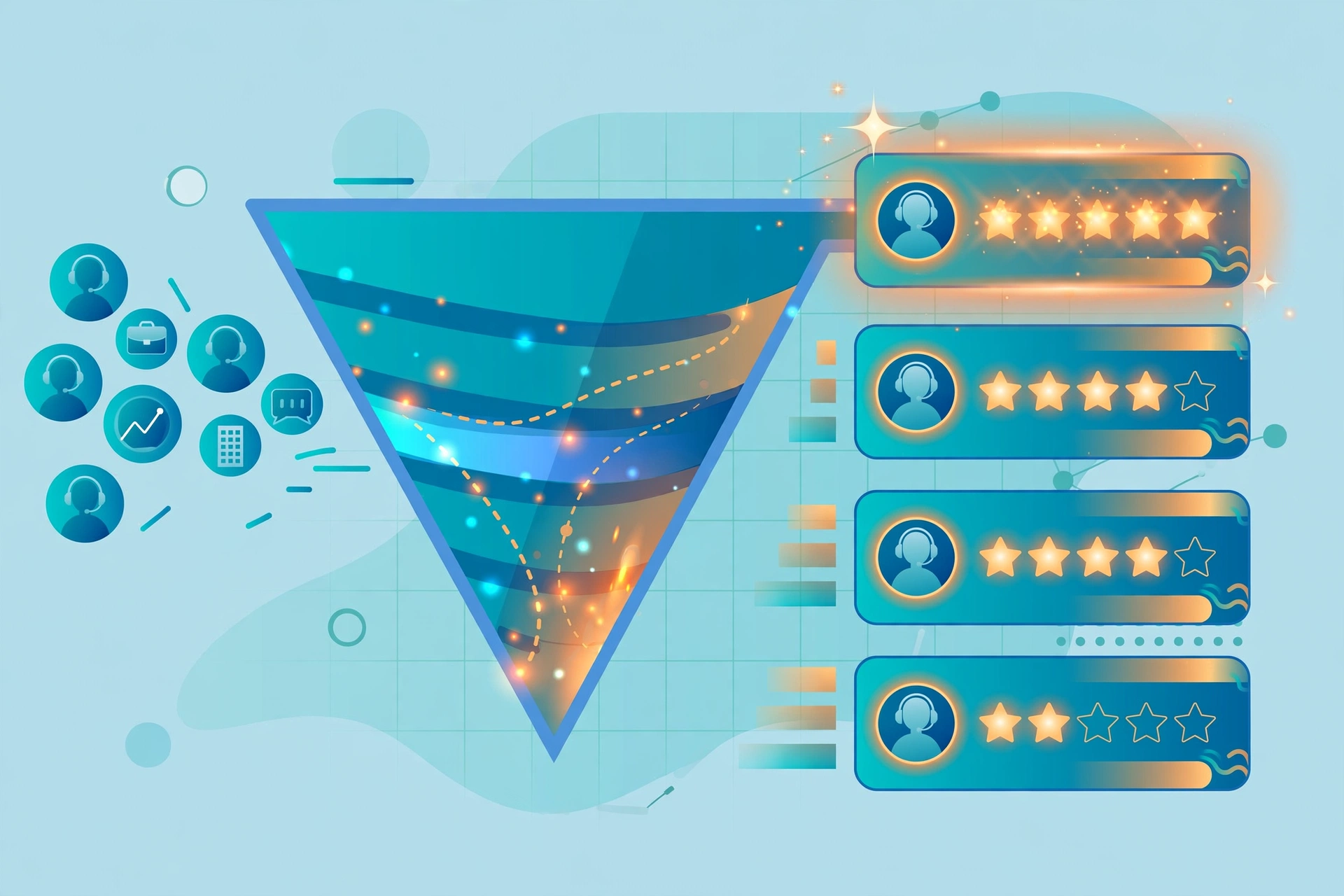

“AI Lead Scoring for Small Business: Stop Chasing Dead Leads”
# AI Lead Scoring for Small Business: Stop Chasing Dead Leads
Every small business knows the feeling: the phone rings, the inbox fills, the contact forms pile up — and half of it goes nowhere. Someone wanted a price and vanished. Someone else was "just looking." Meanwhile the genuinely hot lead — the one ready to buy this week — waited too long for a callback and went with a competitor.
The problem is not lead volume. It is lead triage. Your team treats every inquiry the same because nobody has time to investigate each one. AI lead scoring fixes that: it automatically ranks every incoming lead by how likely they are to become a customer, so your team calls the right people first.
## What Is AI Lead Scoring?
Lead scoring is the practice of assigning a value to each lead based on how likely they are to buy. Traditional lead scoring is manual — a salesperson looks at a form submission and guesses. AI lead scoring does it automatically, instantly, using data:
- What they told you — budget range, timeline, needs, company size (from forms or chat conversations)
- What they did — pages visited, time on pricing page, returned visits, email opens
- What they match — how closely they resemble your past customers
The AI weighs these signals and produces a score — say, 0 to 100 — plus a category: hot, warm, or cold. Your team sees the ranking the moment the lead arrives, not after someone manually reviews it.
## Why Small Businesses Need It More Than Enterprises
Enterprises have SDR teams, data analysts, and sophisticated CRMs. Small businesses have the owner, maybe a salesperson, and a spreadsheet. That makes lead scoring more valuable, not less:
- Limited follow-up capacity. When you can only call 10 people a day, calling the right 10 is everything.
- No analyst on staff. The AI does the analysis nobody has time for.
- Speed matters more. Small businesses win by responding fast. Scoring tells you who deserves the fastest response.
- Less waste. Stop spending afternoons chasing leads that were never going to buy.
## How It Works in Practice
Here is what AI lead scoring looks like day to day in a small business:
Morning: Three new inquiries arrived overnight. The system scored them: one 87 (hot — visited pricing twice, asked about timeline, matches your best customer profile), one 52 (warm — early research stage), one 23 (cold — wrong service area, vague request).
Your move: Call the 87 first, within minutes. Send the 52 a helpful resource and a nurture sequence. The 23 gets a polite automated response — no human time spent.
That afternoon: A website visitor chats with your AI chatbot, asks detailed questions about your process, and mentions they need work done "next month." The conversation feeds the scoring model: 91. Your phone rings before they leave the site.
End of week: The system shows which sources produce the hottest leads — so you shift budget toward what works.
This is not theory. It is what happens when scoring runs automatically on every inquiry, every day.
## Explicit vs. Implicit Signals
Good lead scoring combines two kinds of signals:
Explicit signals — what the lead directly tells you:
- Budget range and timeline
- Specific needs and requirements
- Role (decision-maker vs. researcher)
- Company size or project scope
Implicit signals — what their behavior reveals:
- Pricing page visits (strong buying signal)
- Time on site and return visits
- Content downloaded
- Email engagement
- Chat conversation depth
AI is particularly good at the implicit side — noticing patterns across hundreds of leads that a human would miss. Someone who visited your pricing page three times this week and asked your chatbot about availability is telling you something, even if their form answers were brief.
## Setting Up Scoring: A Simple Framework
You do not need a data science team. Start with a simple framework:
Step 1 — Define your ideal lead. Look at your last 10–20 customers. What do they have in common? Budget range, timeline, needs, how they found you. Write it down.
Step 2 — Pick 5–8 signals. Choose the explicit and implicit signals that best predict a good customer for your business. Fewer, stronger signals beat dozens of weak ones.
Step 3 — Weight them. Not all signals are equal. "Asked about pricing and timeline" should count more than "opened one email." Assign weights based on what actually correlates with closed deals.
Step 4 — Set thresholds. Decide what counts as hot (call now), warm (nurture), and cold (automate). Start with your gut; refine with data.
Step 5 — Connect it to action. A score nobody acts on is decoration. Hot leads trigger instant alerts and fast follow-up. Warm leads enter nurture sequences. Cold leads get light automation.
Step 6 — Review monthly. Check: did hot leads actually close at higher rates? Adjust weights and thresholds based on reality.
## Common Scoring Mistakes
Scoring everything equally. If every signal counts the same, the score means nothing. Weight ruthlessly.
Never updating the model. Your market changes, your offer changes — the scoring should evolve. Review it monthly.
Scores with no workflow. A hot lead that sits in the CRM for two days is a wasted score. Tie every tier to an immediate action.
Overcomplicating it. A simple 5-signal model you actually use beats a 50-signal model nobody understands.
Ignoring negative signals. Someone outside your service area, a student doing research, a competitor snooping — negative signals (wrong geography, no budget, bad fit) should drag scores down fast.
## AI Lead Scoring + Chatbots: The Natural Pair
Lead scoring works best when the data flows in automatically — and AI chatbots are the richest source of scoring data a small business has. Every chat conversation captures explicit signals (budget, timeline, needs — asked conversationally, answered honestly) and implicit ones (engagement depth, topics explored, return visits).
When your chatbot and your scoring work together, qualification happens inside the conversation: the bot asks the right questions, the system scores the answers in real time, and hot leads get routed to you instantly — sometimes while they are still on your website.
## FAQs
### What is AI lead scoring?
AI lead scoring automatically ranks your incoming leads by how likely they are to become customers, using data from their behavior and what they tell you — so your team prioritizes the right follow-ups.
### How accurate is AI lead scoring?
It improves with data, but even a simple starting model beats no scoring at all. Most businesses see meaningful prioritization within the first month, and accuracy climbs as the system learns which signals predict closed deals.
### Do I need a CRM for lead scoring?
You need somewhere for scores to live and trigger actions — a CRM is ideal, but even a structured spreadsheet with score-based workflows is a start. We recommend a proper CRM setup so hot-lead alerts and routing happen automatically.
### How much does lead scoring setup cost?
As part of our Lead Qualification Automation ($699 one-time), AI scoring is built into the qualification flow — every inquiry scored and routed automatically. Standalone scoring setups are quoted as a fixed price after a free consultation.
### Will it work with the leads I already have?
Yes. Existing contacts can be scored based on their history and engagement, which often surfaces hot opportunities hiding in an old list.
### How long until it pays off?
Most businesses feel the difference in the first week — the team simply calls better leads first. Measurable ROI typically shows within the first month as response times to hot leads drop.
### Does it replace human judgment?
No — it focuses it. The AI handles triage so your judgment is spent on conversations that matter, not on deciding which inbox message to open first.
### Can small businesses really use this, or is it enterprise tech?
It is more valuable for small businesses. Enterprises have teams to absorb inefficiency; you don't. Automated scoring gives a small team the prioritization of a much larger one.
## CTA (end of page)
Tired of chasing dead leads while hot ones go cold? [Get a Free Consultation](/contact) — we'll show you how automated lead scoring and qualification could reorder your pipeline around the leads that actually close. Or just [Contact us](/contact) and tell us where your follow-up breaks down.
Santol Edge Team
AuthorWrites extensively about generative AI, autonomous agent design, enterprise automation architectures, and customer experience engineering at Santol Edge.
Read Next

How AI Automation Helps Modern Businesses Scale 10x Faster
Discover how forward-thinking companies are deploying intelligent agents and automated pipelines to reduce overhead and boost revenue.
How AI Chatbots Transform Customer Support and Business Growth
Learn how AI chatbots improve customer response times, qualify leads, support teams, and create more consistent customer experiences.
AI Voice Agents: What They Are and How They Work
Understand where voice agents add value, how they connect with business systems, and what to consider before launching one.
Community Comments (0)
Sep 29, 2026Elisa Gabriella
VP of Operations · BrightSync
“A genuinely useful piece — the point about consolidating thin pages matches what we saw on our own platform last year. Deploying automated workflows cut roughly half our manual ticket volume and resolution speed went up significantly.”
Leave a Reply
Your email address will not be published. Required fields are marked *