
Santol Edge Team
AI Research & Engineering at Santol Edge
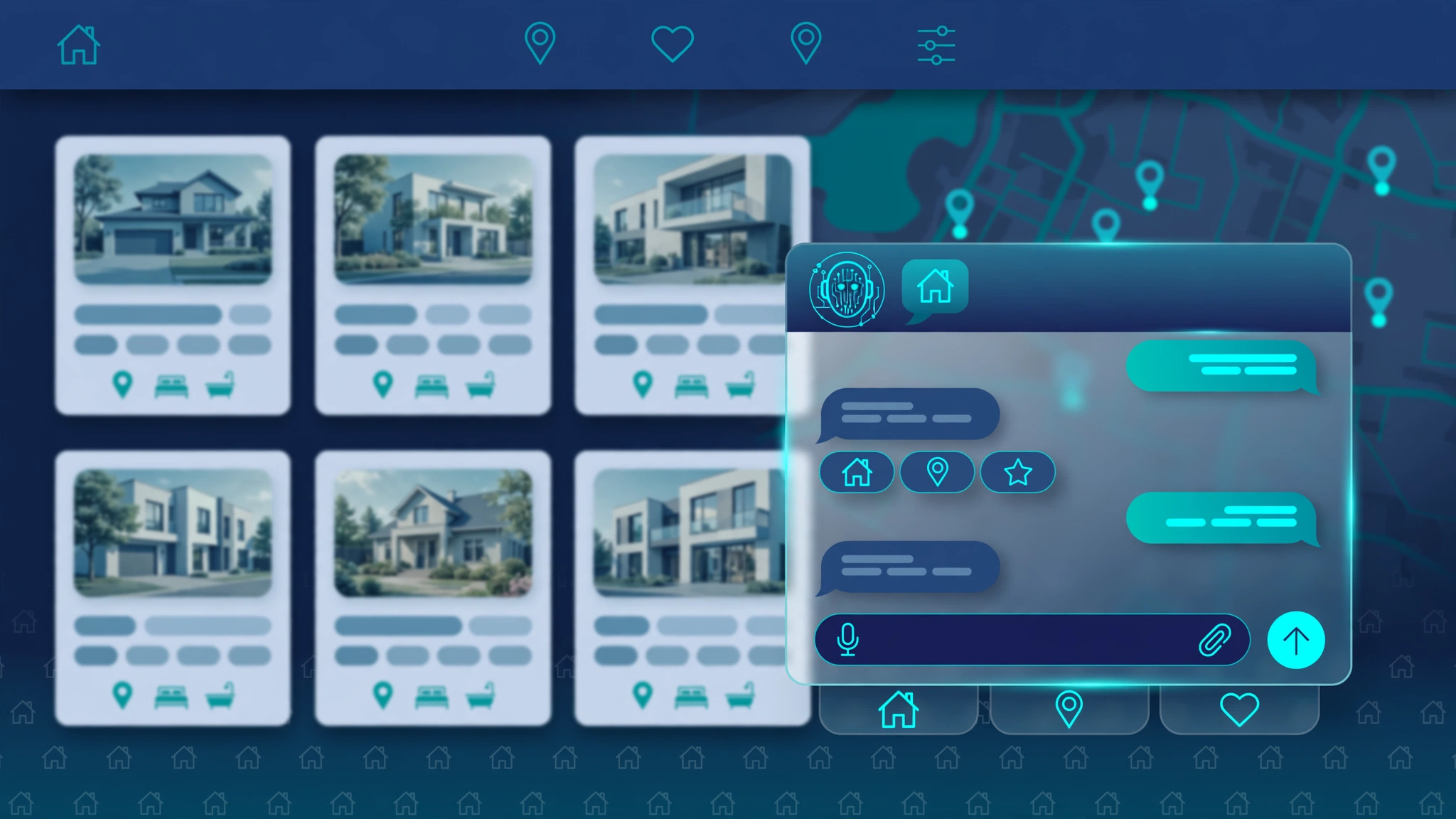

“AI Chatbots for Real Estate: What Actually Works in 2026 (and Why Most Fail)”
AI Chatbots for Real Estate: What Actually Works in 2026 (and Why Most Fail)
If you run a real estate website, you have probably been pitched an AI chatbot. The demo looked magical: a friendly assistant answering questions about square footage at 11 pm while you sleep.
Then you deployed it, and nothing changed. Your ISA — or you — still did all the qualification manually, one caller at a time.
This post is about that gap: why most real estate chatbots fail, what an AI chatbot for real estate must actually do, and the exact field-by-field qualification spec to demand from any vendor — including us — before you pay.
Why Most Real Estate Chatbots Fail
The failure is rarely the AI model. It is the job description the bot was given.
Most are configured as scripted FAQ trees: "What is the price? → $650,000. How many bedrooms? → 4." They answer questions beautifully. But answering questions is not what turns a website visitor into an appointment. Qualification is.
Think about what your best ISA does on a call. They probe: When are you looking to move? What's your budget range? Which neighborhoods? Are you pre-approved? They listen for buying signals, redirect vague answers, and hand over a lead only when it meets the agent's real criteria.
The typical chatbot does none of this. It was built to deflect questions, like a customer-support widget for an e-commerce store — and property is not e-commerce. A failed real estate chatbot usually shows three symptoms:
It captures name + email and calls it a lead. That is contact info, not qualification. Your agent still has to make the discovery call.
It cannot hold a natural conversation. It needs visitors to pick from button menus ("Are you buying or selling?") and breaks when someone types something human like "we're kinda just browsing for now but might be serious next spring."
It is disconnected from your systems. No CRM write, no calendar offer, no notification to the right agent. The chat log dies in a vendor dashboard nobody opens.
If your bot does any of these, you do not have a lead-qualification chatbot. You have a brochure with a typing animation.
What Actually Works: Probing Qualification, Not FAQ Trees
A working real estate chatbot behaves like an ISA, not a knowledge base. Its loop is ask → listen → probe vague answers → capture structured data → route or book — moving a visitor from browsing listings to a qualified appointment without human touch, while writing everything to your CRM.
That requires three things the FAQ-style bots lack:
1. Natural follow-up logic (handling "it depends" answers)
Real buyers are vague. "What's your budget?" gets "around 800k, depends on the area" or "we haven't really set one." A scripted bot accepts the first answer and moves on, or errors out. An ISA-grade bot probes: "Got it — are you flexible up to the high 800s for the right neighborhood, or is 800k a hard ceiling?" That second question is worth more than ten FAQ answers.
2. Deep CRM and calendar integration
The conversation is only half the product. What matters is what the bot does with what it learns:
CRM write-back: every captured field (timeline, budget, neighborhoods, financing) lands in the contact record in your CRM — HubSpot, Follow Up Boss, kvCORE, LionDesk, or wherever you work — not in a vendor-only log.
Smart routing: hot buyers go to the right agent (by territory, price band, or specialty), cold leads go to a nurture list, sellers get routed to listing agents.
Calendar booking: when the lead is qualified, the bot offers real appointment slots from your calendar and books the viewing call. "Appointment Booking Automation" is exactly this handoff, and it is the step where chatbots turn into revenue.
3. Listing-aware answers (grounded in your inventory)
An ISA-grade bot should answer property questions from your actual listings — price, beds, baths, lot size, HOA, school zones — rather than hallucinating details. In 2026 this usually means connecting the bot to your MLS feed, your website's listing database, or a regularly synced inventory file, so answers stay current and the bot can proactively suggest properties matching the buyer's stated criteria.
For a deeper look at what a well-built chatbot costs and includes, see our breakdown of AI chatbot development cost.
The ISA-Grade Qualification Spec: Field by Field
This is the part no vendor post seems willing to print. Here is the actual qualification data set an AI chatbot for real estate should capture before it calls a lead "qualified." Use it as your evaluation checklist.
Identity & contact: full name, validated phone number (asked before booking), email
Intent
Buying, selling, renting, or just browsing/researching
If selling: address or area of the property, and reason for selling
Timeline
Target move date or decision window (e.g., "next 3 months," "spring," "just looking")
Why it matters: timeline is a useful lead-scoring signal in real estate. A bot that does not ask it is barely qualifying.
Budget
Price range or ceiling (buyer), expected list price (seller)
The bot must probe vague answers ("it depends") rather than accept them
Location
Target neighborhoods, cities, or school districts
Commute constraints if mentioned ("needs to be near downtown")
Financing readiness
Pre-approved / pre-qualified, planning to get pre-approval, or cash buyer
Why it matters: this single field separates window-shoppers from closable buyers, and most chatbots never ask it
Property criteria
Property type (house, condo, townhouse, land, multi-family)
Must-haves vs. nice-to-haves (beds/baths minimums, garage, yard, pool)
Urgency & motivation
Reason for moving (job change, upsizing, downsizing, investment)
Current living situation (renting with lease end date, owns and needs to sell first)
Viewing availability
Preferred days/times for a call or showing — captured as structured data the calendar integration can act on
Consent
Explicit opt-in for follow-up calls/texts (TCPA-style consent capture where applicable)
A bot that captures most of these fields in natural conversation, writes them to the CRM, and books the qualified ones — that is an AI chatbot for real estate. Everything else is a widget.
Vendor Evaluation Checklist
When a vendor demos their real estate chatbot, score them on this list:
[ ] Probing logic: give the demo a vague answer ("my budget depends") and watch whether it probes or accepts it
[ ] CRM integration depth: does it write structured fields to your CRM, or dump transcripts into its own dashboard?
[ ] Calendar booking: can it offer real slots and book, or does it just say "an agent will call you"?
[ ] Listing grounding: are property answers pulled from your live inventory, or from a static FAQ?
[ ] Routing rules: can hot leads go to specific agents by territory or price band?
[ ] Human handoff: when the bot is stuck, does it escalate gracefully with full context, or drop the conversation?
[ ] After-hours coverage: does it actually engage and qualify visitors at midnight, or just take a message?
[ ] Ownership of data: do you own the captured lead data and conversation history if you cancel?
[ ] Measured rollout: can it start on one page (e.g., listing detail pages) before going site-wide?
For agencies also fielding phone inquiries, it is worth comparing the chat approach with AI voice agent use cases — many firms end up running both, with chat covering the website and a voice agent covering after-hours calls.
Demo Theater: Red Flags to Watch For
Vendors rehearse demos. Here is how to spot the ones that will not survive contact with real visitors:
The demo only uses perfect inputs. If the salesperson never types something messy, vague, or off-script — do it yourself. Type like a real buyer.
The "CRM integration" is a screenshot. Ask to see a lead record created live in an actual CRM, with fields populated, during the demo. If they cannot, it is not integrated.
No calendar in the demo. A bot that never books an appointment in the demo will never book one in production.
Every answer is instant and perfect. Real AI has latency and occasional uncertainty. A suspiciously flawless demo may be a human-assisted or hard-scripted walkthrough.
Pricing without scoping. CRM choice, listing feed, and routing rules vary wildly. A flat quote without questions about your stack means the vendor has not thought about your stack.
No handoff story. Ask: "What happens when the bot doesn't know?" Vague answers here mean dead conversations in production.
What This Should Cost (Honestly)
Pricing here is all over the map, which is why buyers get burned. Our honest numbers, for benchmarking:
Our AI Website Chatbot is a $499 one-time build. CRM integration, calendar booking, MLS feeds, multi-agent routing, and other custom functionality are scoped individually: fixed quote after a free consultation, quoted before work starts.
If a vendor quotes 10x ours, ask what the 10x buys in the checklist above. Sometimes the answer is legitimate — deep MLS/IDX work is genuinely complex. Often it is not.
FAQ
Do AI chatbots replace ISAs in real estate?
No — they replace the repetitive first discovery call. Your human ISA or agent still closes; the bot just makes sure humans only spend time on qualified, appointment-ready leads.
Will a chatbot annoy my website visitors?
A badly configured one will — instant popups, demanding a phone number before answering anything. A good one waits, offers help contextually on listing and pricing pages, and earns contact info by being useful first.
Can a chatbot really handle vague buyer answers?
That is the entire differentiator. Modern conversational AI can probe, rephrase, and redirect the way a human ISA does. If a vendor's bot cannot, that is a configuration failure.
What CRM integrations matter most?
At minimum: writing structured qualification fields (not transcripts) to your CRM, creating or updating the contact, and triggering your follow-up sequences. Follow Up Boss, HubSpot, and kvCORE cover most independent agencies.
How long does a real estate chatbot take to set up?
A standard configuration with qualification flows and CRM/calendar integration is typically a days-to-weeks project, not months. The long pole is usually your side: finalizing the qualification fields and routing rules.
The Bottom Line
Most real estate chatbots fail because they answer questions instead of qualifying buyers. The ones that work behave like your best ISA: probe vague answers, capture the fields that predict a closing — timeline, budget, financing readiness — write everything to your CRM, and book the appointment.
Want that spec on your site? Start with a free consultation — we'll map your criteria and routing rules, then give you a fixed quote before anything starts.
Contact us
Santol Edge Team
AuthorWrites extensively about generative AI, autonomous agent design, enterprise automation architectures, and customer experience engineering at Santol Edge.
Read Next

How AI Automation Helps Modern Businesses Scale 10x Faster
Discover how forward-thinking companies are deploying intelligent agents and automated pipelines to reduce overhead and boost revenue.
How AI Chatbots Transform Customer Support and Business Growth
Learn how AI chatbots improve customer response times, qualify leads, support teams, and create more consistent customer experiences.

AI Voice Agents: What They Are and How They Work
Understand where voice agents add value, how they connect with business systems, and what to consider before launching one.
Community Comments (0)
Sep 27, 2026Elisa Gabriella
VP of Operations · BrightSync
“A genuinely useful piece — the point about consolidating thin pages matches what we saw on our own platform last year. Deploying automated workflows cut roughly half our manual ticket volume and resolution speed went up significantly.”
Leave a Reply
Your email address will not be published. Required fields are marked *