
Santol Edge Team
AI Research & Engineering at Santol Edge
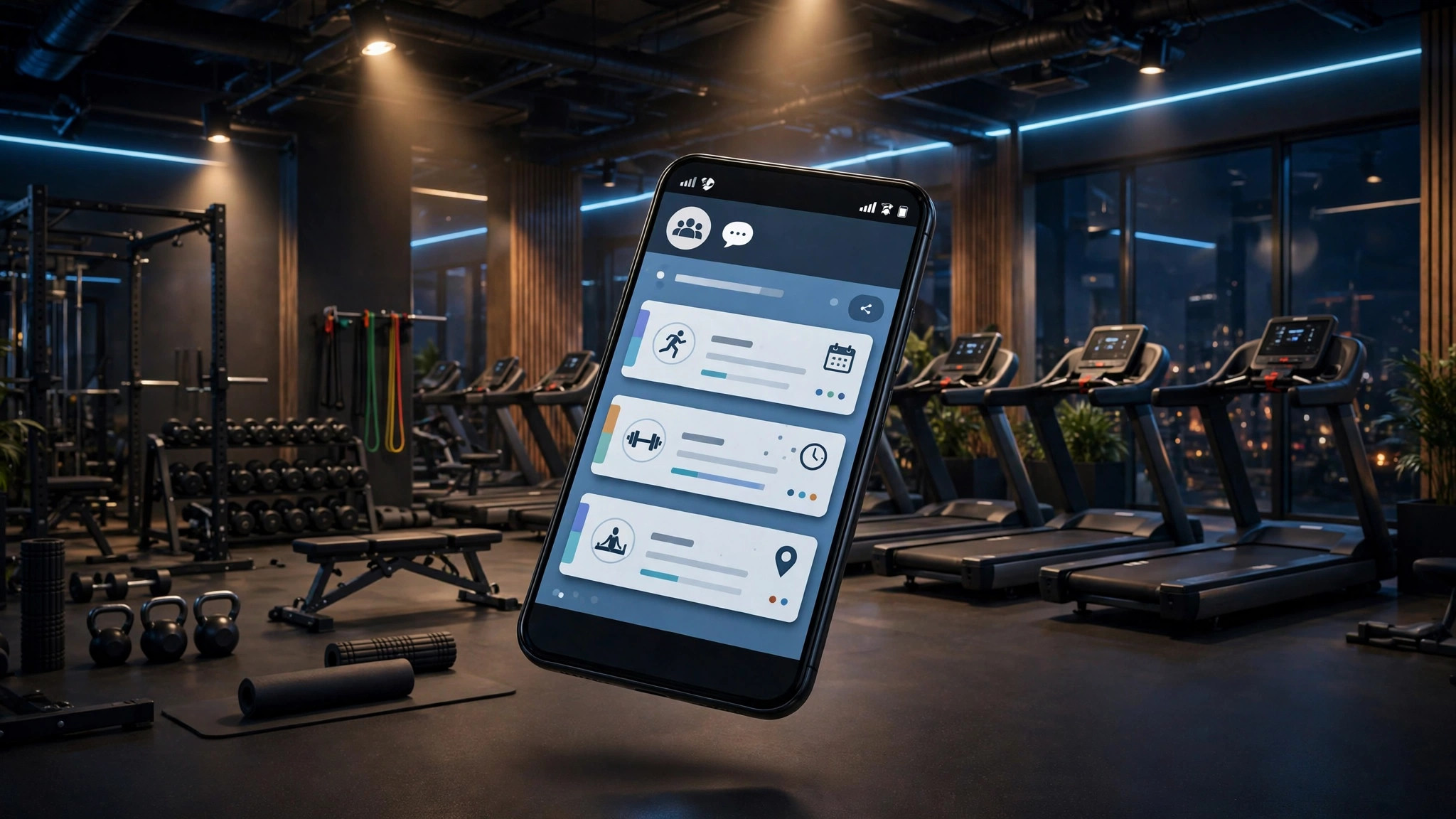

“AI Chatbots for Gyms & Fitness Studios: Fill Classes on Autopilot (2026)”
AI Chatbots for Gyms & Fitness Studios: Fill Classes on Autopilot
The phone rings at the front desk. A prospect asks about class times. Your best trainer is coaching a full HIIT class and can't step out to answer. By the time someone gets back to the prospect — an hour later, maybe tomorrow — they've already booked a free trial at the studio down the road.
This is the daily reality for most gyms and fitness studios. Your staff's job is to coach, correct form, and keep members engaged — not to sit by the phone repeating the same class schedule and membership prices all day. And prospects? They research gyms at 9 PM after work, scrolling Instagram and Google, ready to book a trial right then. If nobody answers, they move on.
An AI chatbot for gyms acts as your front desk that never closes. It answers questions, books trials, fills classes, and captures leads around the clock — on your website, on WhatsApp, and even on Instagram. This guide walks through exactly what a gym chatbot does, how it books classes without the back-and-forth, and what to check before you buy one.
What a Gym Chatbot Handles Day to Day
A gym chatbot is trained on your actual studio data: your timetable, your prices, your membership plans, your policies. Day to day, it handles the conversations your staff currently repeats dozens of times a week:
Class schedules and availability. "When's the next spin class?" The chatbot pulls from your live timetable and answers instantly — including which classes still have spots.
Membership and pricing questions. Plans, pricing, freeze policies, cancellation terms. The chatbot gives your real prices and plan details, not guesses.
Trial bookings. Prospects can book a free trial or intro session directly in the chat — no phone tag, no "I'll get back to you."
Trainer and class info. Class intensity, what to bring, instructor bios, beginner-friendly recommendations. Practical info that helps prospects feel confident showing up.
Facility questions. Opening hours, parking, changing rooms, child care, whether you have a sauna. The small questions that are big enough to stop someone from booking.
Many studios find that once the chatbot takes over these repeat questions, the front desk gets breathing room to focus on the people actually in the room — the members paying you today.
Class Booking Without the Back-and-Forth
Booking a class shouldn't require three messages and a phone call. A class booking chatbot connects to your booking calendar and handles the whole flow inside the conversation:
Real-time availability: The chatbot reads your class calendar and only offers spots that are actually open — no overbooking, no disappointment at the door.
Instant confirmation: The member or trial prospect gets a booking confirmation in the chat, often with the details added to their calendar.
Waitlists: When a class is full, the chatbot can offer the waitlist and notify the member automatically if a spot opens up.
Reminders: Automated class reminders typically reduce no-shows. Instead of an empty bike in a booked-out spin class, the chatbot confirms attendance ahead of time and releases unconfirmed spots back to the waitlist.
Rescheduling: "I can't make Thursday — can I switch to Friday?" The chatbot handles the change in seconds, without a staff member getting involved.
The result: fuller classes, fewer empty spots, and zero admin time spent on scheduling ping-pong.
Trial-to-Membership Conversion
For most fitness businesses, the free trial is the single biggest lever for growth — and the biggest source of lost prospects. Someone clicks your Instagram ad at 10 PM, lands on your site, and asks a question. If nobody responds until morning, the excitement is gone.
A gym membership chatbot responds instantly, every time:
Instant engagement: The prospect's question gets answered in seconds, 24/7. That fast first response is typically what keeps the conversation alive.
Gentle qualification: The chatbot asks a few natural questions — fitness goals, preferred class times, experience level — and recommends the right trial or intro session.
Booking in the same conversation: No "leave your number and we'll call you." The trial gets booked right there, with a confirmation and reminders.
Follow-up sequences: After the trial, automated follow-ups check how it went and nudge toward a membership — while the experience is still fresh.
Many studios find this automation catches the prospects who would otherwise quietly disappear between the trial and the sign-up.
After-Hours Capture: Your Prospects Research Late
Think about when people actually look for a new gym. It's not during your staffed hours. It's 8–11 PM: after dinner, scrolling the phone, comparing local studios. Trainers are busy coaching during peak class times — they're not available to answer the phone at 9:40 PM, and they shouldn't have to be.
An AI front desk works the night shift for you. It captures the prospect's details, answers their questions, books the trial, and queues everything for your team in the morning. The prospect goes to sleep already booked. That's the difference between "we'll follow up Monday" and a booked trial before your competitor's front desk even opens.
WhatsApp and Multi-Channel: Meet Members Where They Are
Most gym members don't live in their email inbox. They live on WhatsApp, Instagram, and your website. A gym chatbot can work across all of them with one consistent set of answers:
Website chat: Catches visitors on your pricing and class schedule pages — the pages where booking intent is highest.
WhatsApp: Members message the same way they message friends. The chatbot confirms bookings, sends reminders, and answers questions in the channel they actually read.
Instagram: Prospects DM your studio after seeing a reel or ad. The chatbot responds instantly instead of letting the DM sit unread for hours.
One training setup, one knowledge base, consistent answers everywhere. No juggling separate tools for each channel.
What to Check Before You Buy
Not all chatbots are built for fitness businesses. Before you invest, check these points:
It must be trained on YOUR data. Your timetable, your class names, your prices, your cancellation policy. A generic chatbot that can't answer "how much is the 10-class pack?" correctly is worse than no chatbot — it erodes trust. Ask how the provider trains the bot on your specific studio information and how updates are handled when you change your schedule or pricing.
There must be a human handoff for health questions. This is a safety line, not a nice-to-have: the chatbot must NOT give fitness, medical, or health advice. Questions about injuries, medical conditions, pregnancy-safe classes, or health concerns should always escalate to your staff immediately. Any reputable gym chatbot has clear handoff rules for these topics — verify this before you sign anything.
It should integrate with your booking system. The chatbot is only as useful as its connection to your calendar and booking software. Check compatibility before committing.
Reminders and follow-ups should be included. Booking is half the value; the follow-through — confirmations, reminders, waitlist notifications, post-trial follow-ups — is the other half.
Pricing should be transparent. Know exactly what you pay upfront, what's included, and what ongoing support costs. Vague "custom pricing" is a red flag for small studios.
Pricing and Our Fixed-Quote Approach
Transparency matters, so here are the real numbers. An AI Website Chatbot — the kind that handles class bookings, membership FAQs, and trial capture described in this guide — is $499 one-time. If you want voice coverage too (an AI voice agent answering calls), AI Voice Agent Setup is $1,200 one-time.
For broader automation, an AI Automation Audit is $149, Lead Qualification automation is $699, Appointment Booking automation is $799, and CRM Setup is $999 — all one-time. Ongoing support plans run $299–$999/month. Anything else is a fixed quote after a free consultation — no hourly billing surprises, no invented tiers. Pricing is always in USD, exactly as shown on our website.
If you're running a gym or fitness studio and spending too much time on the front-desk treadmill, a chatbot is one of the simplest upgrades you can make.
Frequently Asked Questions
How long does it take to set up an AI chatbot for a gym?
Typically, the setup is measured in days, not months. The main work is training the chatbot on your data — your timetable, prices, membership plans, and policies. Once that's loaded and tested, the bot goes live on your website and messaging channels. Many studios are up and running within a week or two of providing their studio information.
Will the chatbot work with my existing booking software?
That's the key question to ask any provider. A gym chatbot needs to read and write to your class calendar to check availability, book spots, and manage waitlists. Confirm compatibility with your booking platform before you commit — integration quality is what separates a useful gym chatbot from a decorative one.
Can the chatbot answer questions about injuries or health conditions?
No — and it shouldn't. A properly configured gym chatbot never gives fitness, medical, or health advice. Questions about injuries, medical conditions, or health concerns are handed off to your staff immediately. This is a standard safety rule, so verify any provider has it in place before buying.
What happens when the chatbot can't answer a question?
Good gym chatbots have a human handoff built in. When a question falls outside its training — or touches on health, complaints, or anything sensitive — it routes the conversation to your team with the full chat history attached. You reply in your own time; the prospect never feels dropped.
Does a gym chatbot work on WhatsApp and Instagram?
Yes. Modern gym chatbots work across your website, WhatsApp, and Instagram DMs with the same knowledge base and booking abilities. That multi-channel setup matters because many prospects message on social channels rather than filling out a contact form.
How much does an AI chatbot for a gym cost?
Pricing varies widely, which is why transparent pricing matters. A one-time AI Website Chatbot setup at a fixed price — $499 one-time in our case — covers the chatbot build, training on your studio data, and launch. Ongoing support plans typically run $299–$999/month depending on what you need. Be wary of providers who won't quote a clear number.
Will a chatbot feel impersonal to my members?
A chatbot handles the routine questions — schedules, prices, booking — so your staff can be more personal where it counts: coaching, onboarding new members, and building community. Many studios find members actually prefer getting instant answers at midnight over waiting for a callback.
Do I need technical skills to manage the chatbot?
No. Once it's set up, updating your timetable or prices is handled through your normal processes — the chatbot pulls from your booking system and its knowledge base. If you change your schedule, the bot reflects it without you touching any code. Ongoing support plans exist precisely so you never have to manage the technology yourself.
Ready to Fill Your Classes on Autopilot?
Your trainers should be coaching — not answering the same schedule and pricing questions fifty times a week. An AI chatbot takes over your front-desk conversations, books trials while you sleep, and fills your classes without the back-and-forth. Setup is a fixed $499 one-time, trained on your actual timetable and prices.
Contact us for a free consultation and a fixed quote for your studio.
Santol Edge Team
AuthorWrites extensively about generative AI, autonomous agent design, enterprise automation architectures, and customer experience engineering at Santol Edge.
Read Next

How AI Automation Helps Modern Businesses Scale 10x Faster
Discover how forward-thinking companies are deploying intelligent agents and automated pipelines to reduce overhead and boost revenue.
How AI Chatbots Transform Customer Support and Business Growth
Learn how AI chatbots improve customer response times, qualify leads, support teams, and create more consistent customer experiences.
AI Voice Agents: What They Are and How They Work
Understand where voice agents add value, how they connect with business systems, and what to consider before launching one.
Community Comments (0)
Sep 30, 2026Elisa Gabriella
VP of Operations · BrightSync
“A genuinely useful piece — the point about consolidating thin pages matches what we saw on our own platform last year. Deploying automated workflows cut roughly half our manual ticket volume and resolution speed went up significantly.”
Leave a Reply
Your email address will not be published. Required fields are marked *