
Santol Edge Team
AI Research & Engineering at Santol Edge
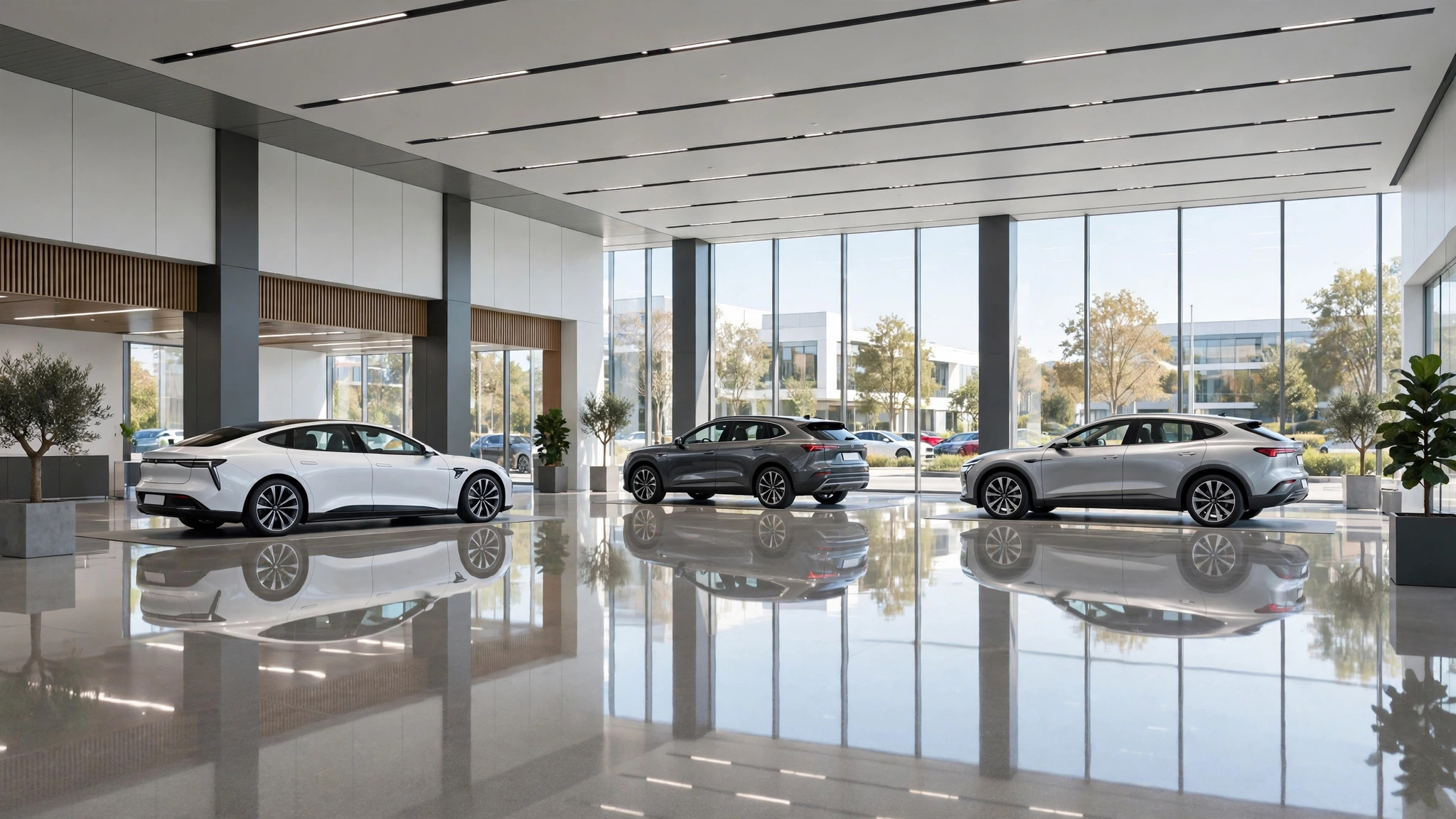

“AI Chatbots for Car Dealerships: The 2026 Guide”
AI Chatbots for Car Dealerships: The 2026 Guide
A shopper lands on your vehicle detail page at 11 PM. They like the SUV, they want to know the out-the-door price, whether their trade-in qualifies, and if they can test-drive it Saturday morning. Your showroom is dark. If your website can only offer a "contact us" form, that shopper is gone — to the dealer whose site answered them.
Car buyers do most of their research online before ever visiting a showroom. The dealership that engages them during that research — instantly, helpfully, at any hour — wins the visit. An AI chatbot built for automotive retail does exactly that: it engages visitors on vehicle pages, answers inventory questions, captures trade-in and quote requests, books test drives, schedules service appointments, and feeds everything into your CRM.
This is a builder's guide for dealer principals and marketing managers: where chatbots create value on a dealer website, how the integrations work, what it costs, and how to evaluate a build.
The Lead-Speed Economics of Car Sales
Car sales have a well-known dynamic: the dealer who responds first usually gets the appointment. Shoppers submit leads to multiple dealerships and buy from the one that engages them fastest and most helpfully. Every hour of delay shrinks your chance of the sale.
The problem is structural. Internet leads arrive around the clock — evenings, weekends, holidays — while your BDC or sales team works shifts. After-hours leads sit until morning. Weekend overflow piles up. Even during the day, a busy Saturday means leads wait.
A chatbot collapses response time to zero. The moment a visitor engages, the conversation starts: the bot answers, qualifies, captures details, and books the appointment — then hands a complete, structured lead to your CRM for the team's morning follow-up. The economics are simple: the same ad spend and the same website traffic produce more showroom visits when no lead waits.
VDP Engagement: Meeting Shoppers on Vehicle Pages
The vehicle detail page is where buying intent is highest — and where most dealer websites are the least helpful. Static specs, a photo gallery, and a generic lead form. The shopper has questions the page does not answer: Is this exact unit still available? What is the real price with fees? Can I get it in a different color? What is the monthly payment?
An AI chatbot trained on your live inventory answers these on the spot. It can confirm availability, discuss pricing and payment estimates, compare trims, and surface similar vehicles when the exact one is gone. Instead of bouncing to check another dealer's site, the shopper keeps talking — and the conversation ends with a test-drive booking or a quote request, not a closed tab.
This is where chatbots beat forms decisively: a form cannot answer "is it still available?" A conversation can.
Trade-In and Quote Capture
Trade-ins are high-intent moments. A shopper asking about their trade-in value is a shopper close to buying. The chatbot captures trade-in details conversationally — year, make, model, mileage, condition — and either provides an estimated range based on your valuation approach or routes the details to your used-car manager for a firm number.
Quote requests work the same way. "What is your best price on this unit?" The chatbot collects the details, confirms what the shopper wants in the quote (financing, cash, lease), and delivers the request to the right desk with full context. Your team responds with the number instead of spending the first call gathering basics.
Test-Drive Booking
The test drive is the highest-converting event in car sales — shoppers who test-drive buy at dramatically higher rates than those who do not. Every friction point between interest and the test drive costs you sales.
The chatbot books test drives directly: it checks your sales team's availability, offers times, confirms the vehicle, collects the driver's details, and sends confirmations and reminders. The shopper hangs up — or closes the chat — with a confirmed appointment. Reminders reduce no-shows. Rescheduling happens through a link instead of a phone tag. The calendar fills while your team sells.
Service Scheduling: The Retention Engine
Service is the profit center most dealers under-market, and the service scheduler is often a phone queue. A chatbot that schedules service appointments — asking for the vehicle, the concern, preferred times, and whether a loaner is needed — captures service business that would otherwise go to independent shops.
Service customers are also your future sales customers. Every service visit is a relationship touchpoint and a trade-in opportunity. A chatbot that makes booking service effortless keeps those customers in your ecosystem instead of losing them to the shop down the road.
DMS and CRM Sync: No Double Entry
A chatbot that captures leads but does not put them in your systems creates work instead of removing it. Proper automotive builds integrate with your CRM and DMS: new conversations create leads with full activity history, test-drive bookings appear on the right calendars, trade-in details route to the used-car desk, and service requests flow to the service department.
Your BDC workflow does not change — it gets fed. The morning starts with structured, qualified leads instead of a pile of raw form submissions. Ask any builder for the specifics of your exact CRM: how leads are created, how they are assigned, and what data maps where. Vague integration promises are the most common disappointment in dealer tech.
For context on how these integrations typically work and what to demand from a builder, see our guides on how to train an AI chatbot on your business data and AI chatbot development cost.
What to Look For in a Builder
Live inventory awareness. The chatbot must know your actual inventory — what is on the lot, what is incoming, what just sold. Ask how the inventory feed works and how often it updates. A bot quoting a sold unit is worse than no bot.
Automotive conversation design. Car buying has a specific vocabulary and a specific flow: VDP questions, trade-ins, financing vs. lease, test drives, service. The builder should demonstrate automotive-specific conversation design, not a generic template with car words swapped in.
Lead routing by department. Sales, used cars, service, finance — the chatbot must route each conversation to the right desk with the right context. Ask to see the routing logic before you commit.
Your CRM, specifically. Not "we integrate with dealer CRMs" — your CRM, with the data mapping shown. This is the question that separates serious builders from template sellers.
Ongoing optimization. The first month of real customer conversations will reveal questions nobody predicted. Your builder should review transcripts, refine answers, and improve routing as part of ongoing support — not charge you a new project fee for every tweak.
What It Costs in 2026
Dealer chatbot pricing spans monthly SaaS tools to fully custom builds with DMS integration. When comparing, separate the setup cost from the monthly cost and confirm what counts as a billable change.
At Santoledge, an AI Website Chatbot is $499 one-time — built, trained on your inventory and processes, and live on your website. For dealerships that want automatic lead qualification and routing — scoring leads and sending hot prospects straight to the right desk — Lead Qualification is $699 one-time. Appointment Booking (test drives and service scheduling with calendar integration) is $799 one-time. An AI Automation Audit of your full lead handling is $149. Anything beyond these is a fixed quote after a free consultation.
Frequently Asked Questions
Will a chatbot annoy shoppers who just want to browse?
A well-built chatbot does not ambush visitors — it offers help and steps back. Most implementations greet once, stay available, and engage when the visitor asks something or lingers on a VDP. Shoppers who want to browse unbothered can dismiss it; shoppers with questions get instant answers. The key is respectful, non-aggressive design.
Can the chatbot give real pricing?
It gives the pricing you configure it to give: MSRP, your advertised price, payment estimates based on your parameters. For negotiated numbers, it captures the quote request and routes it to your team — which is the right boundary. The bot should never invent discounts or commit to numbers you have not approved.
How does it handle trade-in valuations?
The chatbot collects the vehicle details — year, make, model, mileage, condition — and either shares an estimated range based on your valuation method or sends the details to your used-car manager for a firm offer. You decide which approach fits your process; either way, the high-intent shopper is engaged immediately instead of waiting.
Does it replace my BDC?
No — it feeds your BDC. The chatbot handles instant engagement, qualification, and booking; your BDC handles the human follow-up, the negotiation, and the relationship. Dealers using chatbots typically find their BDC handling more leads better, not fewer leads.
What happens when inventory changes?
The chatbot's inventory knowledge updates from your feed, so sold units drop out and new arrivals appear. Confirm the update frequency with your builder — daily is the minimum for an active store; real-time or near-real-time is better.
Can it schedule service appointments too?
Yes — service scheduling is one of the strongest use cases. The chatbot takes the vehicle details, the concern, and preferred times, books the appointment, and can note loaner or shuttle needs. It is a direct driver of service retention.
What if a shopper asks something the bot cannot answer?
It hands off honestly: acknowledges the limit, offers to connect the shopper with the right person, or takes a callback request with full context. Being transparent about limits keeps trust; pretending to know things it does not destroys it.
How do I know it is working?
Every conversation is logged with transcripts and outcomes: leads captured, test drives booked, service appointments scheduled. Review the numbers monthly — cost per engaged visitor, appointment rate, and which inventory questions come up most. That data also tells you what to fix on the website itself.
Getting Started
Start with your website analytics: which pages get the traffic, where do visitors drop off, and how fast does your team currently respond to internet leads? That tells you where the chatbot earns its keep first — usually VDP engagement and after-hours capture. Then evaluate builders on live inventory integration, automotive conversation design, and specifics for your exact CRM.
If you would like a free consultation on what an AI chatbot would look like for your dealership, with a fixed quote based on your actual setup, Contact us.
Santol Edge Team
AuthorWrites extensively about generative AI, autonomous agent design, enterprise automation architectures, and customer experience engineering at Santol Edge.
Read Next

How AI Automation Helps Modern Businesses Scale 10x Faster
Discover how forward-thinking companies are deploying intelligent agents and automated pipelines to reduce overhead and boost revenue.
How AI Chatbots Transform Customer Support and Business Growth
Learn how AI chatbots improve customer response times, qualify leads, support teams, and create more consistent customer experiences.

AI Voice Agents: What They Are and How They Work
Understand where voice agents add value, how they connect with business systems, and what to consider before launching one.
Community Comments (0)
Sep 30, 2026Elisa Gabriella
VP of Operations · BrightSync
“A genuinely useful piece — the point about consolidating thin pages matches what we saw on our own platform last year. Deploying automated workflows cut roughly half our manual ticket volume and resolution speed went up significantly.”
Leave a Reply
Your email address will not be published. Required fields are marked *