
Santol Edge Team
AI Research & Engineering at Santol Edge
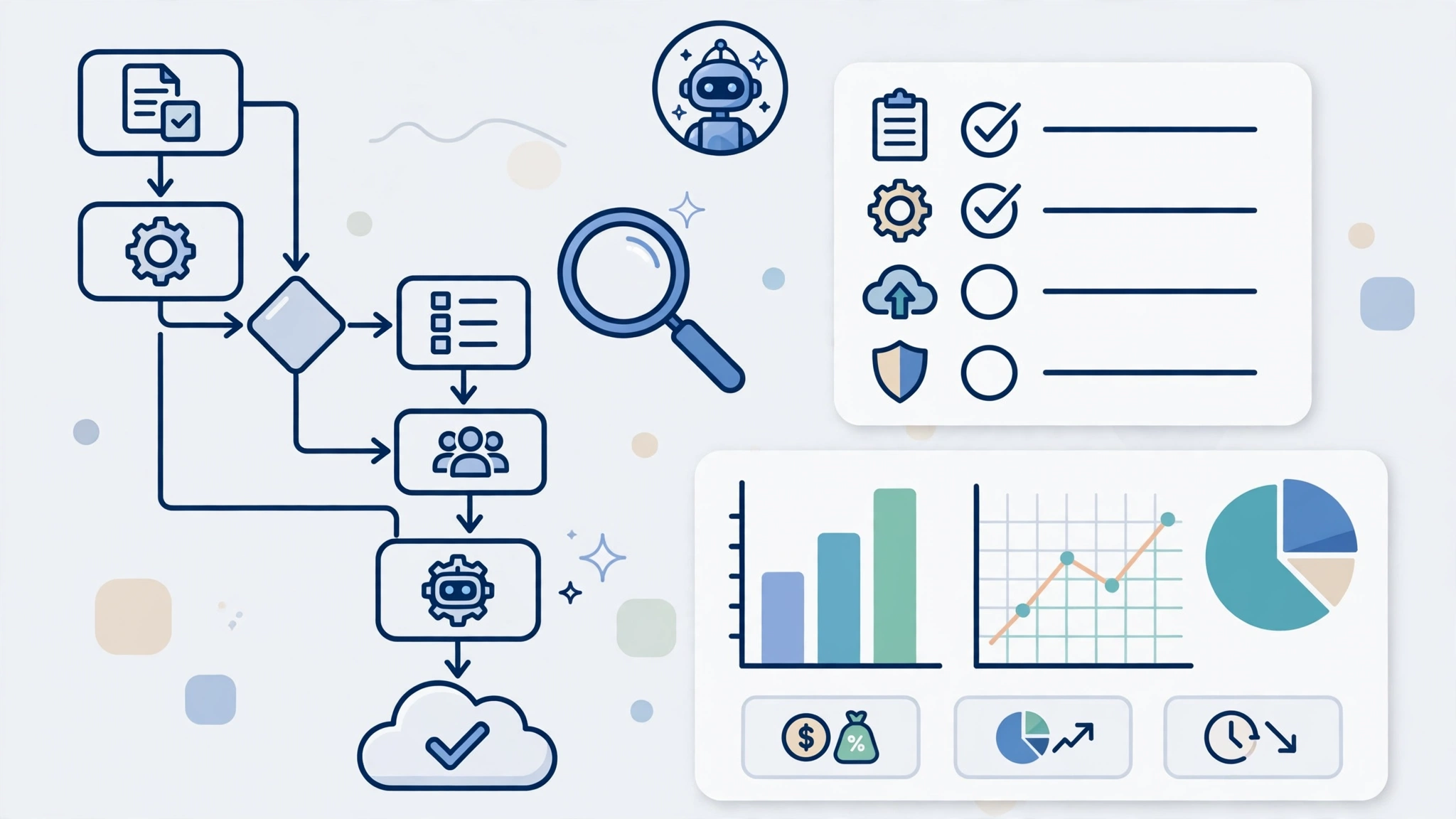

“What Is an AI Automation Audit? (And What You Actually Get)”
What Is an AI Automation Audit? (And What You Actually Get)
An AI automation audit is a structured review of how your business operates, built to answer three questions: what should you automate first, what will it cost, and what will it save. It is not a software demo, not a sales pitch dressed as advice, and not a 60-page PDF nobody reads. It is a decision document.
Most automation projects fail for the same boring reason: the business picked the tool before understanding the workflow. Someone buys a chatbot, a voice agent, or a workflow platform, plugs it into a messy process, and wonders why nothing improved. An audit flips the order — map the work first, measure what it costs today, then decide what to automate, with what, and in which order.
If you are thinking about AI for your business but do not know where to start — or you have already bought tools that sit half-used — this guide explains what an AI automation audit covers, what you actually receive at the end, how long it takes, what it costs, how to spot a bad one, and what happens after.
What an AI Automation Audit Actually Covers
A proper audit follows the same skeleton regardless of who performs it. The details vary, but these five parts are always there:
1. Business and process overview. The auditor learns what you sell, who your customers are, how your team is organized, and what software you already use. This is the context-setting conversation — usually a call or a short questionnaire — and it keeps the rest of the audit grounded in your reality instead of generic best practices.
2. Workflow mapping. Your key processes get documented step by step: how a lead moves from first contact to closed deal, how appointments get booked and confirmed, how invoices go out, how customer questions get answered. The map shows who does what, which tools are involved, and where information moves between systems. This is often the first time a business owner sees their own operation drawn out end to end — and the bottlenecks become obvious on paper.
3. Time and cost analysis. For each workflow, the auditor estimates how long it takes, how often it happens, and what it costs in staff time. This creates the ROI baseline: without knowing what a manual process costs you today, nobody can honestly tell you what automating it will save.
4. Tool and data inventory. What software do you already pay for? Where does your customer data live, and how clean is it? Many businesses discover they already own 80% of what they need — the problem is not missing software, it is that nothing is connected. Our CRM automation guide walks through deciding what to automate first inside the tools you already have. An honest audit will tell you when the answer is "connect what you have" instead of "buy something new."
5. Opportunity identification and ranking. This is the core output. Each automation opportunity gets ranked by impact (time or money saved), feasibility (how easy it is to build), cost (tools and setup needed), and timeline (how fast it can go live). The ranking matters more than the list — a list of 20 ideas without priorities is just a wishlist. If you want the broader picture first, our AI automation guide for small business covers the same ground from the owner's perspective.
The Deliverables: What You Walk Away With
The difference between a useful audit and a waste of money is what lands in your hands at the end. Insist on written deliverables, not just a conversation. A complete audit should give you:
A current-state workflow map showing how your key processes work today, with the manual bottlenecks marked.
An automation opportunity inventory — every realistic opportunity identified, not just the three the auditor wants to sell you.
An ROI-prioritized roadmap that ranks opportunities so you know what to do first, second, and later — and just as importantly, what to skip.
Costed recommendations for each priority item: what the build costs, what the ongoing costs are (software subscriptions, usage fees, maintenance), and what the expected time savings look like.
Clear verdicts per workflow: automate now, fix the data or process first, or keep it human. Some things should not be automated, and a good audit says so.
Implementation next steps — what happens after the audit, who does what, and in what order.
And here is what an audit is not: it is not the build itself. The audit produces the plan; implementing it is a separate engagement. Any auditor who is upfront about this distinction is more trustworthy than one who blurs it.
How Long Does an Audit Take?
A focused audit of one business function — say, lead handling and appointment booking — typically takes one to two weeks from kickoff to final report, including discovery, workflow mapping, analysis, and the review call.
A few things stretch the timeline: auditing several departments at once, a team that is hard to pin down for interviews, or data spread across systems nobody fully understands. A good auditor states the timeline upfront after a short scoping conversation. Be wary of anyone who quotes a timeline before asking what is in scope — they are selling a template, not an audit.
What Does an AI Automation Audit Cost?
Pricing varies with depth and who does the work. Focused, productized audits from freelancers and small agencies commonly run from a few hundred dollars into the low thousands; enterprise consultancies charge far more for multi-week, multi-department engagements. You are paying for senior judgment: correctly identifying which three workflows matter and which seventeen do not.
Santol Edge offers an AI Automation Audit for a flat $149 one-time — a fixed-scope review that maps your key workflows, ranks the automation opportunities by ROI, and hands you the prioritized roadmap described above. Fixed pricing means you know exactly what the audit costs before it starts, with no hourly meter running.
One pricing red flag worth naming: the "free audit" that turns out to be a 45-minute sales call for a single platform. A real audit produces written deliverables you keep regardless of whether you hire the auditor to build anything. If there is nothing to take home, it was not an audit.
Red Flags: How to Spot a Bad Audit Offer
Not every audit is worth paying for. Watch for these:
It promises specific savings before seeing your business. Nobody can honestly quote your ROI before mapping your workflows. Guaranteed numbers upfront are marketing, not analysis.
It recommends tools before mapping processes. If the "audit" starts with a software demo, the conclusion was decided before the investigation. The workflow comes first, always.
There are no written deliverables. A conversation and a handshake is not an audit. You should receive the workflow map, the ranked opportunities, and the costed roadmap in writing.
Every recommendation points to the auditor's own platform. Some recommendations naturally favor the auditor's expertise — that is fine. But if all roads lead to one product regardless of your situation, you got a sales process, not an audit.
It is one-size-fits-all. A template with your logo on it is not an audit of your business. Your workflows, your tools, and your numbers should be visible in every section of the report.
What Happens After the Audit
The audit ends with a decision document, and then you decide. Three paths are normal:
Build the top priorities. Most businesses start with the one or two opportunities ranked highest — the ones with the biggest impact and the shortest path to live. At Santol Edge, the common follow-ons are the builds the audit usually surfaces: AI lead qualification ($699 one-time), AI appointment booking ($799 one-time), and CRM setup ($999 one-time), each with a fixed quote agreed before work starts.
Fix the foundations first. Sometimes the audit finds that the process itself is broken — no automation will fix a workflow that nobody follows. In that case the honest next step is simplifying the process or cleaning up the data before building anything.
Take the roadmap elsewhere. A good audit stands alone. The deliverables should be clear enough that another agency — or your in-house team — can implement them. If an auditor implies the roadmap only works if they build it, that is a soft form of lock-in.
Whatever you choose, the audit has done its job if you can answer "what do we automate first, what does it cost, and what does it save" without guessing.
Do You Actually Need an Audit?
Honest answer: not always. If you have exactly one painful, obvious process — say, nobody answers the phones after hours and leads are leaking — you may not need a full audit to justify fixing it. You need the fix.
An audit earns its keep when the picture is murkier: several processes feel slow, you already pay for tools nobody fully uses, past automation attempts fizzled, or leadership disagrees about priorities. In those cases the audit pays for itself by preventing the most expensive mistake in automation — building the wrong thing first. Understanding how to measure automation ROI before you commit budget makes the audit's findings far more actionable. Even a $149 audit is cheap insurance against a $5,000 build aimed at the wrong problem.
If you are still weighing it, start from the question the audit answers. Can you name, right now, the three workflows worth automating first in your business, in order, with costs attached? If yes, you may not need one. If not, that is exactly what the audit is for.
Frequently Asked Questions
What is an AI automation audit?
An AI automation audit is a structured review of your business operations that identifies where AI and automation can deliver the most value. It maps your key workflows, measures what manual processes cost you today, ranks automation opportunities by ROI, and produces a written roadmap showing what to automate first, what it will cost, and what it should save.
What do you actually receive from an AI automation audit?
Written deliverables: a map of your current workflows with bottlenecks marked, an inventory of automation opportunities, an ROI-ranked priority list, costed recommendations (build cost plus ongoing costs), verdicts on what to automate now versus later versus never, and implementation next steps. If an "audit" ends with only a conversation, it was not a real audit.
How long does an AI automation audit take?
A focused audit of one business function typically takes one to two weeks from kickoff to final report. Multi-department audits take longer. The timeline depends on how many processes are in scope, how available your team is for discovery, and how scattered your data is across systems.
How much does an AI automation audit cost?
It varies with depth: focused productized audits from freelancers and small agencies commonly run from a few hundred dollars into the low thousands, while enterprise consultancies charge far more. Santol Edge offers a fixed-scope AI Automation Audit for $149 one-time. Be cautious of "free audits" that are really sales calls — a real audit produces written deliverables you keep.
Is an AI automation audit worth it for a small business?
It is worth it when the priorities are unclear — multiple slow processes, underused tools, or disagreement about where to start. The audit prevents the most expensive mistake in automation: building the wrong thing first. If you have one single obvious problem, you may be better off just fixing it directly.
What is the difference between an audit and just buying automation software?
Buying software starts with a tool and hopes it fits. An audit starts with your workflows and determines which tool — if any — fits each one. Many audits conclude the business should connect tools it already owns rather than buy new ones. Skipping the audit is how companies end up with expensive software nobody uses.
Will the audit just try to sell me something?
A good one will not. The audit should produce a written roadmap you can take to any agency or implement in-house, and it should be willing to recommend "do not automate this" where that is the honest answer. If every recommendation points to the auditor's own product, you received a sales process, not an audit.
What happens after the audit is done?
You decide. Most businesses build the top one or two ranked opportunities first, sometimes fix a broken process or clean up data before building, and sometimes take the roadmap to another provider. The audit has done its job when you can state what to automate first, what it costs, and what it saves — without guessing.
Ready to See What an AI Automation Audit Finds?
An AI automation audit is the fastest way to replace guessing with a ranked, costed plan. For $149, you get your workflows mapped, your opportunities ranked by ROI, and a written roadmap you can implement with us or take anywhere else.
Get a free consultation — we will walk you through what the audit covers and answer your questions before you spend anything.
Santol Edge Team
AuthorWrites extensively about generative AI, autonomous agent design, enterprise automation architectures, and customer experience engineering at Santol Edge.
Read Next

How AI Automation Helps Modern Businesses Scale 10x Faster
Discover how forward-thinking companies are deploying intelligent agents and automated pipelines to reduce overhead and boost revenue.

How AI Chatbots Transform Customer Support and Business Growth
Learn how AI chatbots improve customer response times, qualify leads, support teams, and create more consistent customer experiences.

AI Voice Agents: What They Are and How They Work
Understand where voice agents add value, how they connect with business systems, and what to consider before launching one.
Community Comments (0)
Sep 26, 2026Elisa Gabriella
VP of Operations · BrightSync
“A genuinely useful piece — the point about consolidating thin pages matches what we saw on our own platform last year. Deploying automated workflows cut roughly half our manual ticket volume and resolution speed went up significantly.”
Leave a Reply
Your email address will not be published. Required fields are marked *