
Santol Edge Team
AI Research & Engineering at Santol Edge
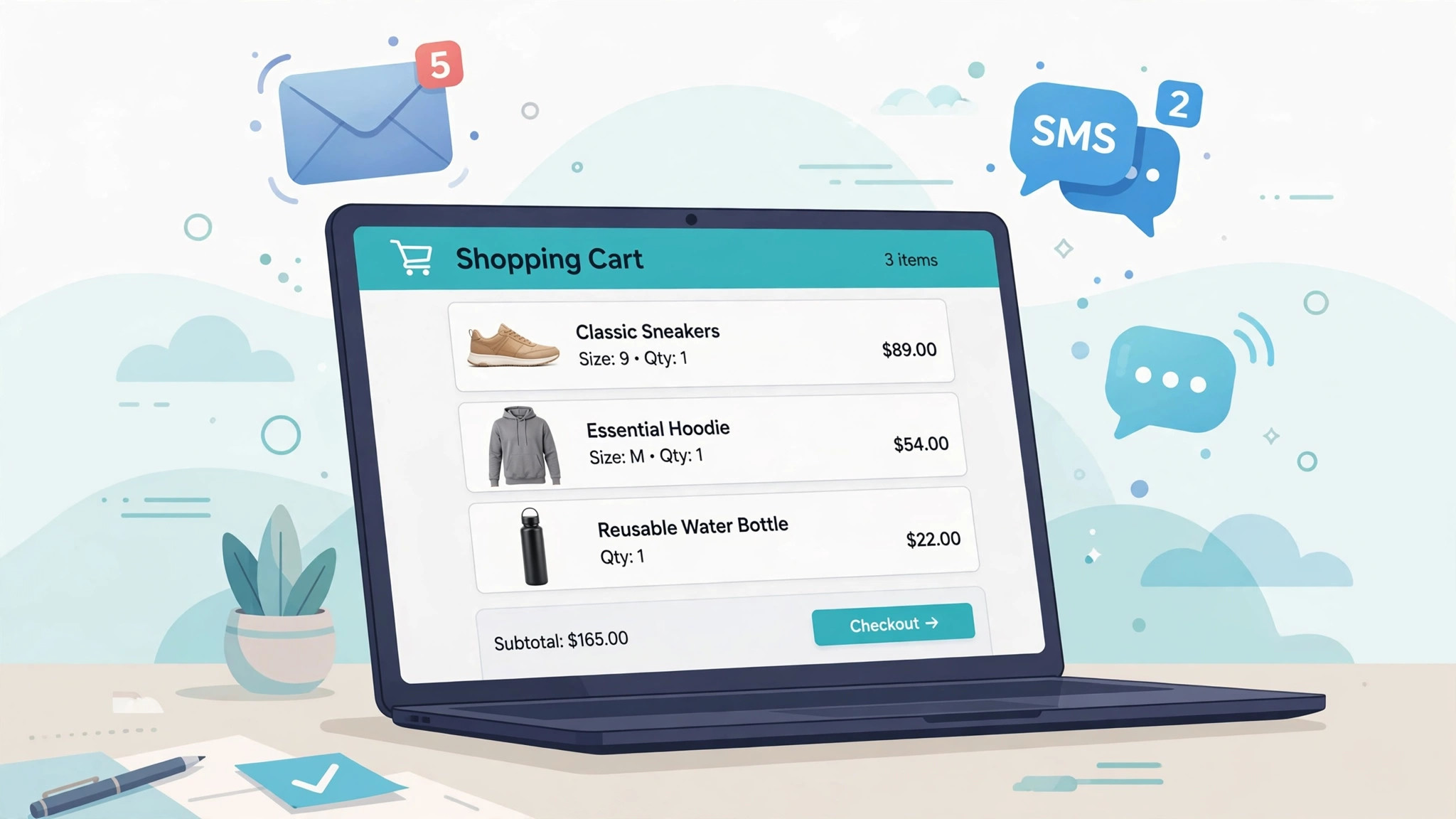

“Abandoned Cart Recovery Automation: The Sequence That Actually Works (2026)”
# Abandoned Cart Recovery Automation: The Sequence That Actually Works
Roughly seven out of ten online checkouts are abandoned — a figure that has barely moved in years. Most stores respond with a single generic "you forgot something" email and call it automation. It recovers almost nothing, because it treats every abandonment the same: the distracted shopper, the price comparer, and the person who was never going to buy all get the same nudge.
Real cart recovery automation is a short, deliberate sequence matched to why people actually abandon. This guide lays out the sequence that works in 2026 — across email, SMS, and chatbot — and the mistakes that quietly train your customers to abandon on purpose.
## Why People Really Abandon
Abandonment is not one behavior. Understanding the three common reasons is what makes the sequence work:
Distraction (the 1-hour window). A large share of abandoners simply got interrupted — a meeting, a child, a phone call. They still want the product. A quick, helpful reminder is all it takes, and timing matters more than cleverness.
Hesitation (the 24-hour window). These shoppers are comparing alternatives or doing mental math on the total cost — shipping, taxes, returns. They need their objection answered, not another reminder that the cart exists.
Decision (the 72-hour window). By now they are either gone or waiting for a reason to act. This is the only point where an incentive belongs — and it should be small, time-bound, and final.
One generic email cannot serve all three. The sequence can.
## The Sequence: 1 Hour, 24 Hours, 72 Hours
Message 1 — at 1 hour: remind, do not discount. Channel: email. Show the product image, the price, and one clear button back to checkout. The tone is a quiet nudge: "You left this in your cart — want to pick up where you stopped?" This catches the distracted, not the resistant. Critical rule: no discount here. If customers learn that abandoning triggers an instant coupon, you train them to abandon on purpose.
Message 2 — at 24 hours: answer the objection. Channel: email or push. This message handles the hesitation: shipping costs and delivery times stated plainly, a customer review of the exact item, size or compatibility guidance, your returns policy in one line. Only add an offer if your margins genuinely allow it — value and reassurance convert better than premature discounts.
Message 3 — at 72 hours: force a decision. Channel: SMS (only where the shopper explicitly opted in) or email. This is the final nudge: a small time-bound incentive, a low-stock note if true, or a direct line to support — "Questions before you check out? Reply here and we'll help." Never send a fourth message. And every message in the sequence must stop the moment the customer completes the purchase — a recovery email for an order that already shipped is embarrassing and erodes trust.
## The Plumbing That Makes It Work
The sequence fails before the first message if the data flow is wrong. Get these right:
Reliable checkout events. Your store must pass the shopper's email, cart contents, product links, checkout URL, and purchase status to the automation layer. Test it end to end: add a product, start checkout, abandon it, confirm the event fires, follow the recovery link on mobile and desktop, complete a test purchase, and verify pending messages stop.
Purchase-status exit conditions. Every step of the flow must check "has this customer purchased since the flow started" before sending. This is the single most common technical failure in cart recovery.
SMS consent, done properly. Do not hide SMS consent inside general terms or pre-check a marketing box. Tell the customer they are opting into cart-recovery texts, name the business, state the expected frequency, and make opting out easy. This is both a legal requirement in most markets and basic respect.
Chatbot as the conversational layer. Where email and SMS are one-way nudges, a chatbot on your site or WhatsApp can have the actual conversation: answer the sizing question, explain the shipping options, handle the "is this in stock" check in real time. The highest-return ecommerce chatbot flow is still cart recovery — but only when it is tied to intent and timing, not fired as a generic blast.
## AI's Role: Personalization Without the Creep Factor
In 2026, the meaningful AI upgrade to cart recovery is personalization of the message itself: the recovery email references the actual products, the likely objection based on browsing behavior, and the right incentive size for that customer's history. Open rates on personalized recovery messages run substantially higher than generic templates.
What AI should not do: invent urgency ("only 1 left!" when the warehouse is full), generate fake reviews, or personalize so aggressively it feels like surveillance. Recovery automation works on trust — the shopper is one click from buying, and anything that feels manipulative kills the sale permanently.
## What It Costs to Set Up
Cart recovery automation ranges from platform-native basics to fully custom builds. Most stores start with their ecommerce platform's built-in abandoned-checkout flows plus an email/SMS tool — the sequence above can be implemented in any competent marketing automation platform. Custom AI-driven recovery — personalized messaging, chatbot-based conversational recovery on WhatsApp or site chat, deep CRM integration — is a fixed-quote project after a free consultation. Our AI Automation Audit ($149 one-time) is the usual starting point: we map your abandonment points and tell you honestly whether the standard tooling or a custom build fits your store.
## The Mistakes That Cost Real Money
1. Discounting in the first message — trains customers to abandon deliberately.
2. More than three to four messages — persistence becomes spam; stop at the sequence end.
3. No purchase-exit logic — messaging customers about orders they already placed.
4. Buried SMS consent — legal risk and instant unsubscribes.
5. Generic copy for every abandoner — the distracted, the hesitant, and the gone need different messages.
6. Ignoring the checkout itself — recovery automation cannot fix a checkout with surprise fees, forced account creation, or broken mobile layout. Fix the friction first; automate second.
Cart abandonment is not a traffic problem — it is a recovery problem, and it is one of the most measurable automation wins in ecommerce. Build the sequence, test the plumbing, respect the shopper. [Contact us](/contact) for a free consultation on cart recovery automation for your store.
Santol Edge Team
AuthorWrites extensively about generative AI, autonomous agent design, enterprise automation architectures, and customer experience engineering at Santol Edge.
Read Next

How AI Automation Helps Modern Businesses Scale 10x Faster
Discover how forward-thinking companies are deploying intelligent agents and automated pipelines to reduce overhead and boost revenue.
How AI Chatbots Transform Customer Support and Business Growth
Learn how AI chatbots improve customer response times, qualify leads, support teams, and create more consistent customer experiences.

AI Voice Agents: What They Are and How They Work
Understand where voice agents add value, how they connect with business systems, and what to consider before launching one.
Community Comments (0)
Sep 28, 2026Elisa Gabriella
VP of Operations · BrightSync
“A genuinely useful piece — the point about consolidating thin pages matches what we saw on our own platform last year. Deploying automated workflows cut roughly half our manual ticket volume and resolution speed went up significantly.”
Leave a Reply
Your email address will not be published. Required fields are marked *